
 E-Paper



Terms of Trade: The gig debate misses the woods for the trees
Indian capital, its new whiz kids included, ought to be indicted for formalising drudgery instead of exploiting it

 Prefer HTon Google


What really is an organic issue in a country of 1.5 billion people is not easy to decipher. These days, it is often what social media shows us as trending . The debate between an e-commerce company owner and his fellow travelers on one side, and partisans who are rooting for the gig workers on the other dominated the SEO cycle for a couple of days around new year. The context was a strategic strike called by e-commerce delivery workers --- or at least a section of them --- on December 31st.
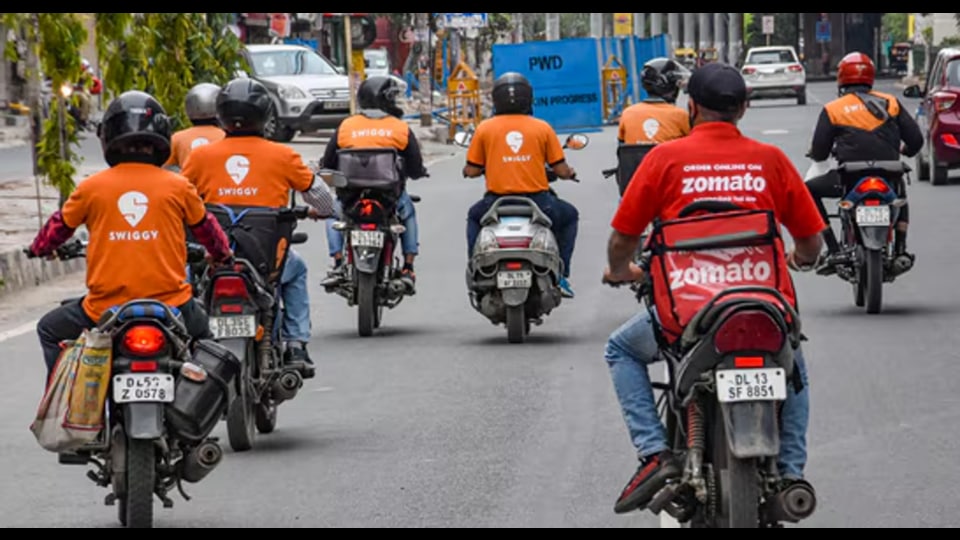
The social media debate, after some pretense of arguing facts, boiled down to the company owner resting his case on an argument which would win him support from one of the most famous Marxist economists the world has ever had.
“Now tell me, is this unfair? Especially for an unskilled job, which is largely part time, and has zero barriers to entry”, Zomato founder Deepinder Goyal asked on microblogging site X (formerly twitter) after listing some of the benefits his company offers to the workers. Joan Robinson, one of the world’s most famous Marxist economists said once, “The only thing worse than being exploited by capitalism is not being exploited by capitalism”.
That workers and capitalists have differences over material entitlements or lack of them and the winner of this class struggle gets a better bargain is Capitalism 101. In a democracy, political power plays a role in how this bargain is resolved. There is nothing remarkable about it. Goyal even had a point of sorts when he wrote in another tweet that some of the middle-class angst over gig workers is a result of the fact that gig work has shattered the invisibility of labour of the poor for the rich. Once again, this is something which anybody who has had a brush with Marxist economics will agree with. Capitalism is known for creating a commodity fetishism where everything else, labour included, is veiled and what we see is the exchange for commodities for a given value.
Where does all this leave the debate around gig workers for the discernible but non-partisan observer? The partisans, of course, are perfectly justified in defending their bargaining positions. It is here that the current debate, sort of misses the woods for the trees.
Gig economy is perhaps the only semiskilled, but formal sector, work which has seen a large growth in the Indian economy in the past couple of decades. The growth is pretty organic across sectors – from cabs to food and grocery deliveries and haircuts – and geographies, with even tier-three towns now partaking in, even driving the expansion. Some of the growth has been achieved by removing what is referred to as information asymmetry. People who used to book black and yellow cabs from taxi stands in Delhi and end up paying both side fares will relate to this. Some of this is formalisation of the informal economy such as a hyperlocal grocery app for the mom-and-pop store next door. Some of this is pure convenience. All of these have happened because some or more than one venture capitalist put their money behind these ideas. Some of them worked, some did not and some have both worked and brought in profits and windfall gains for the investors and promoters. Now, one can find virtues or faults with each of these things, but most of it is symptomatic of enterprise and economy finding momentum and creative destruction of its own.
The only thing which can be, and should be held against, these new-age entrepreneurs, is a more fundamental issue which matters beyond the exchange relation between the company and gig worker. What is the long-term second order gain for the economy at large from e-commerce beyond subsistence wages for workers and doorstep comfort for consumers?
This is exactly where India’s new-age entrepreneurship differs from what exists in, say China or even smaller South East Asian countries. The latter have been equally if not more exploitative of workers, which must have been aided by the fact that they aren’t democracies like India. But what such exploitation has created is cutting edge manufacturing and technological prowess – the book House of Huawei: The Secret History of China's Most Powerful Company by Eva Dou is a good read to understand this – in case of China, and export competitive practices and facilities for other South East Asian countries such as Vietnam.
A Wall Street Journal Story this week reported how tourists, local and foreigners, are competing with each other to find slots on a factory tour in Xiaomi’s plants in China which make fancy sports cars etc. “One woman posted an image on Xiaohongshu of the rice and vegetables she ate at the canteen. “The price is cheap, but the taste is really not great,” she said. “If it’s like this every day, that’s a bit concerning for the hardworking staff.””, the story said.
The average Xiaomi plant worker is perhaps not very better off than the average gig worker in India. The question we ought to ask is, will the Indian worker’s exploitation lead to the development of an economic facility or prowess which will dominate and fascinate the world like China’s manufacturing giants? Indian capital, its new whiz kids included, ought to be indicted for formalising drudgery instead of exploiting it to advance the country’s economic might rather than being just profit seeking which is common to all capitalists.
Roshan Kishore, HT’s Data and Political Economy Editor, writes a weekly column on the state of the country’s economy and its political fall out, and vice-versa


