
 E-Paper



‘Things from our past…’: Pakistan defence minister reacts to ‘terrorists in country’ query
Khawaja Asif said the US helped create and support 'mujahideen' forces, which later became terrorist groups, leaving Pakistan to face the fallout.

 Prefer HTon Google


Pakistan's defence minister Khawaja Asif said that the country no longer shelters terrorists or terror groups, saying that those residing in Pakistan do not engage in any terrorist activities either within Pakistan or across the border in India.
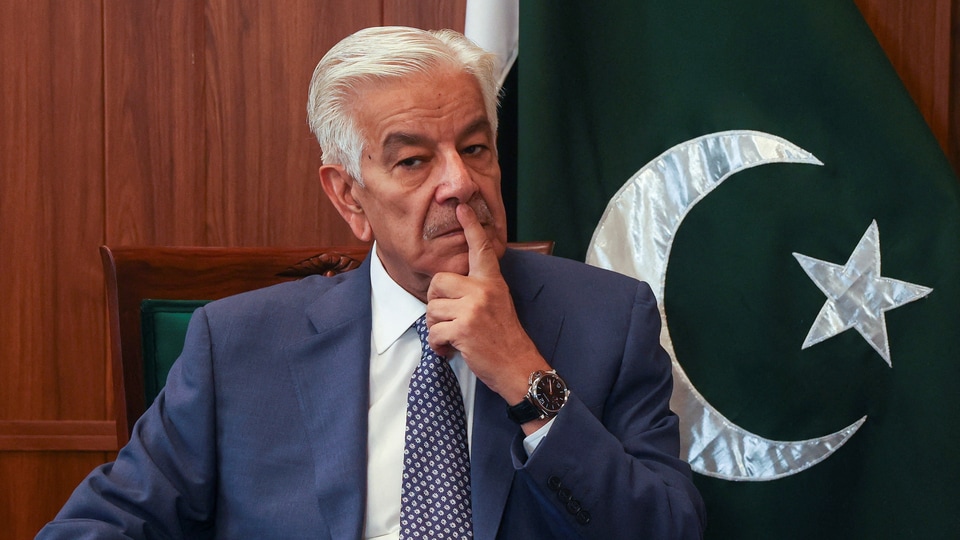
When asked by a BBC journalist earlier this month if Pakistan harbours terrorists, he referred to the issue as “these things (terrorism) are from our past…”
His comments come amidst heightened tensions between India and Pakistan, following the April 22 terror attack in Pahalgam, Jammu and Kashmir, which killed 26 people. In response, India launched Operation Sindoor, targeting terrorist outfits in Pakistan. This led to retaliatory actions, including drone attacks and shelling in the border regions of Jammu and Kashmir, Punjab, Rajasthan, and Gujarat.
The attack was claimed by The Resistance Front, a proxy group of Lashkar-e-Taiba, a banned terrorist organisation that India accuses of operating from Pakistani soil with the backing of the country's deep state.
Follow live updates India Pakistan news
Here’s how Asif justifies and explains it
The BBC journalist asked Asif whether terrorist leaders or groups were still active in Pakistan. Asif firmly responded, “no.” He was also asked about the United States' assertion that Pakistan still permits groups like Jaish-e-Mohammed, responsible for the 2019 Pulwama and 2016 Uri attacks that resulted in the deaths of 59 soldiers, to fundraise through legitimate businesses.
“These (terrorism and terrorists) are things from our past...” Asif said, pointing to the US role in arming Afghan groups during the 1980s Soviet-Afghan war.
He argued that the US had a hand in creating and supporting 'mujahideen' forces, which later evolved into terrorist outfits, leaving Pakistan to bear the consequences. Among these were groups like the Haqqani network, which, he noted, has had ties to both the Taliban and groups such as Jaish and Lashkar.
“The terrorists, which it is claimed that they are in Pakistan or their terrorist outfits are in Pakistan, they were allies of the US efforts in Afghanistan in the 80s. This thing keeps haunting us... that all these people who were actually our allies, or we were their allies... they're all 'dry-cleaned' now, but we are still 'dirty'. They still blame us for people who were their allies.”
He further asked, “Who decides that your or me are terrorists or we are not terrorists?”
According to him, “These (terrorist) leaders are no more... they are living, not dead, but do not indulge in terror activities, either in Pakistan or across the border in India or in any other country.”


