Sign in

This Diwali, lead-free paint will be a national norm

The Central Pollution Control Board (CPCB) has prescribed new draft rules that allows maximum of 90 particles per million (ppm) or .09% in the paints to be sold for both domestic and industrial purposes across India.

Published on: Mar 31, 2017, 07:17:14 IST
Hindustan Times, New Delhi | By
Share
Share via
  • facebook
  • twitter
  • linkedin
  • whatsapp
Copy link
  • copy link

By Diwali this year, paints in India will be sold with less than one percent of lead that causes indoor pollution and is harmful for children.

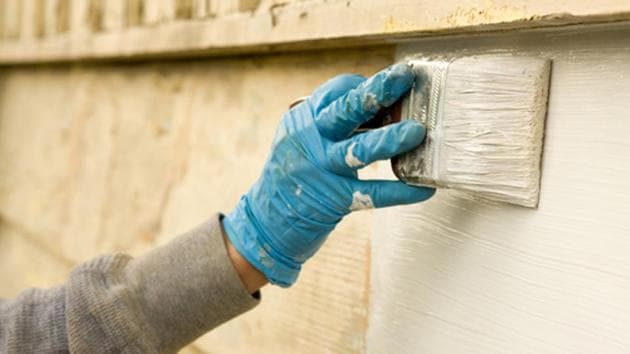
According to studies, high lead content in paints leads to indoor air pollution and affects children the most. (Shutterstock)

The Central Pollution Control Board (CPCB) has prescribed new draft rules that allows maximum of 90 particles per million (ppm) or .09% in the paints to be sold for both domestic and industrial purposes across India.

“It is a standard similar to international level,” said Ravi Aggarwal of non-government advocacy group, Toxic Link. It meant that paints will not contain any added lead. “In case of added lead, the toxic level rises to 500 ppm,” he said.

According to studies, high lead content in paints leads to indoor air pollution and affects children the most. “Exposure to lead can hamper brain development in children. High exposure can even lead to neurological problems,” the World Health Organisation (WHO) said recently.

The new guidelines will impact small and medium scale paint industry, which contributes to about 40% of the estimated business of Rs 40,600 crore in 2015-16. The organised sector already meets the standard.

The officials said big paint companies were pushing the government to have a national norm to ensure a level playing field. The paints manufactured by unorganised sector is 20-30% cheaper than that by the organised sector.

Health Facts

Lead is a cumulative toxicant that affects multiple body systems and is particularly harmful to children

Lead in the body is distributed to the brain, liver, kidney and bones.

 Lead in bone is released into blood during pregnancy and becomes a source of exposure to the developing foetus

There is no known level of lead exposure that is considered safe

A 2013 study by Toxic Link showed high levels of lead in most paints being sold in the market, which was more than 1,000 times the proposed standard of 90 ppm. To meet the new standard, the CPCB has come out with a detailed compliance and testing procedure which the manufacturers will have to abide by.

For paint already manufactured, self-certification by manufacturers on lead content has been allowed, which would be checked randomly by nationally designated laboratories. But for new paints, pre-testing from certified agencies has been made mandatory.

In addition, the CPCB will also conduct random sample testing of paints to find whether manufacturers were complying with the new norm or not. “Three to five samples shall be drawn depending on the quantity of a particular batch,” says the guideline, which will come into effect from November 11, 2017

The rule also prescribes mandatory submission of annual report to the CPCB.

  • Chetan Chauhan
    ABOUT THE AUTHOR
    Chetan Chauhan

    Chetan Chauhan is the National Affairs Editor looking into all aspects of news and features from across India. A Chevening scholar with over three decades of experience in reporting and news management, Chetan has extensively covered all important aspects of the social sector, political economy, environment and climate change nationally and internationally. He did a journalism course at the Reuters Institute of Journalism in Oxford and Digital Media training at Nanyang Technological University in Singapore. He started as a reporter with The Statesman in 1996 and joined the Hindustan Times in 2000 in the metro bureau covering environment, crime and Delhi politics. He covered hot local news, from the Jessica Lal murder case to the rebellion of Delhi Congress MLAs against then Chief Minister Sheila Dikshit, to the replacement of toxic vehicle fuel with cleaner compressed natural gas (CNG) in the national capital. Some of his stories on air pollution became part of the Supreme Court’s landmark MC Mehta versus Government of India case in the National Capital Region (NCR), forcing the government to take corrective measures. As part of the national political bureau since 2004, he covered important central sectors such as environment, education, social justice, labour, rural development, water resources, renewable energy, agriculture, broadcasting and the Planning Commission for more than a decade producing several exclusive and investigative breaking stories. His specialisation is the environment, having covered at least a dozen United Nations global conferences on climate change, biodiversity and wildlife including climate summits in Paris, Copenhagen and Bali. He also covered India’s two five-year plans ---11th and 12th and reported on drafting and execution of right based laws such as Right to Education, Right to Information and rural job guarantee law, MG-NREGA, now being introduced in new format as VG-RAM-G Act. He has in-depth knowledge of social sector issues. He was one of the first to report on tigers vanishing from Sariska and Panna wildlife reserves in 2004 and 2008, respectively, leading to the setting up of the National Tiger Conservation Authority (NTCA) and the introduction of stringent penal provisions for poaching. He has written extensively on the rising human-animal conflict in India and the degradation of India’s biodiversity hotspots because of mining and other activities. Since 2004, Chetan has covered Parliament comprehensively and participated in training on the nuanced coverage of Parliament proceedings. He has travelled extensively across India to cover national and provincial elections since 1998, especially in the Hindi heartland states, considered India’s road to power. He writes a regular column for Hindustan Times, Ecostani, on important national politics, economy, Himalayan ecology and environmental issues. His other responsibilities include providing inputs for edits and edit page articles for the publication, apart from managing news flow from across India.Read More

Get the latest India News, breaking headlines and real-time updates from across the country. Stay informed about politics, government policies, crime, weather and major national developments.