
 E-Paper



Tigers kill their own in Kanha, Sariska reserves, experts say it’s ‘rare’
On Thursday, forest officials confirmed that a male tiger in Kanha national park killed two sub-adults and a tigress in the past month and had also eaten some parts of their bodies.

 Prefer HTon Google


A tiger in Madhya Pradesh’s Kanha has reportedly cannabalised three other big cats in what wildlife experts describe as “rare” but not “unheard of” instance of cannibalism among the biggest of the big cats.
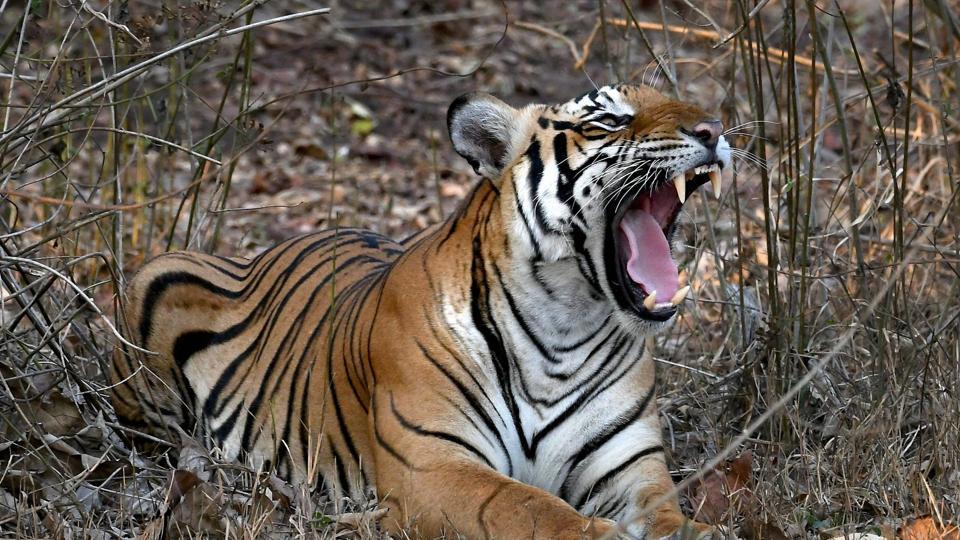
On Thursday, forest officials confirmed that a male tiger in Kanha national park killed two sub-adults and a tigress in the past month and also eaten some parts of their bodies.
Kanha national park field director L Krishnamurthy said: “The sub-adults who were about 2 to 2.5 years old were killed by tiger we have named Bajrang, who is around 6 to 7 years and the dominant male of the region. Bajrang was also responsible for killing a tigress on January 19 in the Mundidadar area of the park.”
Krishnamurthy said that the post mortem of the remains of one of the sub-adults has been done. The post-mortem of the other could not be done, he added, because Bajrang was still eating the remains.
Tiger expert and president of the Wildlife Conservation Trust, Anish Andheria said: “There have been reports of tiger eating tiger flesh but it is rare. The tiger will do so only if it is extremely hungry. In most cases, tigers will avoid fighting and killing another tiger because they themselves might be injured in the attack, but they do so to protect their territory.” He also cautioned against reading too much into the incident.
“We know very little about tiger behaviour. Due to extensive patrolling nowadays any tiger death is reported and officials reach the spot. It is possible that most tigers would (always) eat flesh of other tigers, but simply don’t get a chance because of human intervention.”
Krishnamurthy agreed with the assessment and said cannibalism is “not uncommon among the cat species but it is rare”. Former Kanha tiger reserve director Sanjay Shukla recalled that in March 2015 he saw a tiger eating his own cub.
Still, given that Kanha has enough prey, a tiger eating one of its own is definitely matter for a study, additional principal conservator of forest (Wildlife) Dilip Kumar said .
In a separate incident, a tiger in Sariska is suspected of killing three cubs he fathered. Sariska tiger reserve’s deputy conservator of forest, Hemant Singh, confirmed that it is possible that a tiger named ST-13 may have killed three cubs.
“The father of the cubs, tiger ST-13, has been camping in the same area since December 28, and we fear that it has killed the cubs,” Singh said. “We don’t have evidence of this , but the tigress’ behavior is an indication that she has lost her cubs and that the tiger has killed them.”


