E-Paper



To de-stress elephants, Corbett administration to introduce activities, football
The officials are already worried about the increasing aggression in some of the wild elephants in the Corbett Tiger Reserve. In the case of the elephants that are with the Park for patrolling, the officials warned that in the absence of their herd/family and natural way of living in the wild, these elephants may be developing stress.

 Prefer HTon Google


To de-stress captured elephants used for patrolling in forest areas, the Uttarakhand forest department will introduce playful activities, toys and football to16 such elephants in the Corbett Tiger Reserve, including ten elephants brought from Karnataka.
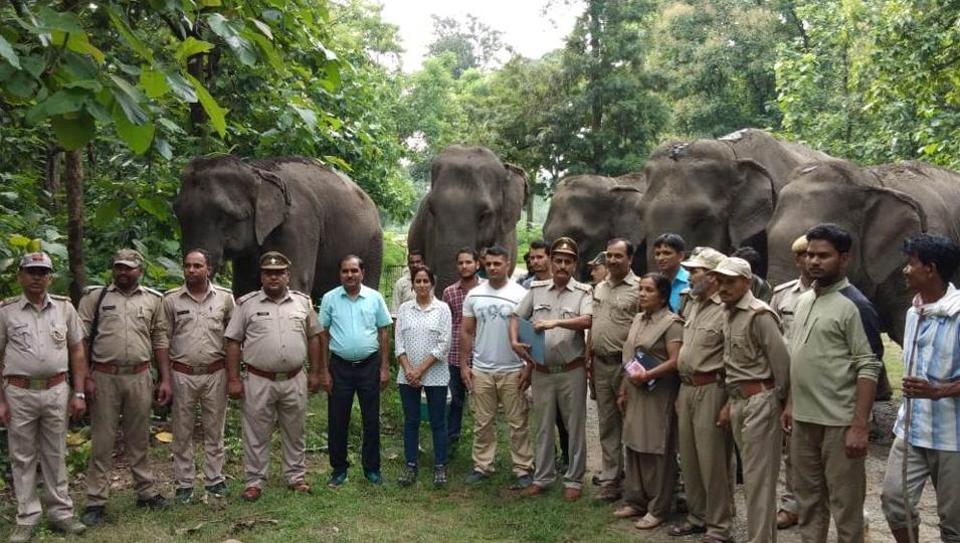
RK Tiwari, sub-divisional forest officer (SDO) Kalagarh said the instructions had been issued by principal chief conservator of forests (PCCF) Jai Raj, who visited the elephant shelter in Kalagarh on Thursday. He said the PCCF was reviewing various aspects of the administration and wildlife management in the Corbett Reserve.
“PCCF told us how elephants like playful activities be it splashing water or kicking at football. So we will definitely try to make them indulge in such playful activities,” he said.
Tiwari said the PCCF had told him that some officials from Corbett should visit the Wildlife SOS Elephant Conservation and Care Centre Mathura and get information about how they were using playful activities and toys to create a good atmosphere for the elephants that would help them to de-stress.
“At the Wildlife SOS Elephant Conservation and Care Centre Mathura, elephants in distress are rehabilitated and taken care of. Our officials will visit SOS Mathura and then try to replicate the playful activities for jumbos in Corbett,” he said.
Tiwari said such playful activities will ensure that the elephants get good exercise and remain cheerful as they have been separated from their wild habitat. “Nine elephants were brought from Karnataka in February 2017. One of them gave birth to a calf this year. Apart from these ten, we have six more elephants here, which are used in patrolling,” he said.
The officials are already worried about the increasing aggression in some of the wild elephants in the Corbett Tiger Reserve. In the case of the elephants that are with the Park for patrolling, the officials warned that in the absence of their herd/family and natural way of living in the wild, these elephants may be developing stress. And such playful activities would go a long way in de-stressing them.
Wildlife expert Ritesh Joshi, who is a scientist at the Conservation and Survey Division of the Ministry of Environment and Forests and author of the Secret Life of Elephants said, elephants are very sensitive and social animals. “When you take them away from their matriarchal families, they are definitely affected in varying degrees. So it becomes very important to be compassionate and sensitive about such elephants. All possible efforts should be made to ensure they don’t get stressed or agitated. Providing them space like watering holes or introducing them to playful activities definitely helps in reducing their stress levels,” he said.
Last year , the state forest department had also made a provision of ₹1.2 crore for development of water bodies for bathing and drinking purposes for the elephants throughout the year in the Corbett Reserve. In a day, an elephant can drink up to 50 gallons (200 litres) of water.
Lakshmi, one of the eight elephants which were seized last year around Corbett and have now been kept at Aamdanda area, has been ailing for over four months, with her rear limbs having developed abscess. Lakshmi was used for joyrides, before they were banned in the state last year by the High Court. Due to these joyrides, the elephant had to wait a lot and her movements were restricted to a small area.