
 E-Paper



Solar eclipse 2026: When can you see the ‘ring of fire’ | Check timings of surya grahan
Surya grahan: The eclipse will last for about 2 minutes and 20 seconds at around 07:01 UTC, which translates to 12:31 pm IST.

 Prefer HTon Google


The first solar eclipse of 2026 will occur on Tuesday, February 17. The annual celestial event, or the Surya Grahan, will be marked by the moon covering the sun's centre, leaving a rim of light around it.
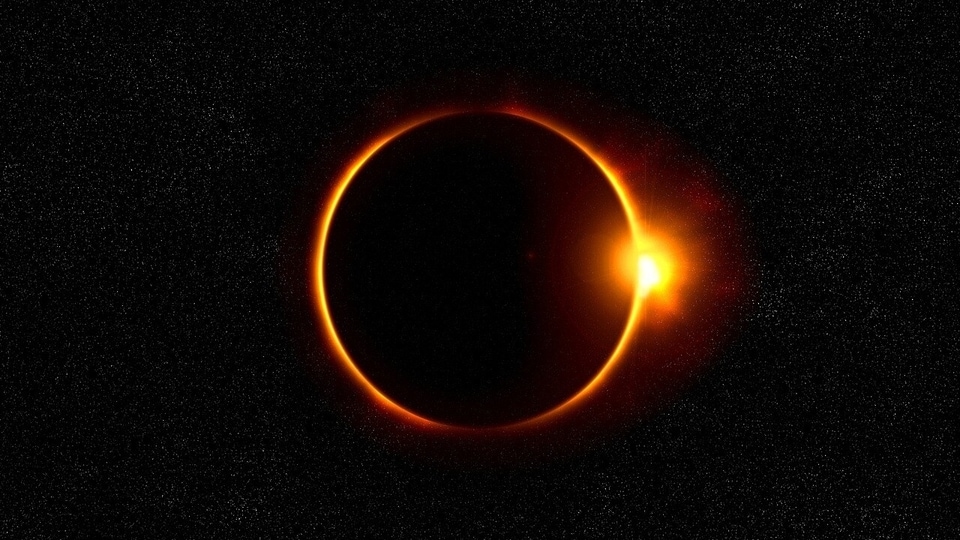
The solar eclipse's path of annularity will reportedly cut across East Antarctica.
What is annual eclipse?
An annual eclipse occurs when the Moon stands at the farthest point from the Earth and since it is smaller is size as compared to the Sun, it fails to cover it completely, hence leaving a rim of light around it, which is referred to as the ‘ring of fire’.
Also read| First solar eclipse of 2026 in February | When and where to watch? Details here
When will the eclipse occur?
The eclipse will last for about 2 minutes and 20 seconds at around 07:01 UTC, which translates to 12:31 pm IST.
Also read| Annual solar eclipse on February 17: Will it be visible in India? Check time and details
Few will witness that moment, but observers in the rest of Antarctica — including those on cruise ships on late-season tours — will see a partial solar eclipse, as will people in parts of southern Africa and the southern tip of South America, said a report by Space.com.
The path of the eclipse will be limited to a small region in Antarctica, making the complete event witnessable to very few space enthusiasts other than those working in a few research stations in the polar continent.
Also read| Solar eclipse of February 17, 2026: Can you see it from India? Know who can see the ‘ring of fire’
Will the eclipse be visible from India?
The solar eclipse on February 17 will not be visible from India. Partial phases of the celestial event can be witnessed across Southern Argentina, Chile, Parts of South Africa and nearby oceans, a report by The Sunday Guardian said.
Which type of solar eclipse will this be?
As per NASA, it will be an annual solar eclipse.Solar eclipses are magnificient visual spectacle as when the Moon passes between the Sun and Earth, blocking the Sun's light and casting a shadow on the planet.
This temporarily darkens the sky, and in the case of an annular eclipse, which is set to happen in 3 days, when the Moon covers the Sun's centre, leaving the Sun's visible outer edges to form a ‘ring of fire.’
How to watch solar eclipse?
- Space enthusiasts can witness the rare celestial event, but seeing it with the naked eye can often pose potential risks. Here are some of the things to keep in mind while watching an eclipse:
- Since looking at the eclipse without protection can cause damage to the eyes, experts advise usage of ISO certified solar eclipse glasses.
- Enthusiasts should use indirect viewing methods including pinhole projectors to ensure safe observation of solar eclipses.
- Telescope and binoculars, which are used to view eclipses should have approved solar filters attached. Observing the eclipse through unfiltered optical devices can cause damage to the eyes.
- Weather conditions should be checked and viewing locations should be planned before witnessing an eclipse.


