
 E-Paper



Top court gives nod for Chennai-Salem highway
A three-judge bench of the Supreme Court, headed by justice AM Khanwilkar, said, “The availability of a highway in any part of the state paves way for sustainable development and overall enhancement of human well-being.”


The Supreme Court on Tuesday said that the Centre was within its power to acquire “any land” for developing national highway in any state under public purpose, upholding the decision of the National Highways Authority of India (NHAI) to acquire land for the construction of the ambitious 277-kilometre eight-lane national highway connecting Chennai, Krishnagiri and Salem in Tamil Nadu.
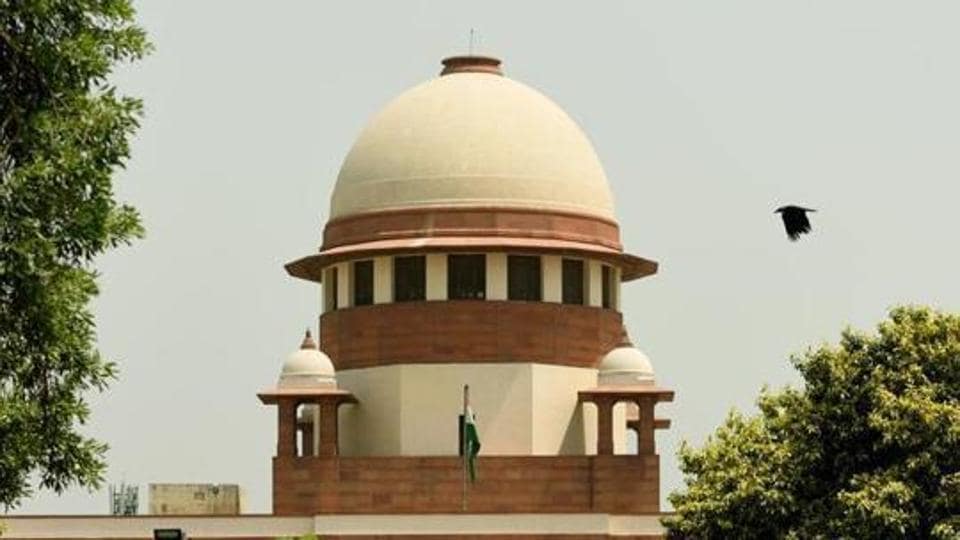
A three-judge bench of the Supreme Court, headed by justice AM Khanwilkar, said, “The availability of a highway in any part of the state paves way for sustainable development and overall enhancement of human well-being.”
The Madras high court had on April 8, 2019, set aside the acquisition of land by NHAI, faulting the government body for not obtaining prior environment clearance before proceeding with the acquisition. NHAI had issued the notification under the National Highways Act, 1956, declaring the stretch from Tambaram (Chennai) to Harur as NH-179B and the stretch from Harur to Salem as NH-179A.
The project, which was part of the Bharatmala Pariyojana Phase-I and is expected to cost ₹10,000 crore, was envisaged to reduce the distance between Chennai and Salem by 40km and to diversify the traffic from the congested Chennai-Krishnagiri section of Golden Quadrilateral and Chennai-Ulundurpet section of the Chennai-Madurai Economic Corridor.
The NHAI notification under Section 3A(1) of the 1956 Act led to filing of a public interest litigation (PIL) before the high court, which had set aside the order.
The land owners, too, had moved the Supreme Court against the haste shown by the central government to mutate the title of land soon after the notification was issued.
On Tuesday, the top court agreed that for construction of any development project, prior environment clearance under the notification issued by ministry of environment, forest and climate change (MoEFCC) on September 14, 2006, is a must. However, this stage will only arrive before the start of actual construction. In the present case, the bench noted, the project was at the stage of “planning” and “finalisation”.
In a 140-page judgment, the bench went to the extent to suggest, “On a thorough perusal, the judgment (of the high court) does not reveal any just circumstance for invoking the judicial review jurisdiction.
The top court agreed with the HC that until acquisition process stood completed, it was wrong on the part of the executing agency to alter the mutation entry possessed by landowners.


