
 E-Paper



Undetected coronavirus cases may fuel spread with many trying to flee screening
For every confirmed case in China, there are five to 10 people in the community with undetected infections who have mild symptoms, according to a new analysis of data from China published in the journal Science.


No community transmission of coronavirus disease has taken place so far in India, show the first 500 results of community tests done across the country, but with people continuing to evade screening and escape quarantine, the threat of undetected cases looms large.
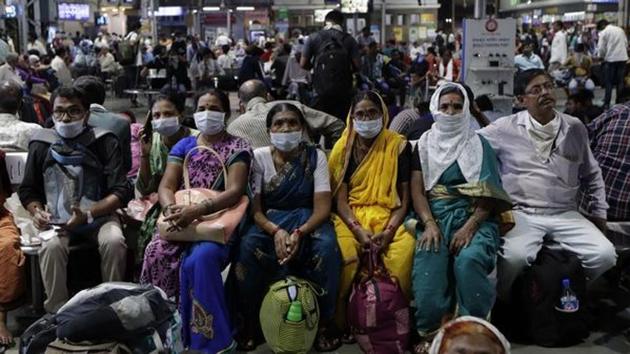
“These are chances of asymptomatic or mild cases being missed and depending on the contagiousness, numbers and exposure, it can lead to many new infections. This is why people who are diagnosed are isolated for at least two weeks till they test negative twice for the infection,” said Dr Lalit Kant, former head of epidemiology and communicable diseases, Indian Council of Medical Research.
For every confirmed case in China, there are five to 10 people in the community with undetected infections who have mild symptoms, according to a new analysis of data from China published in the journal Science.
The study, which examines how contagious are people with mild or no symptoms, and whether they can cause undetected community infection, found 86% of infections in China had not been recorded before the January 23 lockdown.
The mild, undetected cases were around half as contagious as confirmed cases. But the sheer number of mild cases made them the infection source of 79% of confirmed infections in China, found the modelling study of the virus’s natural spread in China before the January lockdown.
“These findings explain the rapid geographic spread of Sars-CoV-2 and indicate containment of this virus will be particularly challenging,” said the study, which used mobility data, a dynamic metapopulation model, and Bayesian inference to estimate the prevalence and contagiousness of unreported cases to predict the pandemic potential of Sars-CoV-2, the virus that causes Covid-19.
Bayesian inference is a method of statistical inference to update the probability for a hypothesis as more information becomes available.
Covid-19 has a long incubation period of up to two weeks, which makes home quarantine essential for everyone who may have been exposed to infection. This is done to stop it from causing undetected infections during the asymptomatic period, which would result in widespread community outbreaks and strain the health system.
“Most people recover under home quarantine, but with the higher rates of diabetes, cardiovascular disease, air pollution, and malnutrition in our population, severely affected cases may be around 20% of those infected. These cases will need hospital care under isolation, some will need intensive care with respiratory support,’ said Dr Srinath Reddy, president, Public Health Foundation of India.
In a worse-case scenario of widespread community transmission, mild cases will have to be treated at home and only severe cases will be hospitalised. “Strong primary health services should be able to supervise and support home care, while all available public and private hospitals will need to be mobilised for hospital care,” said Dr Reddy.
The China study underscores the pandemic potential of Sars-CoV2, much like the 2009 H1N1 pandemic influenza virus also caused many mild cases, quickly spread globally, and eventually became an endemic seasonal flu that has been infecting and killing people since 2009-10.
“Presently, there are four, endemic, coronavirus strains circulating in human populations (229E, HKU1, NL63, OC43). If the novel coronavirus follows the pattern of 2009 H1N1 pandemic influenza, it will also spread globally and become a fifth endemic coronavirus within the human population,’ said the study.


