
 E-Paper



From first speech to halwa tradition: 5 key facts as Union Budget 2026 nears
As has been the tradition over the last few years, Union finance minister Nirmala Sitharaman will present the budget in Parliament on February 1

 Prefer HTon Google


India's Union Budget is seen as a landmark event before the start of every fiscal year, with every citizen, the business world, and even other countries keeping an eye on the financial blueprint of one of the world's biggest economies and markets.
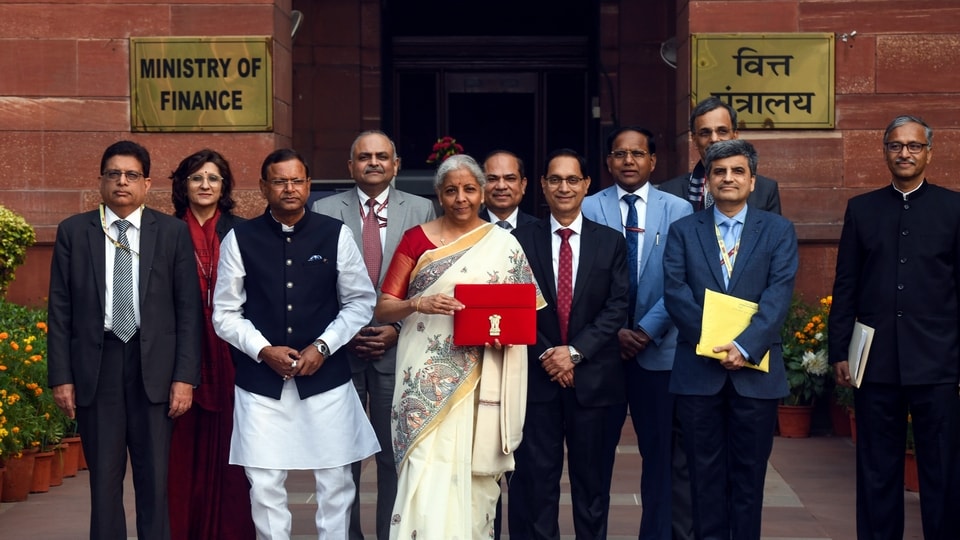
As has been the tradition over the last few years, finance minister Nirmala Sitharaman will present the Union Budget 2026 in Parliament on February 1, Sunday.
Ahead of the big day, here are some interesting facts about the process.
From the first budget to the longest one, immerse yourself in the trivia as you wait for the Union Budget 2026.
Why budget presentation timing was changed
India followed the tradition of presenting the Union Budget in the parliament at 5 PM for several decades after Independence. This practice was a colonial-era legacy, rooted in the need to align the announcements with business hours in the United Kingdom.
Since India is several hours ahead of Britain, a late-evening presentation ensured that financial details could be communicated to London on the same working day.
The historic shift from an evening to a morning presentation was made in 1999 by Yashwant Sinha, who was the finance minister in Atal Bihari Vajpayee's BJP-led NDA government.
Another timing shift came in 2017, when Narendra Modi's government changed the presentation date from the last working day of February to February 1, aiming to end uncertainty for economic agents and allow more time for policy implementation before the fiscal year starts on April 1.
Who gave the first budget speech?
The first Union Budget of India, as we know it now, was presented on April 7, 1860, during British rule. This was the time when the British rule in India was trying to recover from the wounds of the First War of Independence (1857), and the administration of India had shifted from the East India Company to direct Crown rule. The budget was presented by James Wilson, then India's finance minister under the British Raj.
The first budget speech of independent India came on November 26, 1947, by the then finance minister RK Shanmukham Chetty. At that time, the nation was grappling with the tragedy of Partition. Amid riots, displacement, and economic uncertainty, expectations for the budget were sky-high. With the new financial year starting on April 1, 1948, the November 26 budget came as an interim measure.
Why is halwa cooked to mark ceremony
The Union finance ministry has traditionally hosted a halwa ceremony about 10 days before the Union Budget is presented in Parliament.
The ceremony marks the commencement of printing the document.
The ceremony initiates the “lock in” of the proposed budget, preventing it from leaking into the market until it is tabled. To maintain secrecy over the documents, the North Block offices are transformed into a fortress.
Shift from briefcase to ‘bahikhata’
For decades, the finance minister carried a red briefcase to Parliament. The shift from a briefcase to a bahikhata (traditional Indian ledger) was initiated by Nirmala Sitharaman in 2019. It symbolised a break from the colonial legacy, promoting Indian heritage and a move towards Digital India, eventually transitioning to a paperless tablet presentation in 2021, which is still carried in a bahikhata-style pouch to blend tradition with modernity.
Record for the longest budget speech
Nirmala Sitharaman holds the record for the longest budget speech in Indian history, at 2 hours and 42 minutes. This was done in 2020, when Sitharaman broke her own record of 2 hours and 17 minutes in 2019.
During that speech, Nirmala Sitharaman introduced significant reforms, including a new income tax regime and announced the historic LIC IPO. Midway through her speech, Sitharaman felt unwell, and Lok Sabha Speaker Om Birla read the last two pages of her speech.


