
 E-Paper



Union Cabinet approves ₹9,857-crore Pune Metro Phase 2 project
With this expansion, Pune joins Delhi, Mumbai, Bengaluru, Hyderabad, Chennai, and Kolkata, which have metro networks exceeding or nearing the 100-km scale

 Prefer HTon Google


New Delhi: The Union Cabinet on Wednesday approved ₹9,857.85 crore investment for Pune Metro Phase 2 project, which will add 31.64 km of new corridors in two lines with 28 elevated stations.
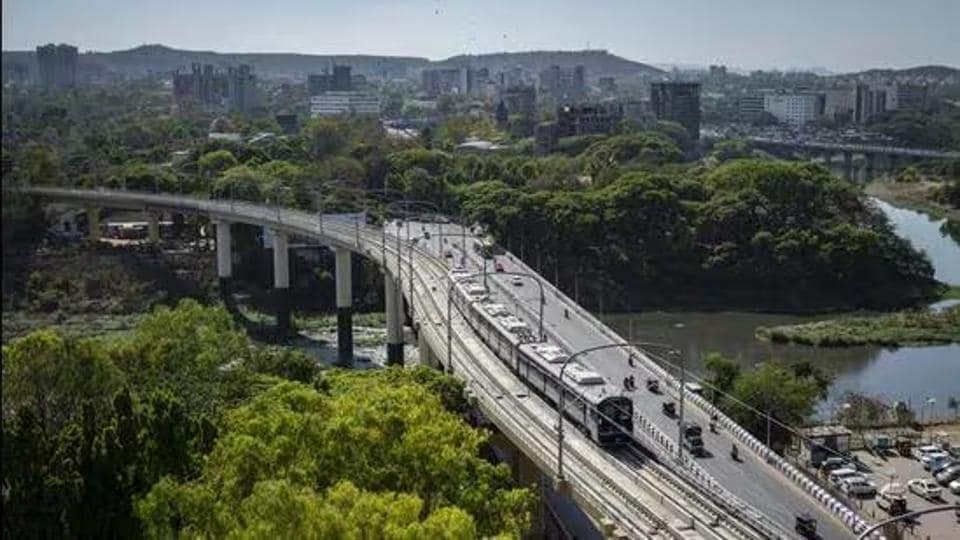
With this expansion, Pune joins Delhi, Mumbai, Bengaluru, Hyderabad, Chennai, and Kolkata, which have metro networks exceeding or nearing the 100-km scale, positioning Pune among India’s major metropolitan rail systems.
The Lines 4 and 4A in Pune Metro Phase 2 will push the city’s sanctioned Metro rail network past 100 km, and will connect key IT hubs, commercial zones, educational institutions, and dense residential areas across East, South, and West Pune.
Also Read: Ahmedabad confirmed as host city for 2030 Centenary Commonwealth Games
Union minister for housing and urban affairs, Manohar Lal Khattar, in a tweet, said, “Thrilled to announce the Union Cabinet’s approval of ₹9,857.85 crore investment for Pune Metro Phase 2, adding 31.64 km of new corridors and 28 stations. This will ease congestion, enhance connectivity, and boost sustainable urban transport in Pune. A major step towards #SmartCities! #PuneMetro #UrbanTransformation”
The project is to be implemented by Maha-Metro within five years and is jointly funded by the Union government, Maharashtra government, and external funding agencies.
Line 4 stretches about 25.518 km, running from Kharadi IT Park to Khadakwasla, while Line 4A (the spur line) covers 6.118 km, connecting Nal Stop to Warje and Manik Baug. This expansion under Phase 2 will integrate seamlessly with existing and sanctioned lines at Swargate (Line 1), Nal Stop (Line 2), and Kharadi Bypass, creating a more unified metro grid across Pune.
These corridors target some of the city’s most congested transit routes, including Solapur Road, Sinhagad Road, Magarpatta Road, Karve Road, and the Mumbai–Bengaluru Highway, aiming to reduce private vehicle dependency and traffic congestion while improving safety and promoting green mobility. Official projections estimate initial daily ridership on these lines to be around 4.09 lakh passengers by 2028, expected to grow to over 11.7 lakh by 2058.


