
 E-Paper



Uttar Pradesh cabinet accepts OBC commission's report on quota in civic polls
According to a senior government official, the government will now seek an urgent hearing in the Supreme Court where the matter is sub-judice.

 Prefer HTon Google


The Uttar Pradesh cabinet on Friday accepted the recommendation of a five-member commission set up to look into the issue of reservation to other backward classes (OBCs) in urban local body elections, minister for energy and urban development Arvind Kumar Sharma said.
According to a senior government official, the government will now seek an urgent hearing in the Supreme Court where the matter is sub-judice.
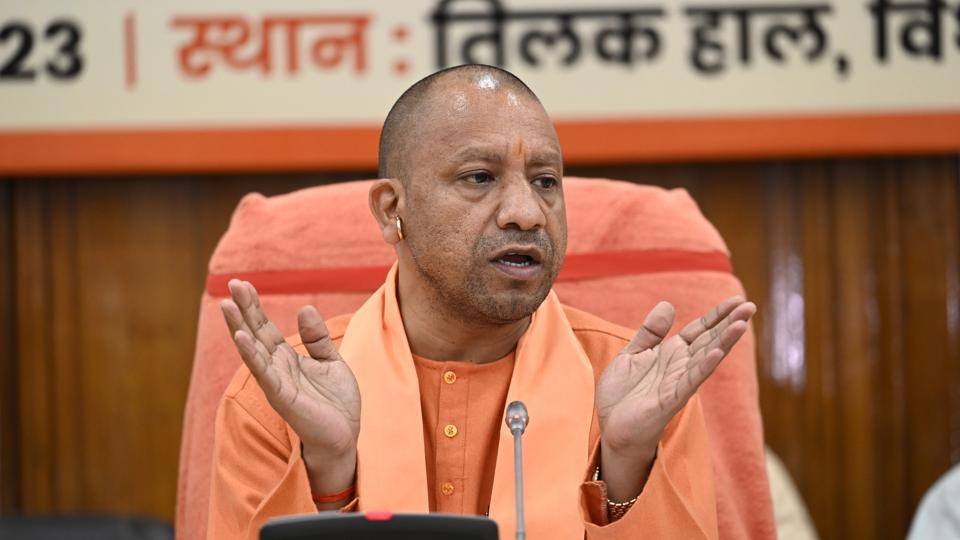
Chief minister Yogi Adityanath presided over the cabinet meeting.
“The state cabinet accepted the report of the Uttar Pradesh State Urban Local Bodies Dedicated Backward Classes Commission and supported complete reservation for the OBCs. We are going to take this report to the Supreme Court in a day or two and move ahead on the issue in accordance with the directives of the court,” Sharma told reporters at Lok Bhawan in Lucknow. He did not share the content of the report.
The panel was set up by the government after the Allahabad high court on December 27 set aside a December 5 government notification for 27% reservation for OBCs in local body elections. The ruling was on the grounds that the state did not follow a “triple test formula” laid down by a Constitution bench of the Supreme Court in 2010 before carrying such an exercise.
Also read: 'Will only hold civic elections with OBC quota’: Yogi Adityanath after HC verdict
The triple test requires the state to set up a dedicated commission to conduct a rigorous empirical inquiry into the nature and implications of the backwardness of OBCs with respect to local bodies, specify the proportion of reservation in light of the commission’s proposals, and not exceed the 50% quota cap as held by the top court in a landmark 1992 judgment.
However, the Supreme Court on January 4 stayed the high court order -- which had also ordered for the polls to be held without the quota. Hearing separate appeals by the state government and state election commission against the high court verdict, a bench of Chief Justice of India (CJI) Dhananjaya Y Chandrachud and justice PS Narasimha said: “High court has directed to go ahead with the elections. This cannot be accepted as we see that a segment of the state would remain unrepresented.”
The top court asked the state to explore the possibility of asking the commission to give a preliminary report as it was conscious of the “constitutional vacuum” created due to the absence of elected bodies in municipalities for a period of three months.
In Uttar Pradesh, backward groups were crucial to the Bharatiya Janata Party’s (BJP) phenomenal electoral performance in 2022, when it became the first party in three decades to return to power in the state, and the high court’s verdict had put the Adityanath government under pressure from opposition parties who were blaming the BJP for failing to protect political reservations for backward groups.
On Friday, the opposition Samajwadi Party and Congress demanded the panel’s report be made public for all to know what recommendations have been made by the commission. “We do not know what is there in the report. We demand that the government make it public so that we are able to study it,” Samajwadi Party spokesman Rajendra Chaudhary told news agency PTI.
“The Uttar Pradesh Congress wants the government to make the report public. The Congress is ready for the elections and we want to know what has been stated in the report,” party spokesperson Ashok Singh said.
The issue of OBC quota in local body polls has arisen in other states as well. In Maharashtra, Madhya Pradesh, Bihar and Odisha — all states tried to institute OBC quotas last year but the judiciary struck down the government notifications for not adhering to the triple test. Madhya Pradesh and Bihar later set up a commission and its report was accepted by the court in part or full.


