
 E-Paper



UPA glory to post-2014 slump: Sonia Gandhi’s highs and lows as Congress chief
In the summer of 2004, nearly all Congress leaders had surrendered to the possibility of another term for Prime Minister Atal Bihari Vajpayee’s NDA government.

 Prefer HTon Google


In the summer of 2004, nearly all Congress leaders had surrendered to the possibility of another term for Prime Minister Atal Bihari Vajpayee’s NDA government. Opinion polls too, indicated sweeping victory for Vajpayee, a charismatic, towering personality of Indian politics.
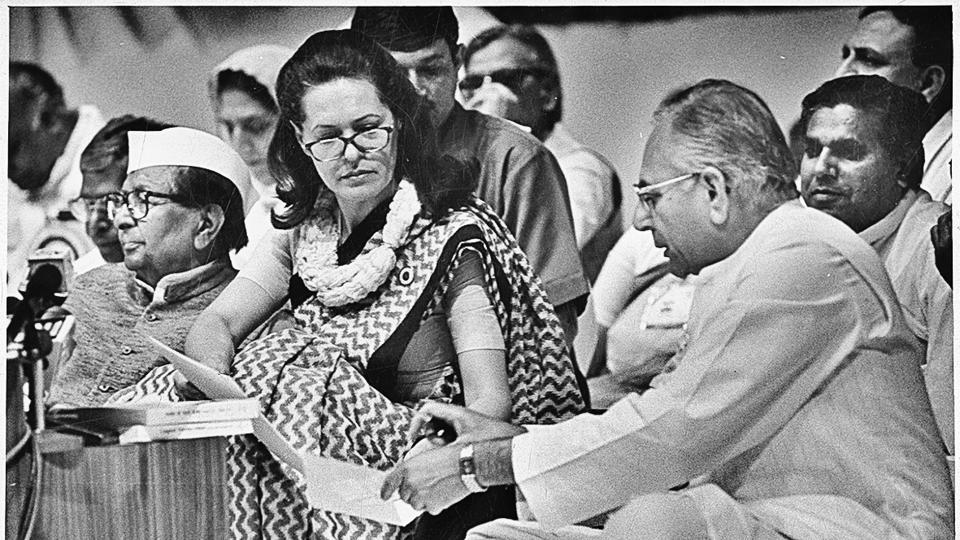
Congress president Sonia Gandhi, who joined active politics just six years ago in 1998, thought otherwise. Her lieutenants recalled that in many Congress meetings, strategy sessions and campaigns she insisted that the party would return to power.
Also Read: Challenges for Congress as a new chief takes over
And when the Congress-led United Progressive Alliance formed the government, she refused to become the Prime Minister, although she did become the chairperson of UPA and of the National Advisory Council, a formalized kitchen cabinet of sorts.
On October 26, Gandhi steps down as the longest serving Congress president—a post she held for 22 years in two phases.
The fifth woman president of the Congress, Gandhi took charge of the Indian National Congress in March 1998 when the party seemed to be on a downslide, lifted it to form its first coalition government that ran for 10 years, but then witnessed an even bigger slide in its fortunes over the following eight years. A year after her elevation to the top post stalwarts such as Sharad Pawar quit the party. And in her last three years as the party chief, several leaders, young and old, left the Congress.
Early years in politics
Gandhi became a primary member of the Congress in 1997, the year two governments were pulled down by the Sitaram Kesri-led Congress. Her active participation started in the 1998 Lok Sabha election through rallies—her first one was in Bellari, Karnataka. The Congress managed to get 141 seats while Atal Bihari Vajpayee’s BJP received 182, and he became the PM for the first time. Weeks after the election, angry members of the CWC removed Kesri and adopted a resolution making Gandhi as the party chief.
Also Read: The real story in the Congress poll
She quickly earned the nickname of “reader” for reading out written texts in her speeches, faced the rebellion of the likes of Sharad Pawar, Purno Sangma and Tariq Anwar over her “foreign origin” when a section of the Opposition planned to make her the PM when the 13 months-old Vajpayee government collapsed in 1999 after J Jayalalithaa of the AIADMK withdrew support to it.
But in the 1999 election the Vajpayee-led BJP won 182 seats, and forged a successful coalition, the National Democratic Alliance, to return to power. It was a model the Congress would replicate five years later.
In 2002, a challenge to Gandhi’s presidency came from Jitendra Prasada, another veteran. Even though Prasada was defeated, receiving just 94 of 7700 votes, a gracious Gandhi inducted him in the CWC, the party’s highest executive body. It remains to be seen if Mallikarjun Kharge, the Congress’ new president, extends the same courtesy to Shashi Tharoor.
In the same month the Congress faced a dilemma in J&K: The party won more seats than its partner PDP in the assembly poll and there was consternation over the choice of CM. At a CWC meeting, most supported a Congress CM. But Congress leaders Pranab Mukherjee and Arjun Singh argued PDP should lead the government to send the right political message. After a vociferous debate, Gandhi sought a voice vote. It was overwhelmingly in favour of Ghulam Nabi Azad as the CM. Mukherjee later told his close aides that Sonia quipped to him, “You are in hopeless minority” and that he retorted, “But I am right.”
Also Read: Congress president will decide my role: Rahul Gandhi
Two days later, Gandhi invited PDP chief Mufti Mohammad Sayeed to form the government.
Her days in the Opposition benches helped her grow as a politician. When Parliament was attacked in 2001, she dialed Prime Minister Vajpayee to enquire about his wellbeing. The Prime Minister was so touched by her gesture that next day, he famously told the Lok Sabha, “When the Leader of Opposition calls the PM to ask about his wellbeing, it shows Indian democracy is in good health.” Two years later, Sonia moved a no-confidence motion in the Lok Sabha against Vajpayee government and made such sharp accusations that Vajpayee wondered if the words “have been specially chosen from a dictionary!”
The UPA days
The meeting that sealed Manmohan Singh’s choice as the PM took place in the bedroom of an unwell Harkishen Singh Surjeet, the CPIM general secretary. Surjeet and then West Bengal CM Jyoti Basu were among Gandhi’s trusted political allies.
According to an eyewitness who was present in the meeting, Surjeet, who was lying on the bed, jumped up when Gandhi announced she wouldn’t be the PM. She argued it might create an unnecessary controversy and asked Surjeet to garner support for Singh.
Critics, however, claimed that the political power remained vested with Gandhi, that ministers were more loyal to her . The National Advisory Council, pushed major policy interventions such as MGNREGA, and the Right to Education and Food Security Act, reinforcing claims that it was a super cabinet. The BJP and other Opposition parties were vocal about a dual power centre in the establishment.
Gandhi supported Singh when the latter was adamant about signing the Indo-US Nuclear Deal. She braved the withdrawal of support from the Left parties and tasked leaders such as Pranab Mukherjee and Ahmed Patel to secure support for the government. In the run up to the 2009 election, Gandhi famously covered her photo on the manifesto and announced Manmohan Singh would be the PM candidate.
The UPA’s second term in power was marred by corruption scandals and allegations of economic mismanagement. It found Gandhi slowly taking the backseat and Rahul Gandhi, then a party general secretary, developing keen interest in electoral strategies. Manmohan Singh announced his retirement in 2014 and Rahul Gandhi, for many practical purposes, emerged as the new face of the Congress.
The Narendra Modi years
The Congress suffered two consecutive Lok Sabha defeats including stooping to its lowest ever tally of 44 in 2014 Lok Sabha elections, and just managing to do better with 52 in 2019. Rahul Gandhi’s appointment as the party president in December 2017 lasted less than two years. On August 11, 2019, Sonia was appointed as the interim president after the Congress failed to find an alternative. Out of power for more than five years, the organization suffered an exodus of promising young leaders such as Jyotiraditya Scindia, Himanta Biswa Sharma, RPN Singh, Jitin Prasada and veterans such as Ghulam Nabi Azad, Kapil Sibal, Luizinho Falerio, and Ashwani Kumar. The party lost 37 state elections in eight years and faced a rebellion of senior leaders who demanded wholesale changes and an end to Rahul Gandhi’s arbitrary decision-making.
Peeved with the attack on the leadership, Sonia Gandhi declared in a CWC meeting : “I am a full-time, hands-on president.” In another, Gandhi offered to resign.
In her second innings as the Congress chief, Gandhi, whose health started failing, discovered WhatsApp as the most effective communication tool, scrambled to keep the flocks together, lost her mother—a vital source of her mental strength—and walked in the Bharat Jodo Yatra in Karnataka, the state where she held her first public rally.
She will remain an MP and UPA chairperson at least for this Lok Sabha. It is learnt that she will spend more time in Priyanka Gandhi’s bungalow in Himachal Pradesh (where the air is cleaner). She may also restart giving selfies to random fans or cycle in Goa—as she did after stepping down as Congress chief in 2017.


