
 E-Paper



US trade representative's office makes U-turn on India map showing PoK, Aksai Chin; deletes X post
The map clearly differed from earlier maps shared by Washington, which were sensitive to Pakistan's concerns and had clearly marked PoK.

 Prefer HTon Google


The US trade representative's office shared a map of India, including the entire Jammu and Kashmir region, with Pakistan-occupied Kashmir (PoK), and Aksai Chin, a region claimed by China, in a post on X on Saturday. Four days later, the post has been deleted.
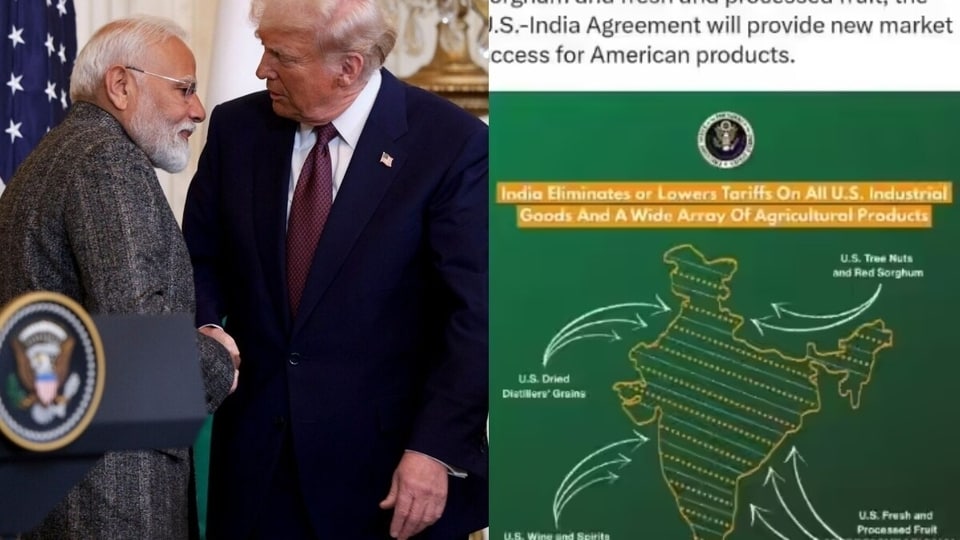
The U-turn move came on Wednesday after the US trade representative's office's X post caught many by surprise. The map clearly differed from earlier maps shared by Washington, which were sensitive to Pakistan's concerns and had clearly marked PoK.
ALSO READ | Key revisions made in White House factsheet on US-India deal | What's changed
To be clear, the map showed the entire Jammu and Kashmir region, including Pakistan-occupied Kashmir, as part of India, and depicted Aksai Chin, a region claimed by China, also within India. The demarcation was in line with New Delhi's long-held stance on its territorial integrity.

While India has clearly stated that it does not require any external validation for its territorial claims, the US sharing such a map held a strategic value. It suggested that Washington had clearly and deliberately moved on from its previous representations.
However, the deletion of the post now brings a cloud of questions to the situation. Neither India nor the US has made any official remarks regarding the map.
Coincidentally, the White House has quietly revised its fact sheet on the India-US trade framework, removing a claim that New Delhi would reduce tariffs on "certain pulses", walking back assertions that India would remove digital services taxes and had "committed" to purchase $500 billion in American products.
Why did it matter?
The timing of such a map, in line with India's territorial integrity, gained significance against the backdrop of an interim trade agreement with the US.
ALSO READ | 'Arunachal is in India': Delhi hits back at Beijing over flyer’s case
The trade deal has led the Trump administration to reduce the tariffs to 18 per cent, along with the removal of the 25 per cent penalty tariff imposed on New Delhi for its Russian oil purchases.
India's stance on PoK, Aksai Chin
For a long time now, India has reiterated that Jammu and Kashmir is an integral and inalienable part of the country. The ministry of external affairs has, on many occasions, objected to and rejected maps shared by China, Pakistan, or any other third country that mark India's territorial boundaries otherwise.
At a global platform such as the United Nations, as well, India has clearly stated, "Jammu and Kashmir was, is, and will always be an integral part of India. Pakistan continues to illegally occupy the territory of Jammu and Kashmir, which it must vacate."
New Delhi had stated that Pakistan's repeated references neither validate their illegal claims nor justify their state-sponsored cross-border terrorism.
Previously, in a "standard map" released by China, the country had staked claim over Arunachal Pradesh, the Aksai Chin region, Taiwan and the disputed South China Sea.
In November last year, after a woman from Arunachal Pradesh was harassed at the Shanghai airport over her Indian passport, the MEA expressed strong condemnation of the incident.
During the row, China had once again claimed its rights over Arunachal Pradesh and refuted allegations of the Indian woman's harassment.
However, the MEA clearly asserted that Arunachal Pradesh is an integral and inalienable part of India, saying that it is a "self-evident fact".
"No amount of denial by the Chinese side is going to change this indisputable reality," he added.


