
 E-Paper



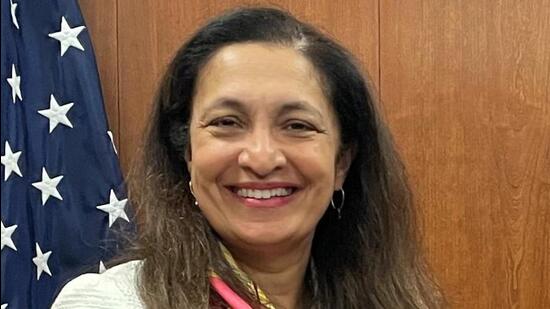
Democratic, pluralistic India is a natural partner: Top US official Uzra Zeya
Uzra Zeya said India-US partnership hasn't been more important for the Indo-Pacific's security and prosperity than at this “inflection point” in world history


NEW DELHI: A democratic and pluralistic India is a natural partner for the US and the bilateral partnership has never been more important for the security and prosperity of the Indo-Pacific than at this “inflection point” in world history, US under secretary for democracy and human rights Uzra Zeya said on Tuesday.
Read here: Heat waves hit US, effects of dry-heat wave in 10 points
In an exclusive interview at the conclusion of her visit to India, during which she met senior Indian officials and civil society groups, Zeya spoke about how India and the US can work together to offer an “affirmative alternative” to countries across the region so that they can exercise their sovereignty at a time when there are concerns about China’s “suppression at home, but also its efforts to export its model externally”. Edited excerpts:
Could you give us a sense of the meetings you’ve had in New Delhi and the priorities in these interactions?
Over the past two days, I’ve had a broad range of productive meetings with senior officials at the external affairs ministry and other government officials, as well as civil society, academia and the philanthropic sector. These meetings are intended to build upon the positive momentum of Prime Minister [Narendra] Modi’s recent historic state visit to the US. For our part, it also builds upon India’s very successful G20 presidency and other top-level engagements. The intensive pace of high-level US-India engagement shows the depth and strength of the relationship. In my governmental and non-governmental meetings, I discussed our shared commitment to an Indo-Pacific that is free, open, connected, prosperous, secure and resilient. For our part in the US, we believe a democratic and pluralistic India is a natural partner for the US. I commended my counterparts for India’s very important contributions to the Summit for Democracy and congratulated them on the ongoing but highly successful Indian G20 presidency. I think all of these engagements in these areas of collaboration truly demonstrate to the world there is no better alternative to democracy when it comes to solving global challenges, but also delivering for our people and for the world. At this inflection point in world history, the US-India partnership has never been more important to the world, but also to the security and prosperity of the Indo-Pacific region.
You referred to follow-ups to the prime minister’s visit, were there any specific issues that came up or that you raised?
If you look back to the very ambitious and detailed joint statement issued from the visit, the underpinning of the unprecedented US-India partnership is our shared democratic values, where we have a stated commitment to continue the Global Issues Forum...but I think there’s also a shared commitment in terms of supporting innovation and technology that strengthens democratic societies, as opposed to undermining them. In the broader Indo-Pacific region, in the neighbourhood supporting more free, more open, more resilient, secure societies in line with the US Indo-Pacific strategy.
Read here: More than half of America's beaches contaminated with poop and sewage: Report
How much of an issue is human rights right now in India-US relations and how can the two sides work together on this?
I think we saw clearly during the prime minister’s historic state visit, a reaffirmation from the US side, from the Indian side of shared values, freedom, democracy, diversity, inclusion, pluralism and equal opportunities for all citizens. We see these values underpinning, standing at the core of an increasingly close but ambitious partnership. And as close partners and friends, we regularly exchange views in a straightforward and respectful way about democracy and human rights and it’s one aspect of the relationship. But also note in my role as under secretary for civilian security, democracy and human rights, I have a global remit where President Biden and secretary [of state] Blinken have clearly articulated and exhorted US diplomats to keep democracy and human rights at the centre of US foreign policy. But obviously, our relationship with India is multidimensional, as we noted in the joint statement, it really touches upon every aspect of the human endeavour from the sea to the stars. So, this is not by any means, the sole issue in the relationship, but rather an underpinning and I think a motivation.
There’s been a lot of debate in India on reports on religious freedoms by the USCIRF and the state department. What are your views on those reports and did they figure in the meetings?
Maybe I can make a clarification here. The US department of state, which I represent, publishes annual reports mandated by the US Congress on human rights, on international religious freedom, on trafficking in persons. These reports are based on objective criteria. In the case of the annual human rights reports, it’s the Universal Declaration on Human Rights to which every UN member has ascribed to. And it’s based on engagement with governments, publicly available information and engagement with civil society and other experts. The annual human rights reports, for example, are among the most widely read reports put out by the department of state. They are meticulously researched and we stand by these reports, and it’s also a long-standing tradition for over two decades. Under US law, we put these reports out.
The US Commission on International Religious Freedom (USCIRF) is independent of the US executive branch and the state department. It is funded by the US Congress, so USCIRF puts out annual reporting and recommendations with respect to religious freedom, which are distinct from the assessments taken by the US department of state and, in this case, the Biden administration.
Did you discuss these reports at any time during the visit?
Well, I can’t go into specific details of our diplomatic discussions, but I would say these reports are an important aspect of US diplomacy internationally on human rights, they are a critical aspect and it’s a process on which government engagement is a core part.
In terms of efforts to keep the Indo-Pacific free and open, could you tell us a bit more on what you plan to do in this sphere? There’s been a lot of interest in your visit to Bangladesh, and could you throw some light on that?
Certainly, I think we share a convergent approach and commitment with our Indian friends, through new groupings such as the Quad, to support a free and open Indo-Pacific that is more prosperous, more secure, more connected, more inclusive, more resilient. I can’t go into too much detail on our diplomatic discussions, but certainly this is integral to regional peace and security and stability, another shared vocation for both of our governments. I’m very pleased to be proceeding to Dhaka immediately after Delhi. In fact, I will be leaving later this afternoon and we look forward to robust discussions with the government on a host of issues, humanitarian cooperation, the elections process, and I think our hope for a peaceful, free and fair elections process, as well as the nexus between Bangladesh’s economic progress and prosperity, which has been the subject of a very substantial and multi-decade development partnership, and the critical role of respect for labour rights and freedom of association towards achieving Bangladesh’s ambitions.
Are there continuing concerns about the Bangladesh elections because the US state department recently made an announcement on restricting issuance of visas to those responsible for undermining the election process in Bangladesh?
I would refer you to the public announcement that our department spokesman made on a new visa sanction authority that is absolutely intended to support free and fair elections, which we think are critical for every democracy, but are essential for democracies to be able to thrive.
There’s been some pushback from South Asia in relation to the human rights situation in the US, people talk increasingly about polarisation in the US. How would you respond to, say somebody in South Asia, raising these issues, where at one time, the US was seen as one of the leading players on human rights, but now more and more people are increasingly asking about such issues within the US?
I think on this point, I would come back to the US Constitution, which in its preamble exhorts us as Americans to continuously work towards a more perfect union, and President Biden has taken this exhortation to heart. You know what we have happening in the US is a recommitment to improving human rights at home, as we reassert US leadership on human rights and democratic renewal internationally. Some of the ways, some of the lines of effort that are so important domestically, or issues like racial equity and justice, you know, his first week in office, President Biden issued an executive order on racial equity, requiring all US government agencies to look at these issue sets and to work collectively to ensure that we are delivering for all Americans. I think one of the measures of a successful and thriving democracy is how does it deliver for all its people? So taking this to heart, on LGBTQI-plus equality, this is another area where President Biden has really led domestic efforts that are coupled with international efforts to advance equality for LGBTQI-plus persons. We see this commitment on issues like the dramatic historic investment in US infrastructure and specifically digital rural broadband, where we’re making a multi-billion-dollar commitment to bring that access to all Americans. This helps inform and in fact inspire our efforts internationally. We believe that one of the many strengths of democracies is their ability to self-correct, their readiness to confront challenges and problems openly, and to work to solve them.
Read here: All you need to know about India's Chandrayaan-3 and its benefits for the US
Another interesting meeting you had in New Delhi was the one with the Dalai Lama and we saw a very strong reaction from China. There are concerns about China’s handling of Tibet and one of the issues of concern to the Indian and American sides is the issue of the Dalai Lama’s reincarnation. The Central Tibetan Administration here is increasingly talking about how young Tibetan people travelling to different parts of the world could be weakening the Tibetan movement. What are your views on those issues?
I would note that I’m very honoured to serve concurrently as US special coordinator for Tibetan issues. On the questions you’ve raised, this comes to my mission as special coordinator, and at the core is a US policy to work to support the advancement of the human rights of Tibetans, who face absolutely severe repression at home on the most fundamental freedoms – freedom of religion, freedom of expression, freedom of association. On religious questions, we have a separation of church and state and an Establishment Clause in the US, so I have no involvement in religious affairs per se. But as a foreign policy question, the US absolutely supports Tibetan Buddhists’ right to practice their religion, to venerate, educate, and ultimately select their own religious leaders, and we believe no foreign government should be interfering in this effort. On this point, I do want to take a moment though to commend India’s decades of generosity, hosting his Holiness the Dalai Lama, as well as thousands of Tibetan refugees.
Since you spoke about human rights in the broader Indo-Pacific, how much of a concern are China’s actions in this field, because we do hear about increasing actions by China that affect human rights and freedoms in various countries, especially small island countries?
We are absolutely concerned by PRC suppression at home, but also its efforts to export its model externally. This is why I think the Quad cooperation and partnership on a free and open Indo-Pacific is so important, and why India’s role is so valued. We are determined in the US to offer an affirmative counterpoint to protect the integrity of international institutions, principles expressed in the UN Charter, of sovereignty, of territorial integrity. One point I want to make, and I think you interviewed my esteemed colleague, National Security Adviser Jake Sullivan during his recent visit, [is that] the White House has made very clear that what the US is seeking is a policy of managing competition with PRC responsibly. So, part of this competition is offering an affirmative alternative where countries of the region - we’re not asking them to choose between the US and China, but we want them to be able to have a choice and exercise their own sovereignty and not be coerced externally from the PRC or from others.


