
 E-Paper



UP polls: In Sonbhadra a quest for land rights, clean air and water
Uttar Pradesh assembly election 2022: While outreach toward tribal communities has helped the party gain support in constituencies with a predominant tribal population, the pending promise of land rights has emerged as a concern for the ruling BJP ahead of the March 7 polls.

 Prefer HTon Google


Sonbhadra: Men leaving home and families for distant places to earn a living is a way of life in Sonbhadra’s Dudhi, a distant part of Eastern Uttar Pradesh.
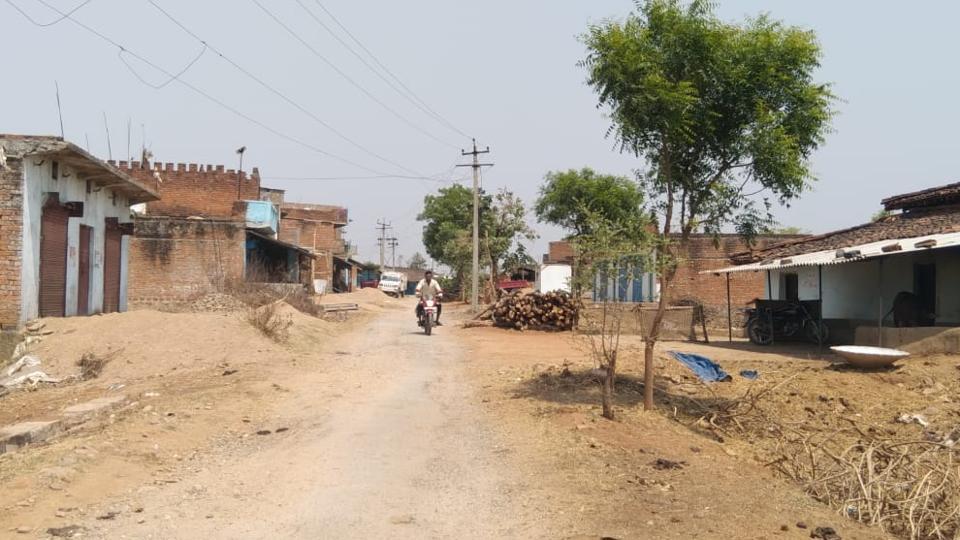
“Pet hai to duniya se bhent hai…(loosely translated as making acquaintance with the world through the stomach),” says Phoolwanti, who uses only one name. Every year, men from her village Nagwa span out in search of work while women stay behind to till the little land parcels that they claim as their own and supplement incomes by working on the fields of others.
“Some come back a few times in a year, some in a few years and some as bodies...” she says about the men.
Phoolwanti is part of the Gond tribe, listed among the Scheduled Tribes that make up for the bulk of the population in the Dudhi. The assembly constituency is reserved for STs and as per census 2011, Sonbhadra’s population is made up of around 23% scheduled castes and 21% scheduled tribes.
Their struggle for sustenance is exacerbated by their long pending quest for land rights. To get the rights to till land, says Kalawati, another Gond, is an unending battle and the community is at the mercy of the forest officials and other government agencies that threaten to evict them. “We are constantly harassed by the forest guards...” she says.
While the government has promised pattas or land titles to ST communities, people complain that not only does the government not recognise the claims, when it does give the rights, it does for considerably smaller land parcels than what the residents stake claim to.
To prove their rights over the land, people need to show proof of having lived there for three generations or 75 years.
“In Sonbhadra alone just about 15% of the total claimants got the titles and those too were over land that has their home, well, and a garden patch, not the land they cultivate, so this means taking away their land,” says Maheshanand Bhai, who runs the Gram Seva Samiti, a non-government organisation in Dhudhi.
He says the tribals do not have proper documents to prove their rights over the land. “They also practised what is known as zoom farming, which means they cultivate a piece of land for a year or two and then leave it to replenish for the next couple of years moving to another land parcel. The forest department has arbitrarily identified these unused land parcels as forest areas and barred them from the cultivating,” he says.
Article 4 and article 20 of Reserve Forest Act are used by the state to deprive the tribals of the land and forest rights, Maheshanad adds.
Under Article 4 of RFA, a particular area is proposed to be deemed as a reserve forest and later after consultation with local people it can be declared as a reserve forest. “But it is mandatory to consult the people before changing the status of the area and that does not happen,” he says.
Hari Krishna who is from the Kharwar community says he submitted a claim for 19 Bigha (11 acres) of land but has been allocated five . “Our MPs and MLAs show up only during elections. No efforts are being made to ensure that migration from this area stops or some wells are constructed for irrigation purposes. As on date we are dependant on the monsoon,” he says.
BJP’s tryst with land laws
The BJP government’s outreach toward tribal communities aided by the support of the Vanvasi Kalyan Ashram, an offshoot of its ideological fount, the RSS, has helped the party gain support in constituencies that have a predominant tribal population.
While schemes such as free ration, shramik cards, and homes under the Pradhan Mantri Awas Yojana have ensured that the support has not eroded, the pending promise of land rights has emerged as a concern for the party ahead of the March 7 polls.
A BJP leader in the state says the party is wary of upsetting the community as it could impact the polls “the way it did in Jharkhand.”
One of the reasons that was stated for the BJP’s loss in the 2019 Jharkhand election was the tribal communities’ opposition to the then chief minister Raghubar Das’s proposed legislation to acquire tribal land for setting up industry.
“Unlike the open protest in Jharkhand we sense a simmering discontent here,” added the BJP leader, who asked not to be named.
It was perhaps in acknowledgment of this sentiment that the state government in 2020 announced that it would review the cases where applications were rejected. A committee was announced, but the outcome still awaited.
The decision also came close on the heels of the 2019 massacre of 10 Dalits allegedly over a land dispute. “These people were locked in a battle for land rights with the village pradhan. Whatever the reason, it became a political hot potato. While the government promised action, it brought to fore the deficiencies in the system. Sonbhadra mein Son nadi hi nahi khoon bhi behta tha (not just the river Son but even blood flowed here,” the BJP leader said.
The district was once a hotbed of Naxal activities and locals say the region was marred by armed conflict which resulted in many deaths.
Clean air and water
While the BJP’s workers are out reiterating that the party will make good on its promises, tribal communities have a list of demands, from clean water to improved healthcare to education to land titles to a policy on relocation of those displaced by construction activities.
Virendra Pratap Singh, who works as a coordinator at the Gram Seva Samiti, says that even after a protracted legal battle for clean drinking water, the government is yet to follow through the court’s order. “The Supreme Court announced a compensation to those who were affected by fluoride contaminated water, which was paid but they (the government) were also asked to ensure that villagers get clean supply of water. Some borewells were dug and sets to purify water using solar energy were installed but, in many places, they are crying for maintenance and the villagers are back to drinking contaminated water.”
Meanwhile, the presence of large factories in the region means poor air quality. Clouds of dust and a largely desertified expanse announce the start of Sonbhadra’s territory.
“When air quality dips in Delhi there is so much noise. Here people breathe hazardous air every day. Consequently, we have lung ailments,” says Singh, who feels people-oriented issues should have been at the core of all election narrative.
Hemmed by four states—Bihar, Jharkhand, Chhattisgarh and Madhya Pradesh—Sonbhadra is the second largest district in the most populous state of Uttar Pradesh.
There are four assembly constituencies in Sonbhadra, Dudhi and Obra, which are reserved for STs and Ghorwal and Robertsganj. While BJP won three seats, its ally Apna Dal’s Hari Ram won the Dudhi seat in 2017 after defeating BSP’s Vijay Gond. In the 2017 elections, the BJP won 36.6% of the vote share in Sonbhadra and BSP was second with 25.2 %.
Residents in Robertsganj, the Lok Sabha constituency of which Sonbhadra is a part, say there is probability of the BSP gaining in these elections is high.
“Last time the margin of victory was not very large. The (BJP) legislators are aware of the public anger against them. Recently (BJP MLA) Bhupesh Chaubey had to hold his ears and apologise. People can see through such gimmicks,” says Ramavatar, a labourer in Robertsganj market. He says the apathy shown by the legislators has made people grow distant from the party.
Delayed NREGA wages and relocation woes
To supplement incomes that have dried up during the pandemic, the government announced work under its flagship rural job guarantee scheme, MGNREGA, but residents claim that the money has been delayed. A resident of Nagwa said she and 24 others worked for 22 days on “bhoomi sudhar” (work on farm land) at a local farm and were paid for just 14 days. “It was in December and we are still waiting for the money.”
Delayed payments are also a reason why some people choose not to work on MGNREGA projects and instead work for private contractors for less money, since payments are made on time.
In village Amwar, election- talk is all about how successive governments have failed to create a template for relocation of people who are evicted for construction of dams and other infrastructure projects. “The government paid ₹7.5 lakh per family for relocation necessitated by the construction of the Kanhar Dam and said they will give us land to rebuild houses but there are hundreds of names that are missing from the list of beneficiaries. So, the villagers have decided that we will move only when everyone gets justice despite pressure from the government to move,” says Phaneshwar Jaiswal, a former village head.
He says the delay has had many consequences. “When people got money some of them blew it up, some private insurance companies swooped down promising returns ...many have already lost money.”
The mood turns grim when he talks of how the neighbouring Sundari village will vote for the last time. After this election, the village will cease to be on account of the dam related relocation.
Watching street performers perform as part of a party’s election campaign, the villagers laugh off the promises being made as being akin to the “gold rush”. In 2020 there was much excitement when reports of 3,500 tonne of gold being discovered in Sonbhadra turned the focus on the region. The Geological Survey of India estimated the reserves at a mere 160kg spread over an extremely wide area.


