E-Paper



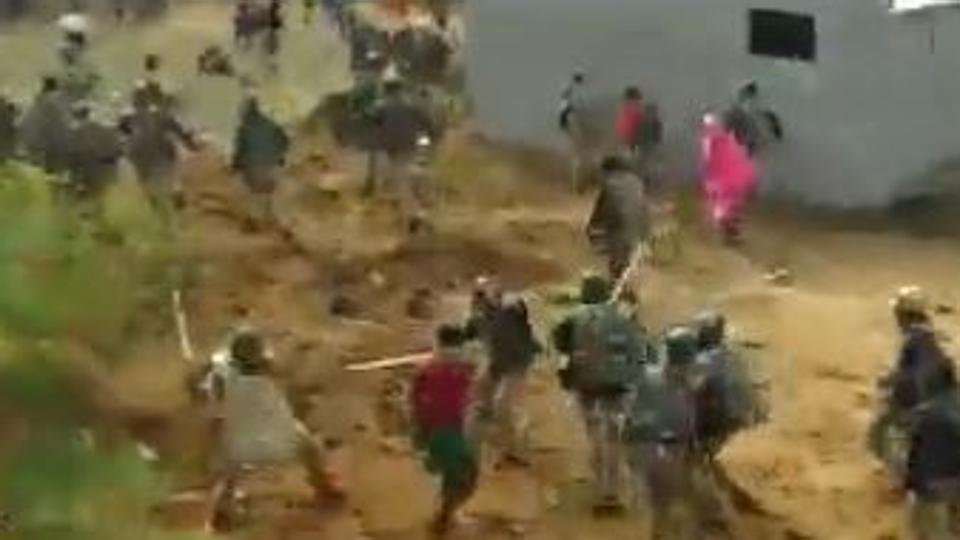
Villagers clash with police at steel plant site in Odisha’s Jagatsinghpur
Jagatsinghpur Superintendent of Police Akhileswar Singh said police personnel were attacked by villagers and eventually used mild force to disperse them.

 Prefer HTon Google


Bhubaneswar: Around two dozen villagers including women and teenagers protesting the proposed steel plant by JSW Steel at Dhinkia village of Jagatsinghpur district were injured after police resorted to lathi charge to disperse them.
Police said Debendra Swain, a former member of the panchayat samiti spearheading the protest against the project, was arrested along with two others as he led a group of armed miscreants to attack the police and government officials.
Jagatsinghpur SP Akhileswar Singh said police had to act as the villagers started throwing urine on them and some even attacked the police with razors. “We had to do mild lathi charge to disperse the villagers. At least 7 policemen have been injured in the scuffle,” said Singh.
As many as 15 platoons (450 personnel) of police were deployed in Dhinkia area in view of the prevailing situation, news agency PTI said, quoting a local official said.
Prashant Paikray, spokesperson of the Jindal Pratirodh Bheetamati Suraksha Samiti, the organisation protesting the steel plant in the area, alleged police personnel assaulted people when they tried to stop the cops from entering the village to demolish the betel vine plantations.
Erasama Tehsildar PN Das, said the villagers had given consent to acquire their betel vines following which the administration demolished them.There is no illegality, he claimed, according to PTI.
“When the villagers tried to stop the police from entering Dhinkia, police charged them with batons sparing none, not even women and children. Many villagers have received serious injuries,” said Paikray.
The villagers alleged that the demolition drive was arbitrary and designed to expedite land acquisition for the JSW project. “I joined the protest against the demolition drive of our betel vine. But police beat us up mercilessly,” alleged an old woman.
In 2017, JSW Utkal Steel Limited, led by industrialist Sajjan Jindal, proposed to set up a 13.2 million tonnes per annum integrated steel plant at the same site that was initially allocated to Korean steel major Posco more than a decade ago. The Korean company, which signed a pact with Odisha government, dropped out in 2017.
The new steel plant by JSW in Jagatsighpur is expected to be connected with the company’s proposed 30 MTPA iron-ore grinding plant in Keonjhar district via a 312 km-long slurry pipeline.
A 52 MTPA captive jetty located near the mouth of Jatadhar river will also cater to the import and export requirements of the company. But ever since the company signed up for setting the steel plant, it is facing similar protests in Dhinkia who say they did not want the project.
Earlier on December 20 last year, tension prevailed in the village following a violent face-off between the villagers and the police. The villagers opposed the administration’s move to demarcate the boundary of the village which forms part of the project site of JSW. Since January 1, an uneasy calm prevailed in the area as the people of Dhinkia installed bamboo gates at the entrance of the village.