
 E-Paper



Visibility, weather, tech error? What ex-IAF pilot said on Baramati crash that killed Ajit Pawar | Watch
Ajit Pawar was on way to his hometown, Baramati, to address four public meetings ahead of Zilla Parishad elections on Wednesday when the plane crash occurred.

 Prefer HTon Google


A fatal plane crash in Baramati of Pune district in Maharashtra led to the death of deputy chief minister Ajit Pawar and four others, including his staff and plane crew on Wednesday morning.
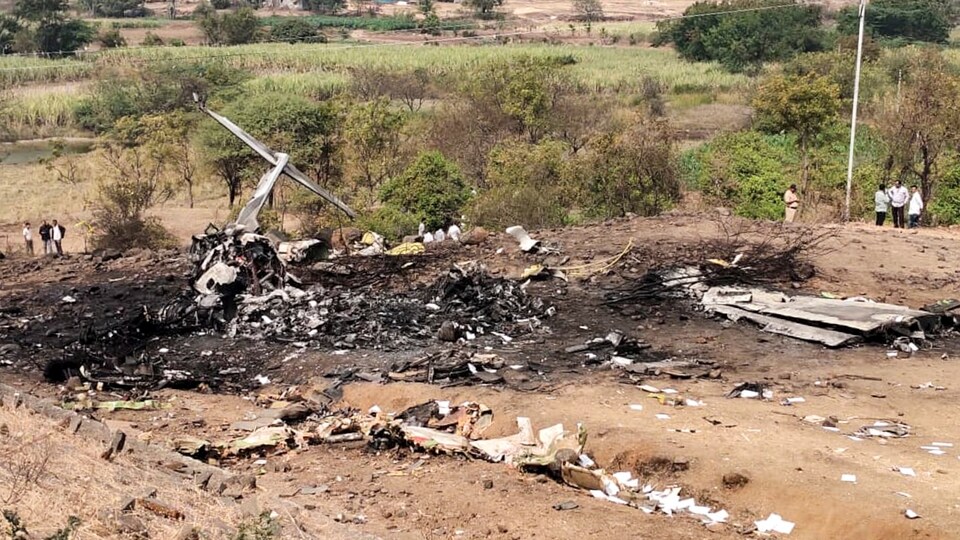
As condolences pour in over the incident that shocked the country and the political circle, questions now emerge on what led to the crash even as Union aviation minister K Ram Mohan Naidu said the preliminary information showed visibility at the Baramati airport was poor, as the plane made two attempts at landing before it crashed by the runaway and burst into flames. Track updates on Ajit Pawar death
The victims, besides Ajit Pawar, have been identified as his personal security officer Vidhit Jadhav, flight attendant Pinki Jadhav, and pilots Sumit Kapur and Shambhavi Pathak.
Also read: Ajit Pawar dies in freak plane crash, Maharashtra announces 3-day mourning: 10 updates
Now, a former pilot of the Indian Air Force (IAF) and a friend of pilot Sumit Kapur has said the cause could be a combination of factors such as bad weather, technical issues, or pilot judgment error.
Lack of electrical aids at Baramati airport
Ehsan Khalid, a former IAF pilot, flagged lack of enough electrical aids at the Baramati airport to support operations. He said that under such circumstances, the actual visibility may have been lower than was actually reported.
Also read: CCTV footage captures Ajit Pawar plane crash horror, moment it burst into flames
“I have known the pilot since my Sahara (airline) days, almost two decades ago. He was an experienced pilot. I am told that as the plane was making its first approach, it had to go around and make a second approach,” Khalid said in a video posted by the ANI.
Apart from 18 years of military experience, Khalid also worked with airlines such as Sahara, Jetlite and Kingfisher.
“I do not know whether the first approach was abandoned and the missed approach was carried out due to bad weather visibility alone, or whether there were also technical issues with the aircraft,” he added.
Marginal visibility
Referring to media reports about the visibility being marginal, Khalid said if the visibility would have been really bad, the pilot would not have attempted to land.
"Marginal visibility means the situation was unclear, a kind of ‘go or no-go’ condition," he said.
Listen to what he said on the plane crash:
The plane crash that killed Ajit Pawar
The Maharashtra deputy CM was on his way to his hometown, Baramati, to address four public meetings ahead of local elections on Wednesday. However, the chartered plane that was carrying him crashed after making two landing attempts at the Baramati airport.
The crash occurred around 8:48 am, prompting immediate deployment of investigation teams from the DGCA and the Aircraft Accident Investigation Bureau (AAIB), while the BJP-led state government announced three days of state mourning.
According to Flight Radar data, the Learjet 45 plane left from Mumbai at 8:10 am and disappeared from radar shortly before the crash. The pilot had reportedly alerted air traffic control about visibility issues moments before the crash, though details will emerge in the probe.


