
Western Ghats green zone to be 47,825 sq kms, 20% less than expert panel’s proposal
A draft notification by the environment ministry allows the ongoing mining for the next five years and development of small residential complexes within the proposed area
A proposed ecologically sensitive no mining zone in the Western Ghats, a green hotspot, would shrink to around 56,825 square kilometers, down from around 77,000 sq kms recommended by a high level panel.
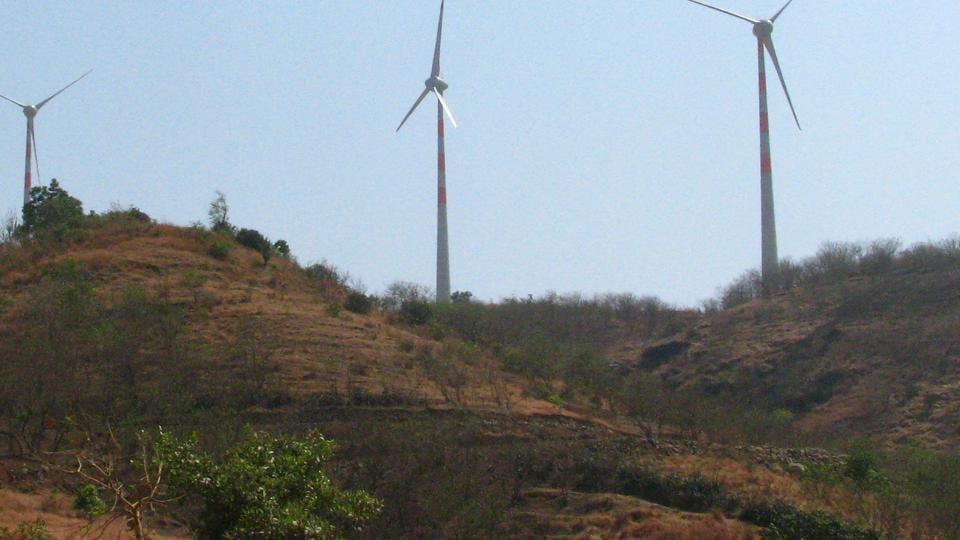
A draft notification by the environment ministry this week allows the ongoing mining for the next five years and development of small residential complexes within the proposed ecological area, which will be 20% less than what the expert panel had recommended.
“All new and expansion projects of building and construction with built up area of 20,000 square metres and above and all new and expansion townships and area development projects with an area of 50 hectares and above or with built up area of 1,50,000 square metres and above shall be prohibited and there shall be no restriction on repair or extension or renovation of existing residential houses in the eco-sensitive area,” the draft rule says.
The high level panel headed by former planning commission member K Kasturirangan had recommended a complete ban on mining and zero tolerance towards construction activity in the Western Ghats, considered as one of the world’s best ecological hotspots.
The rule also provides life-line to the existing highly polluting industries categorised as “red” by the Central Pollution Control Board (CPCB) and existing thermal power plants, saying their “expansion will not” be allowed. However, new “red” category industries and thermal power plants will not be allowed in the zone spread across six states on the western coastline of India, the rule says.
The dilution has been done to appease the state governments which had opposed the recommendations of the Kasturirangan panel in 2013.
The proposed rule also accepts the demand of the state governments to allow hydro-power projects in the ecologically sensitive area with a condition of maintaining 30% water flow during lean (summer) season.
Karnataka and Maharashtra had proposed hundreds of small hydro power projects in the Western Ghats which environment experts say could have adverse impact on local marine population. The rule asks the states to conduct a comprehensive study to establish a baseline for each hydro power project.
The eco sensitive zone in the Western Ghats is important to ensure living space for highly unexplored animal and plant species. Around 80 new species of frogs, 30 of fresh water marine and several plants have been discovered there in the last decade. “Many more are to be discovered in the vast space of 1,60,000 sq kms,” said Madhav Gadgil, who headed the first panel on the Western Ghats constituted by the UPA government.
The rule will be notified once people submit their response within next 90 days.
ABOUT THE AUTHORChetan ChauhanChetan Chauhan is the National Affairs Editor looking into all aspects of news and features from across India. A Chevening scholar with over three decades of experience in reporting and news management, Chetan has extensively covered all important aspects of the social sector, political economy, environment and climate change nationally and internationally. He did a journalism course at the Reuters Institute of Journalism in Oxford and Digital Media training at Nanyang Technological University in Singapore. He started as a reporter with The Statesman in 1996 and joined the Hindustan Times in 2000 in the metro bureau covering environment, crime and Delhi politics. He covered hot local news, from the Jessica Lal murder case to the rebellion of Delhi Congress MLAs against then Chief Minister Sheila Dikshit, to the replacement of toxic vehicle fuel with cleaner compressed natural gas (CNG) in the national capital. Some of his stories on air pollution became part of the Supreme Court’s landmark MC Mehta versus Government of India case in the National Capital Region (NCR), forcing the government to take corrective measures. As part of the national political bureau since 2004, he covered important central sectors such as environment, education, social justice, labour, rural development, water resources, renewable energy, agriculture, broadcasting and the Planning Commission for more than a decade producing several exclusive and investigative breaking stories. His specialisation is the environment, having covered at least a dozen United Nations global conferences on climate change, biodiversity and wildlife including climate summits in Paris, Copenhagen and Bali. He also covered India’s two five-year plans ---11th and 12th and reported on drafting and execution of right based laws such as Right to Education, Right to Information and rural job guarantee law, MG-NREGA, now being introduced in new format as VG-RAM-G Act. He has in-depth knowledge of social sector issues. He was one of the first to report on tigers vanishing from Sariska and Panna wildlife reserves in 2004 and 2008, respectively, leading to the setting up of the National Tiger Conservation Authority (NTCA) and the introduction of stringent penal provisions for poaching. He has written extensively on the rising human-animal conflict in India and the degradation of India’s biodiversity hotspots because of mining and other activities. Since 2004, Chetan has covered Parliament comprehensively and participated in training on the nuanced coverage of Parliament proceedings. He has travelled extensively across India to cover national and provincial elections since 1998, especially in the Hindi heartland states, considered India’s road to power. He writes a regular column for Hindustan Times, Ecostani, on important national politics, economy, Himalayan ecology and environmental issues. His other responsibilities include providing inputs for edits and edit page articles for the publication, apart from managing news flow from across India.Read More

E-Paper


