E-Paper



What is the Venezuela oil link in the India-US trade deal? Explained
With US tariff penalties tied to Russian oil and Trump pushing a shift to US and Venezuelan crude, PM Modi's outreach to Caracas gained strategic weight.

 Prefer HTon Google


Prime Minister Narendra Modi’s phone call with Venezuela’s acting president Delcy Rodriguez, days before the India–US trade deal announcement, has emerged as a key diplomatic move in the backdrop of a tense year in ties with Washington, where tariff pressure was directly linked to India’s purchase of Russian oil.
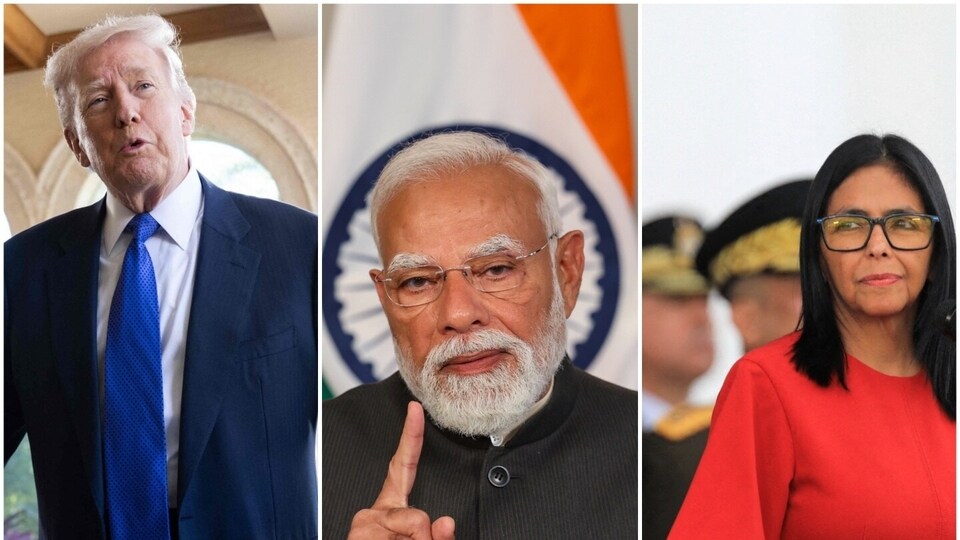
Over the past 12 months, India–US relations were strained by steep American tariffs, repeated negotiations and public disagreements over New Delhi’s energy imports from Russia. US President Donald Trump repeatedly tied tariff relief to India reducing Russian crude purchases — and said India should instead buy more oil from the United States and potentially Venezuela.
Against that backdrop, Modi’s call with Rodriguez, focused on expanding cooperation in energy, trade and investment, came at a crucial moment.
Tariffs linked to Russian oil
The India-US trade dispute escalated in 2025 when the US imposed tariffs that eventually took the total levy on Indian goods to 50%, including a 25% punitive component linked to Russian oil purchases.
India remained one of the largest buyers of discounted Russian crude after the Ukraine war, with imports rising sharply in recent years. New Delhi consistently defended the purchases as necessary for energy security and price stability.
Trump repeatedly cited these imports as a sticking point in trade talks. As recently as October 2025, he said Modi had indicated India would stop buying Russian oil, though no agreement followed then.
What Trump said in the deal announcement
Announcing the new deal after his latest phone call with PM Modi, Trump said the US would cut tariffs on Indian goods from 50% to 18%. He claimed India agreed to stop buying Russian oil and replace those imports with supplies from the US and Venezuela, alongside other trade commitments.
Trump wrote that the shift in oil sourcing would also help efforts to end the Russia–Ukraine war.
A White House official later told HT that the separate 25% punitive tariff would be dropped as part of India’s agreement to cease Russian oil purchases, bringing the final tariff level to 18%.
Modi, in his public post, confirmed the tariff reduction and welcomed the move but did not explicitly mention Russian oil or replacement sourcing.
The Venezuela factor
Just days before the trade breakthrough, PM Modi spoke with Venezuela’s acting president Delcy Rodriguez. The two leaders agreed to deepen and expand bilateral ties across sectors including energy, trade, investment, digital technology, health and agriculture.
The call was the first between the two since Rodriguez took charge as interim president. Both sides said they would take India–Venezuela relations to “new heights” and strengthen cooperation across sectors.
The timing drew attention because Trump, in his trade deal post, explicitly named Venezuela — along with the US — as a potential replacement source for Indian crude imports. Venezuelan oil is broadly similar in grade to the heavier Russian crude processed by several Indian refineries, though analysts note supply constraints could limit full substitution.
A year of friction and frequent Modi–Trump calls
The tariff and oil dispute played out alongside prolonged negotiations and political sparring. During the stalemate, US commerce secretary Howard Lutnick claimed in a podcast that a deal had collapsed at one point because “Modi didn’t call” Trump.
India’s Ministry of External Affairs rejected that claim, saying Modi and Trump had spoken eight times by phone during the year, and that engagement had continued even when talks were stuck.
HT also reported a Modi–Trump phone call in October 2025, when trade tensions and tariff issues were discussed but no breakthrough followed.
Breakthrough after deadlock
The impasse finally eased after the latest Modi–Trump call this week, when both leaders announced a concluded trade deal framework and tariff cut. Union minister Ashwini Vaishnaw described the pact as a “win-win” agreement for both economies.
With Washington directly linking tariff relief to oil sourcing and naming Venezuela as an alternative supplier, Modi’s outreach to Rodriguez — focused in part on energy cooperation — is being seen as a timely diplomatic step ahead of the trade reset.
Full details of the trade and energy arrangements are still awaited, but after a year of tariff shocks and oil-linked pressure, energy diplomacy has clearly been central to the turnaround in India–US trade ties.