
 E-Paper



Who is Chanderkant Jha, the ‘Butcher of Delhi’ caught by police today?
Chanderkant Jha's case gained popularity recently due to a documentary named after him - "Indian Predator: The Butcher of Delhi".

 Prefer HTon Google


Notorious serial killer Chanderkant Jha, also known as the 'Butcher of Delhi,' was caught on Saturday by police after a months-long manhunt, reported news agency PTI.
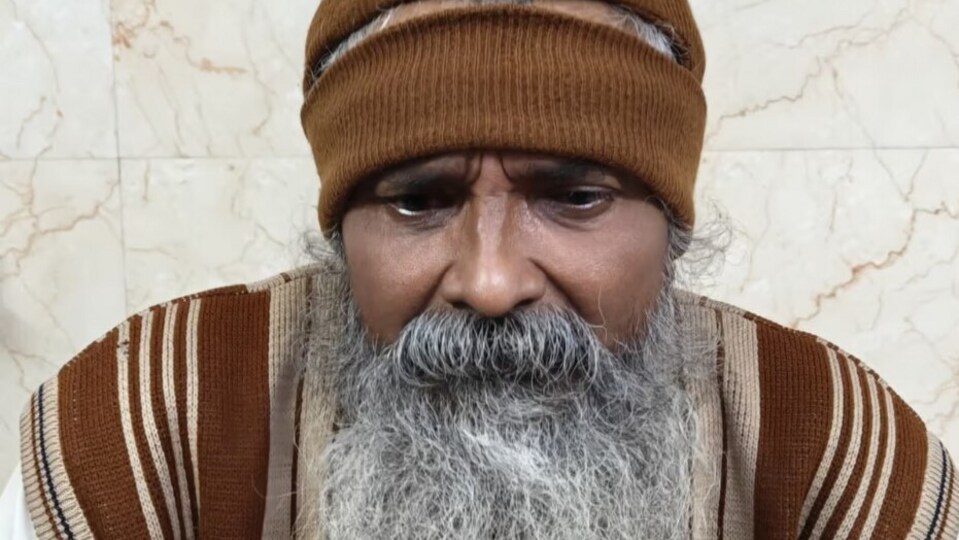
The 57-year-old criminal had evaded arrest for more than a year after skipping parole in October 2023. Acting on a tip, the Delhi police arrested him on January 17, attempting to flee to Bihar from the Old Delhi Railway Station, stated Additional Commissioner of Police Sanjay Kumar Sain.
Jha's case gained popularity recently due to a documentary named after him - "Indian Predator: The Butcher of Delhi".
Who is the ‘Butcher of Delhi’?
Chanderkant Jha was responsible for killing and dismembering 18 victims in West Delhi from 1998 to 2007, earning him the name of the ‘Butcher of Delhi’.
Jha, born in 1967, migrated to Delhi from Bihar in search of work in 1990. He resided near Azadpur Mandi and worked in various low-income jobs since he had only studied up till eighth grade. He was married twice and had five daughters as well.
Also Read: Punjab serial killer arrest: Disparaging remarks on sexuality, body triggered murders
Chanderkant Jha's modus operandi was to befriend people, mostly other migrants, by providing them with food, shelter and work.
However, any minor infraction on their end would be perceived as a ‘wrong’ justifying the extreme punishment Jha dealt out.
Chanderkant Jha's first recorded murder was in 1998, when he killed Mangal alias Aurangzeb in Adarsh Nagar, Delhi, and scattered the man's body parts in Delhi.
Also Read: Punjab serial killer wrote 'dhokebaaz' on victim's back, killed 11 in 18 months
He was arrested in 1998 and then released in 2002, after which he continued to leave a trail of gruesome murders.
In June 2003, Jha murdered his associate Shekhar in Haiderpur believing him to be a drunkard and liar. Then in November of that year he killed a migrant from Bihar called Umesh for “betraying him” and in a bold move dumped his body near Tihar jail.
In 2005, he killed a man named Guddu for smoking marijuana. He killed a man named Amit in 2006 for allegedly being a womanizer and left his body outside Tihar jail as well.
In October 2006, Amit, accused of womanizing, met a similar fate, with his body left outside Tihar Jail. In 2007, two bodies, a man named Upender and one named Dilip, ended up outside Tihar's gate number 1 months apart. One of them was killed for having an illicit love affair, while the other was killed for eating non-vegetarian food.
In 2013, Jha was finally convicted of three murders and earned two death sentences which were later commuted to a life imprisonment sentence. However, he was granted parole in 2023 for 90 days, during which he escaped.
Additional police commissioner Sain said that over several months, a team tracked and interrogated family, friends and individuals Jha had previously worked with across Delhi-NCR, Haryana, Bihar and Uttar Pradesh. There was a bounty of ₹50,000 offered for Jha's capture as well.


