
 E-Paper



Why India's first chief election commissioner Sukumar Sen deleted lakhs of women from voter rolls
In the early 1950s, India was preparing for its first election. When officials prepared the electoral rolls, around 28 lakh women were deliberately left out.

 Prefer HTon Google


It was the early 1950s. India, a young nation, was preparing for its first general election. The Constitution had given every adult the right to vote, regardless of gender, caste, wealth or education.
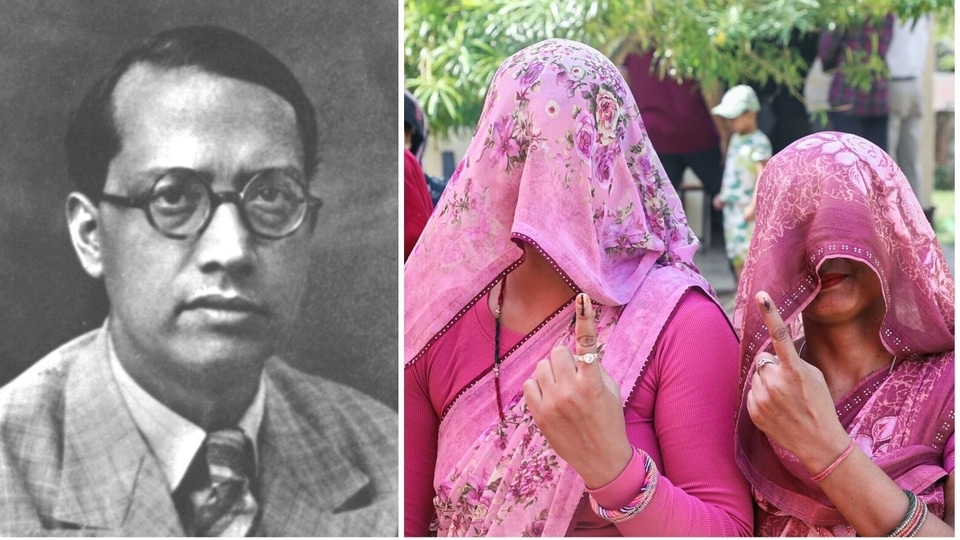
There was, though, one rule that Sukumar Sen, India's first chief election commissioner, was unwilling to compromise on: a woman had to be registered in her own name.
Around 28 lakh women were left out of the electoral rolls for the first general election in 1951-52.
Woman: Just a mother or wife?
When officials began preparing the electoral rolls, they came across a problem in parts of northern India. Some women did not want to give their names, Election Commission records say.
In many regions, social customs forbade women from speaking their own names to strangers. When officials asked for details, women identified themselves through male family members. Voter entry drafts listed names like “Ramlal's wife” or “Mohan's mother”. Sen refused to accept such entries.
He declared that every voter must register under her own individual name. A relative's name was not enough. When nearly 28 lakh women refused to provide their names, Sen struck them off the electoral rolls. He insisted that women must exist on paper as citizens, not just as dependents.
Historical Election Commission accounts describe this as one of Sen's most progressive decisions while preparing the first electoral rolls.
Fixing the electoral rolls for 1957
Sen did not leave those women behind. After the 1951–52 elections, he launched a massive cleanup drive. He instructed election officers to register women by their actual names. He brought political parties and local women's organisations into the campaign.
The result was a much larger female electorate. The 1957 election had about 8.9 crore women electors, according to electoral data, compared with about 5.6 crore in 1952.
Building democracy
The Constitution gave every adult the right to vote, without conditions based on property, education, caste or gender. This was a major change from British-era elections, when voting was limited to people who met conditions such as property ownership or tax payments.
The scale of the first election was huge. India had a population of about 36.5 crore in the 1951 Census, with around 17.2 crore people aged 21 and above eligible to vote. Literacy stood at just 16.6%. Officials had to prepare electoral rolls, train staff and set up polling stations across the country.
The first election took place between October 1951 and February 1952. Indelible ink was used on voters' fingers to prevent impersonation and double voting.
Historian Ramachandra Guha described Sen as “the man who had to make the election possible” and an “unsung hero of Indian democracy”. Sen left no memoirs and apparently very few private papers.
Journalist Vikas Lather notes that a road in West Bengal's Burdwan district is named after Sen. He also writes that Sen was a thinker who believed republican forms of government had existed in ancient India.
There were no EVMs, just steel boxes
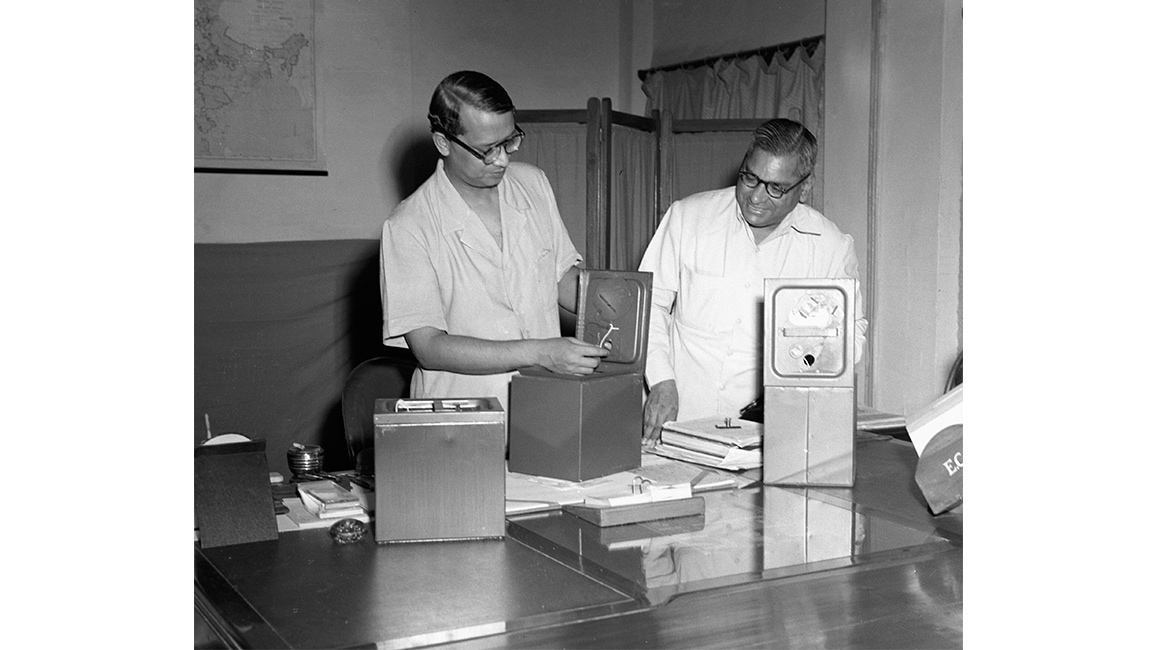
The first election looked nothing like today's polls. Voters did not press a button. They received a ballot paper and deposited it into the box assigned to their chosen candidate.
That meant multiple ballot boxes could sit at one polling station, one for each candidate. Candidate names, party symbols and other identifying details were displayed on the boxes to help voters, many of whom could not read.
The system required an enormous number of boxes. One of the companies that helped meet the demand was Godrej & Boyce. Its new factory at Vikhroli in Bombay produced 12.83 lakh steel ballot boxes in about four months. Workers produced around 15,000 boxes a day, sometimes working in three shifts.
There was even an engineering problem to solve. After more than 50 designs were tested, a factory worker, Nathalal Panchal, developed an internal locking mechanism that helped make the boxes secure without the cost of an external lock.
Who was Sukumar Sen?
Sen was an Indian Civil Service officer who became India's first Chief Election Commissioner in 1950. He served from March 21, 1950 to December 19, 1958.
He oversaw the first Lok Sabha election and elections to the state assemblies as well. The first Lok Sabha election involved 489 seats, while around 3,283 seats were contested in the state assemblies.
After leaving office, he helped Sudan organise its first parliamentary elections based on universal adult suffrage. India awarded him the Padma Bhushan in 1954 for his contribution to public service.


