
 E-Paper



Why is Tawang in Arunachal Pradesh important to China?
The PLA transgression in Yangtze plateau is an annual affair, since the PLA intruded into Somdorong Chu in 1986-87, as a part of Chinese plan to show that the territory is disputed. Just like the then Indian Army Chief Gen K Sundarji launched a counter to Somdorong Chu without even informing the then government, the Indian Army this time too was prepared for the PLA and repelled them.

 Prefer HTon Google


During the India-China Special Representative dialogues on boundary resolution, State Councilor Wang Yi apparently wanted to discuss status of Tawang in Arunachal Pradesh as part of the dialogue. It is learnt that his Indian interlocutor, National Security Advisor Ajit Doval, told Councilor Wang that they would have to permanently wind up the dialogue as Tawang is non-negotiable for India. The 22nd round of SR dialogue was held on this day three years ago.
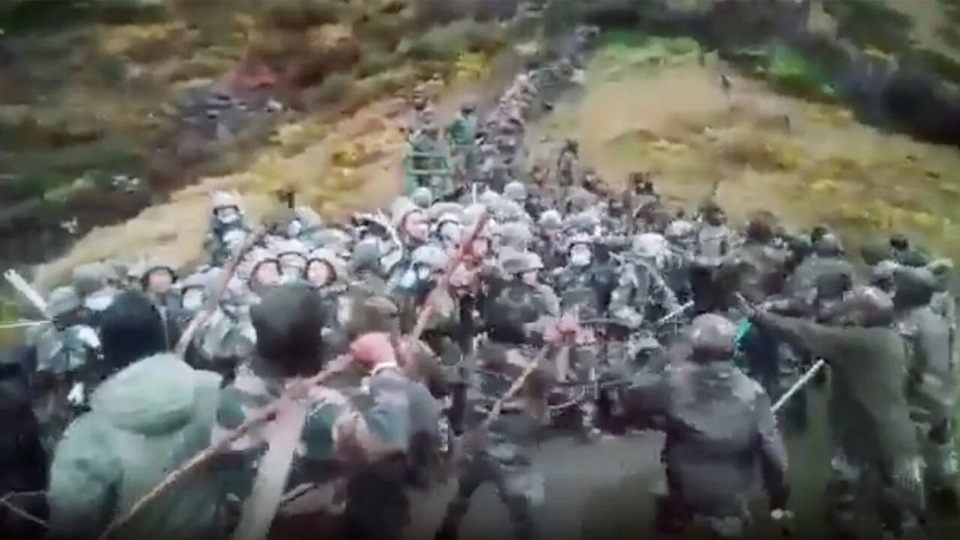
While the Opposition parties predictably have made hullabaloo about the PLA transgression at Yangtze plateau, north-east of Tawang, on December 9, the same happened on October 27, 2021, and has been happening since 1986-87 Sumdorong Chu incident where brave Indian Army Chief General K Sundarji retaliated to PLA intrusions with counter deployments without even asking the then Rajiv Gandhi government.
ALSO READ: Is Tawang skirmish a PLA message after Auli Indo-US exercises?
This time too, the Indian Army was prepared for the transgression and repelled it as the main PLA objective of this annual transgression is to stake claim on Yangtze plateau and mark the territory fully under Indian Army control as disputed. To say that the Indian Army or intelligence was caught by surprise is untrue.
The Yangzte plateau is around 15 kilometers long and 10 kilometers wide with heights ranging from 14000 to 17000 feet. The plateau is critical to the defence of Tawang as it gives Indian Army advantage to dominate Chinese positions across the Line of Actual Control (LAC) and gives them heads-up in case of a surprise PLA attack in the area to gain tactical advantage over Tawang town. But there is more to Tawang, which fell to PLA thanks to inept military and political leadership in the 1962 war.
Tawang and Yangtze are key to Tibetan Buddhism, which the Communist Party of China (CPC) is trying to co-opt as part of Sinicization of Tibet. Tawang is the birthplace of sixth Dalai Lama Tsangyang Gyatso, who was reincarnation of the fifth Dalai Lama Ngawang Lobsang Gyatso or Great Fifth, the first Dalai Lama to become the spiritual and temporal head of Tibet.
Since Tawang is the birthplace of sixth Dalai Lama, this gives India permanent locus standi in the hallowed Dalai Lama institution. The 14th Dalai Lama Tenzin Gyatso fled to India to escape Chinese oppression during 1959 Tibet uprising and crossed into Tawang on March 30, 1959.
The importance of Tawang to Tibetan Buddhism dates centuries before the 14th Dalai Lama crossed over from occupied Tibet in 1959. It was in the eighth century that master of Tantric Buddhism, Padmasambhava, crossed over to Tibet via Tawang after the Vajra master taught at Nalanda University. It is said that while on his mission to spread Tantric Buddhism in Tibet, Padmasambhava also known as Guru Rinpoche threw 108 prayer beads at Yangtze as a result there are 108 waterfalls in the area till today.
While Dalai Lama is head of Gelugpa school, Padmasambhava founded the Nyingma school of Tibetan Buddhism. Kagyu and Sakya are the other two schools of Tibetan Buddhism.
It is because of the Padmasambhava legend that Yangtze plateau is a holy site for Buddhists on both side of the LAC and is treated as a sacred place. That the 14th Dalai Lama prefers India to Chinese occupied Tibet, and only he will decide his reincarnation not the Chinese Communist Party is something unpalatable to the Xi Jinping regime.
While the 14th Dalai Lama says that he will live till 110 years of biological age, who knows if his successor could come from Tawang, the birthplace of the Sixth, or in occupied Tibet.


