
 E-Paper



Why Vijay’s blockbuster Tamil Nadu debut needed a VCK script change
TVK is the largest single party with 108 seats, still the crown remained out of reach. In a house of 234, here's how the VCK became Vijay's key to the CM chair.

 Prefer HTon Google


The calls kept coming. Meetings stretched late into the night. Cars moved in and out of Raj Bhavan. Political parties that fought each other for years suddenly found themselves in the same conversation. For over three days, every conversation around government formation in Tamil Nadu came back to one party, the Viduthalai Chiruthaigal Katchi.
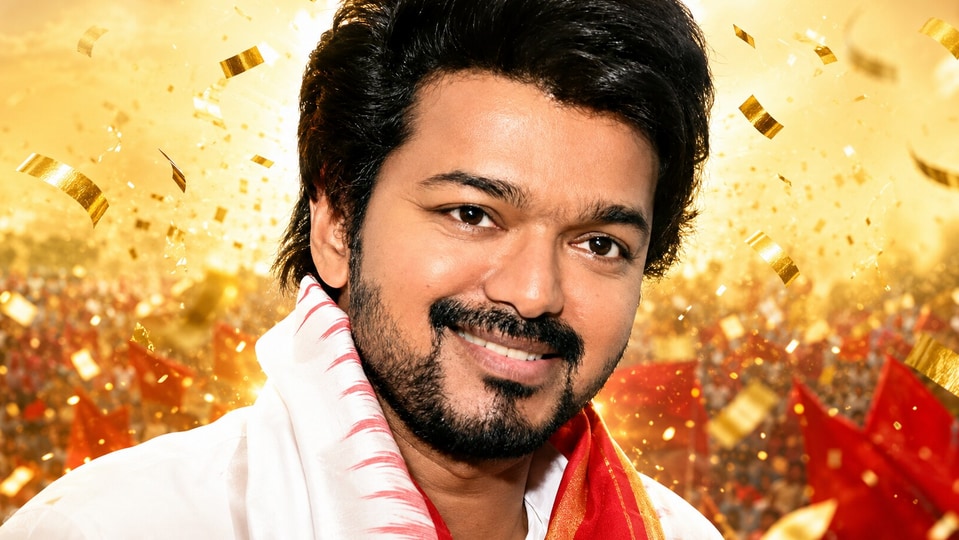
The VCK, with only two MLAs, happened to be the most important player in the state’s post-election drama. The party’s support has now paved the way for C Joseph Vijay to become Tamil Nadu’s next chief minister.
Numbers setback for the TVK
Vijay’s Tamilaga Vettri Kazhagam (TVK) was the single largest party in the 234-member Assembly with 108 seats. The actor-turned-politician won from two constituencies: Perambur and Tiruchirappalli East. He is required to vacate one, which drops the party’s effective strength further and leaves it dependent on smaller parties to cross the majority mark of 118.
At one point, TVK believed it had the numbers. Congress support added five seats. The Left parties appeared willing to come on board. There were also expectations of support from the Indian Union Muslim League (IUML) and Amma Makkal Munnetra Kazhagam (AMMK).
But one by one, the equations began to change. Through all the uncertainty, the VCK remained the central question.

The party everyone was waiting for
The VCK’s position has swung repeatedly over the last three days. On Wednesday, VCK leaders and Left representatives met MK Stalin, chief of the Dravida Munnetra Kazhagam (DMK), to discuss their future course after the election result.
Stalin reportedly told the parties they were free to make decisions in their political interest. That effectively opened the door for negotiations with Vijay’s TVK.
Soon after, TVK began reaching out to the VCK, the CPI, CPM and IUML in a bid to gather enough support to form the government.
The numbers looked manageable. TVK needed only a few more seats to cross the halfway mark. The VCK, though, did not immediately commit.
A day later
As talks continued on Thursday, the Left parties slowly moved towards supporting TVK. Initially, there were indications they might prefer an arrangement involving issue-based external support, but later their stand appeared firmer. The VCK, again, did not immediately commit.
Party chief Thol Thirumavalavan avoided making a direct announcement and repeatedly said a decision would be taken later. As speculation grew, the VCK became the biggest obstacle as well as the biggest opportunity for TVK.
At the same time, Governor Rajendra Arlekar continued asking Vijay to prove he had majority support before inviting him to form the government.
Vijay said that he should be allowed to prove his strength on the floor of the House. The Governor, though, reportedly insisted on letters of support first.
Without a clear commitment from the VCK, TVK could not conclusively cross the majority mark.
More confusion
By Friday morning, TVK leaders believed the numbers were finally in place.
With Congress, the Left parties and expected VCK support, Vijay’s camp felt it crossed 118 seats. Reports also suggested support from the IUML and AMMK could take the number even higher. Believing he had enough backing, Vijay met the Governor again. Then the situation changed.
AMMK chief TTV Dhinakaran accused TVK supporters of circulating a forged support letter and clarified that his MLA remained with the AIADMK-led NDA alliance. The IUML too stepped back from supporting TVK.
Attention immediately returned to the VCK.
VCK backtracks support
Late Friday evening, a post appeared on an X account, claiming to be VCK's official, saying that the party sent a support letter to Vijay. For a brief moment, it seemed the deadlock was over.
The social media post was deleted soon after. The account itself was suspended within an hour.
By Friday night, there was still no confirmed support letter from the VCK before the Governor.
Once again, Vijay left Raj Bhavan without an invitation to form the government.

VCK denies reports of bargaining
As rumours spread about negotiations for ministerial posts, VCK general secretary D Ravikumar rejected claims that the party was demanding positions.
“We request the media not to lend credence to such reports. We further urge the media not to become complicit in attempts to malign the VCK,” Ravikumar said.
Ravikumar called such reports “entirely contrary to the truth” and said they were attempts to malign the party.
The breakthrough
The VCK on Saturday evening finally budged and sent out a letter of support for TVK.
Vijay’s Tamilaga Vettri Kazhagam has now secured support from Congress (5 seats), CPI (2 seats), CPM (2 seats) and VCK (2). IUML also extended support, bringing in two seats. That takes TVK’s support base to 120 seats, including its tally after Vijay vacates one constituency.
The state is still waiting for the governor to accept Vijay's stake to form the government.


