E-Paper



Wildlife Protection (Amendment) Bill eases norms at state level
The Wildlife (Protection) Act, 1972, specifically prohibits trade in wild animals including captive and wild elephants

 Prefer HTon Google


Experts have welcomed the removal of a provision from the Wildlife Protection (Amendment) Bill, which made trading elephants possible. The bill was passed in Lok Sabha on Tuesday with another provision related to the formation of standing committees of the State Boards for Wildlife. This provision is likely to ease the process of wildlife clearances for infrastructure projects at the state level as the panel will mostly consist of official members, experts have said.
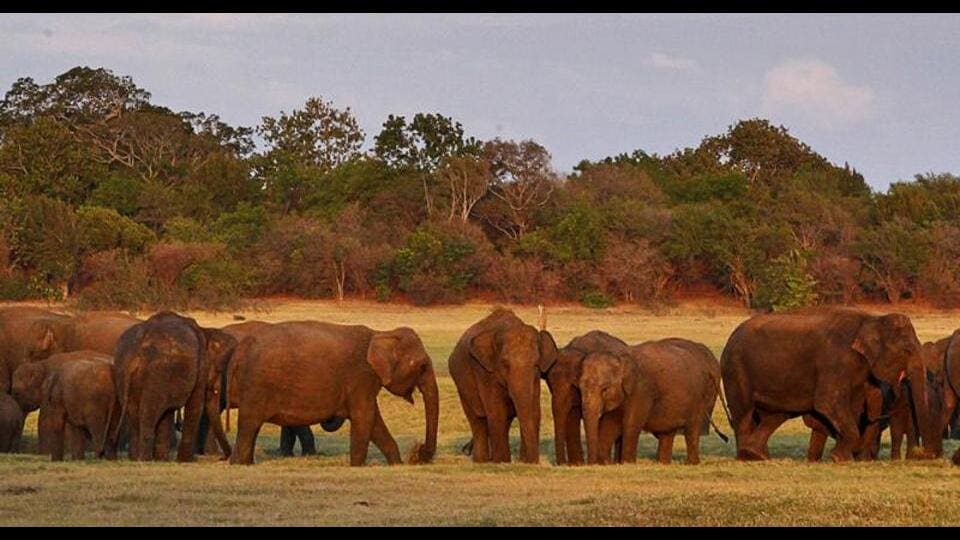
The Wildlife (Protection) Act, 1972, specifically prohibits trade in wild animals including captive and wild elephants. Under sections 40 and 43 of the law, transfer, acquiring, and receiving of a captive elephant is permissible only with the prior approval of the chief wildlife warden. Such transfer, acquisition, and receiving of an elephant should not involve any commercial transaction.The amended bill has a new Subsection (4) to Section 43 that takes away the protection from trade in elephants.
A Parliamentary Standing Committee headed by Congress leader Jairam Ramesh in April asked the Centre to provide an explanation of provisions for the transport of captive elephants and its recommendations seem to have been accepted.
“The Bill of 2022 states that transfer and transport of captive elephants for religious and other purposes is permitted subject to such conditions as may be prescribed by the central government. This is the situation that exists in the present law also, though the use of the word ‘religious’ seems to have been added due to the recommendation of the Standing Committee headed by Ramesh. The Bill of 2021 did not use the word ‘religious’. Notwithstanding this, the decision to not open up commercial trade in live elephants is a positive development. It is pertinent to point out that the Bill of 2021 specifically allowed commercial trade in ‘live elephants’ whereas the Bill passed in 2022 refers to transfer (non-commercial) and transport of ‘captive elephants,’” said Ritwick Dutta, an environmental lawyer.
“Unfortunately, the wrong practice of the standing committee assuming the role of the National Board for Wildlife...at the central level will be replicated at the state level also with the state board made defunct and the standing committee with select members taking all decisions on national parks and sanctuaries.”
The second major change in the bill is the clarification with respect to Section 29 of the Act. The bill of 2021 permitted bona fide use of water from sanctuaries for drinking and household purposes for local communities. The word ‘local community’ was not defined and left open to interpretation. The passed bill makes it clear that ‘local communities’ refer to those within the limits of the sanctuaries and hence avoids the possibility of misuse, Dutta said.
Dutta’s team also said categorisation of various species in terms of their families in the passed bill will help officials in the management of wildlife.
“Now there are specific sections for bears, porcupines, primates, antelopes, etc. The fact that rodents including different species of rats have found an honourable mention...is significant since they are all treated as pests. Enforcement agencies used to find it difficult to locate species in the schedule since they were distributed all across. Besides many subspecies which were not included have now been included...,” Dutta said in his critique of the bill.
“It is a welcome step that we are tackling invasive alien species, which have wreaked devastation both to the economy and ecology. However, the definition of invasive alien species is not complete. The bill defines it as: “invasive alien species” means a species of animal or plant which is not native to India and whose introduction or spread may threaten or adversely impact wildlife or its habitat; But in fact these are species that are not native to an Indian habitat. Even an Indian species may be invasive in another part of India - such as the Indian Crow in Andaman and Nicobar Islands. We need to update such definitions and make them more scientifically accurate,” said Neha Sinha, wildlife biologist and author.
“Secondly, there is a provision in the Bill to have a standing committee within the National Board for Wildlife, which shall have about 12 members. The idea seems to be that such a standing committee will speedily clear proposals. Yet, at a time of climate change and species loss, what we need is not necessarily speed but absolute thoroughness in decision-making, along with effective representation from wildlife and ecology experts. The 2002 amendment mentions “ten persons to be nominated by the Central Government from amongst eminent conservationists, ecologists and environmentalists in the Board”. Will the standing committee have such independent and subject experts?” Neha added.
Some experts pointed out there is an exception made for the conservation of breeding centres, which can be misused. As per the existing law, a zoo cannot acquire, transfer or sell any wild or captive animal except from a recognised one. This means that a zoo could only engage with another recognised zoo. No animals, which are either from the wild or in captivity outside of a zoo, can be acquired.
The bill has a provision stating that this will not apply to breeding centres. This will allow the breeding centres to acquire animals that are either in captivity or in wild for conservation breeding, Dutta said.
In a tweet, Debadityo Sinha, a senior resident fellow at Vidhi Centre for Legal Policy, said, “Now there is an exemption for ‘conservation breeding centre’. Also exempted is the transfer of elephants. Given the recent interest by big corporates towards private Zoos, I seriously hope this provision isn’t misused.”
The bill passed on Tuesday amends the Wildlife (Protection) Act, 1972, for better implementation of the Convention on International Trade in Endangered Species of Wild Fauna and Flora (CITES).
According to a statement in response to queries from HT, the environment ministry said the bill provides for the relevant definitions, the designation of the CITES Management and Scientific Authority, the conditions for the trade of CITES-listed species, and other relevant matters. “In addition to this, certain other amendments have also been proposed so as to make the Act more comprehensive.”
The new amendments make way for schedules to the Act to be rationalised and reduces them from six to four. Monetary penalties for contravention of the provisions of the Act are proposed to be increased so as to ensure that they function as a sufficient deterrent. The bill empowers the Central government to regulate or prohibit the import, trade, possession, or proliferation of invasive alien species whose introduction or spread may pose a threat to wildlife. It allows State Boards for Wildlife to constitute committees, sub-committees, or study groups as may be necessary for better care of seized live animals and disposal of seized wildlife parts and products, among other provisions, an environment ministry official said.