E-Paper



Passage of revised citizenship bill might affect BJP fortunes in Assam & Northeast, feel experts
The BJP got 60 out of the 126 seats in 2016 and formed its first government in Assam with help of Asom Gana Parishad (14) and Bodo Peoples Front (12).


Keeping with its electoral promise, the Bharatiya Janata Party (BJP) pushed through the controversial Citizenship Amendment Bill (CAB), 2019 in Parliament.
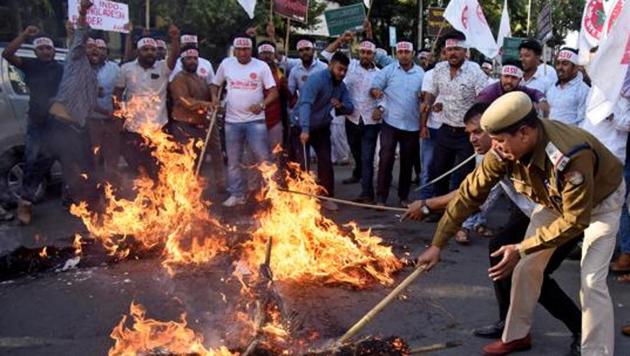
After failing to table the legislation in Rajya Sabha earlier this year, armed with a fresh mandate, the party brought a revised version of CAB this time after wide consultations with groups in the Northeast.
But instead of helping the party reap benefits, passage of the legislation despite widespread protests in Assam and Tripura and sporadic opposition in other five states of the Northeast could hurt BJP in the next round of Lok Sabha and assembly polls, feel experts.
“Bringing in the legislation overriding mass opposition could become problematic for BJP when Assam goes to polls in 2021 to elect a new assembly,” said senior journalist Mrinal Talukdar.
The BJP got 60 out of the 126 seats in 2016 and formed its first government in Assam with help of Asom Gana Parishad (14) and Bodo Peoples Front (12).
In the 2019 Lok Sabha polls, the party won nine of the 14 seats in the state, increasing its tally from 2014 when it got eight. A break-up of vote share, however, shows that while BJP won nearly 83 lakh votes the non-BJP vote was around 81 lakh.
“The spontaneous protests against CAB, something not seen since the Assam agitation against illegal immigrants, could lead to formation of a new regional political party comprising indigenous Assamese who would take the space ceded by AGP,” said Talukdar.
According to him, the new front, unofficial talks for which is underway, could corner 25-30 assembly seats in the 2021 and play the role of a kingmaker.
The BJP could lose a similar number of seats but still be a force to reckon with partially due to votes it could get from nearly five lakh Hindu Bangladeshis (estimated) who would benefit from CAB, felt Talukdar.
Following its electoral victory in Assam in 2016, BJP formed governments in Manipur, Arunachal Pradesh and Tripura and is part of the ruling coalition in Meghalaya and Nagaland.
Besides increase in its vote share in these states, the party’s success also had a lot to do with strategic tie-ups with regional parties like National Peoples’ Party (Meghalaya), Nationalist Democratic Peoples’ Party (Nagaland) and Indigenous Peoples’ Front of Tripura (Tripura).
When the BJP tried to pass CAB in Parliament earlier this year, most of its Northeast allies were opposed as they felt it would hurt their states’ interest and go against indigenous communities.
This time around, they have been placated with provisions like keeping states like Mizoram, Nagaland, Arunachal Pradesh with Inner Line Permit (ILP) and autonomous areas in Assam, Meghalaya, Tripura, which come under Sixth Schedule of Constitution outside the purview of CAB.
“The BJP has been able to get support from their allies in the Northeast, but people in Assam feel a tremendous sense of defeat of Assamese pride and hurt to the psyche by the passage of CAB in Parliament. BJP could have taken a more nuanced approach in dealing with the issue,” said political expert and Registrar of Gauhati University Noni Gopal Mahanta.
While the other northeastern states became victorious with exemptions that they sought (Manipur was brought under ILP), it’s Assam where the BJP leadership failed to address concerns in a more concrete manner.
“In bringing CAB, BJP extended the deadline for illegal immigrants from March 25, 1971 (as per the Assam Accord of 1985) to December 31, 2014. While the limit was extended by 43 years, nothing substantial came Assam’s way,” said Mahanta.
“Whether this hurts the BJP’s poll prospects or not in coming years will depend on how the party handles the situation now and till the next elections. For the time being, pushing the CAB despite protests isn’t smart handling of the issue by the BJP,” he added.
While the changes made to the legislation have more or less satisfied its allies, the general public in most of these states is still circumspect and expressing solidarity with people in Assam and Tripura who are agitating against CAB.
“There’s a feeling of northeast solidarity and people in most states are opposing CAB and supporting protests. In Manipur, despite announcement of ILP people are still uncertain and feel CAB can still be harmful,” said Pradip Phanjoubam, editor of Imphal Free Press, an English daily newspaper published from Imphal.
“BJP seems to be hopeful that these protests will subside by the time next round of elections happen in the region. There’s anger against CAB, and if elections happen now BJP could be completely shunned,” he added.