E-Paper



Will complete probe into Delhi excise policy by July 3: CBI, ED tells SC
SG Mehta blamed Delhi chief minister Arvind Kejriwal for a substantial delay in the probe, complaining that the AAP chief evaded ED summonses for six months, forcing the agency to finally arrest him on March 21

 Prefer HTon Google


New Delhi: The Central Bureau of Investigation (CBI) and Enforcement Directorate (ED) committed in the Supreme Court on Tuesday to complete their investigations and file final charge sheets in the Delhi excise policy case by July 3.
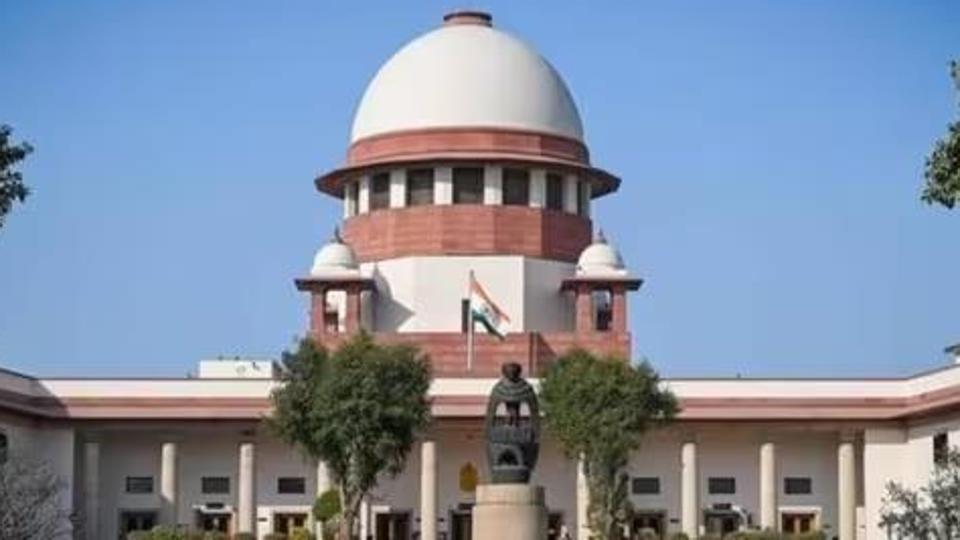
This came after the top court noted that the trial in the case could not commence until the agencies concluded their probes and that any directive for a day-to-day trial would be a sheer “make-believe” mandate.
The agencies made the statement on the completion of their probes during a hearing on a bail plea filed by former Delhi deputy chief minister Manish Sisodia, who cited the delay in the commencement of the trial as prime ground for his release on bail.
A vacation bench comprising justices Aravind Kumar and Sandeep Mehta pointed out that the trial could not proceed unless the CBI and ED finished their investigations and filed the necessary charge sheets. Recognising the importance of a timely trial, the bench emphasised that any order for an expedited trial without the completion of investigations would be impractical and merely illusory.
Also Read: ₹1,100 crore proceeds of crime in Delhi excise policy case, says ED
Following the agencies’ commitment to file the charge sheets by July 3, the bench disposed of Sisodia’s bail plea, granting him the liberty to renew his prayer for bail after the final charge sheets were filed.
“We take on record a statement of the learned solicitor general that the final charge sheets in the cases registered by the CBI and ED will be filed on or before July 3. In view of this statement, we dispose of this petition with liberty to the petitioner to renew the petition after the final complaints/charge sheets are filed,” the bench recorded in its order.
Solicitor General Tushar Mehta appeared for the agencies in the case while senior counsel Abhishek Manu Singhvi represented the Aam Aadmi Party (AAP) leader, who argued that the petition may be listed before the same bench that had in October 2023 made key observations on speeding up the trial even as the bail plea was not accepted.
But the bench said that Sisodia can revive his bail plea after the investigations were over in the case.
Mehta, on his part, requested the bench to direct the trial court to conduct a day-to-day trial, underlining that the agencies are interested in an expeditious conclusion of the case.
Responding, the court said, “That prayer is good for nothing...It’s a make-believe prayer. Unless you (agencies) complete their investigations, what’s the point of asking for such a direction.”
During the hearing, the Court also pointed out that in a case like this where there are several accused and investigations continue, it would be extremely difficult to attribute delay either to the accused or the prosecution, requiring the agencies to complete their investigations first for the trial to finally begin.
Also Read: Delhi excise policy case: HC seeks ED’s response on businessman’s bail plea
SG Mehta blamed Delhi chief minister Arvind Kejriwal for a substantial delay in the probe, complaining that the AAP chief evaded ED summonses for six months, forcing the agency to finally arrest him on March 21.
The case stems from allegations of irregularities in Delhi’s excise policy, which the Central Bureau of Investigation (CBI) began probing following a recommendation by Delhi’s lieutenant governor in July 2022.
CBI has so far filed four charge sheets in the case whereas ED has filed a total of eight charge sheets, including the latest one on May 17 in which it also made AAP as an accused.
The excise policy case has embroiled several high-profile names, including Delhi CM Kejriwal and Bharat Rashtra Samithi (BRS) legislator Kavitha, who are presently incarcerated in the Capital’s Tihar jail.
AAP MP Sanjay Singh was released on bail in May after the top court asked the ED why Singh should be kept behind bars after serving six months in jail, considering that there does not appear to be any concrete evidence against him, and no money has been recovered linking him to the alleged money laundering offence.
Kejriwal has also challenged the validity of his arrest by the ED in the top court, which is expected to deliver its ruling on the issue in July.
The Delhi high court had on May 21 denied bail to Sisodia in the cases registered separately by CBI and ED, noting that the evidence collected during the investigation showed that Sisodia subverted the process of making the policy by fabricating public feedback.
The high court had criticised Sisodia for crafting the excise policy to benefit private individuals. It had noted that instead of genuinely soliciting public comments, Sisodia orchestrated a scheme wherein, pre-drafted emails containing specific suggestions favourable to certain interests were sent to the excise department’s designated email address by various individuals under his direction.
“This deceptive act was a calculated move to create the illusion that the excise policy was formed after careful consideration of the feedback received from the public,” the high court stated, adding in its judgment that the corruption, in this case, stemmed from Sisodia’s intent to create a liquor policy that would benefit select individuals in exchange for substantial advance kickbacks.
The high court underscored the misuse of public power and breach of public trust by Sisodia, who, as the then deputy CM, was responsible for the formulation of the new liquor policy. “The material collected during the investigation shows that the applicant subverted this process... The aim was to frame public policy which would benefit select individuals, especially the wholesale distributors, in return for advance kickbacks,” justice Swarana Kanta Sharma highlighted in the May 21 judgment.
Justice Sharma observed that there had been no delay on the part of the prosecution or the trial court regarding the trial. “There has been no delay on the part of the prosecution to supply documents. There has been no delay on the part of the trial court, and the arguments on charge in the case filed by the CBI have already been partially heard. It is also not the fault of ED, CBI, or the trial court that there have been multiple accused persons or delays on the part of the accused in joining the investigation. No fault can be found with the CBI or ED when there was a voluminous record of investigation.”
Sisodia was arrested by the CBI on February 26, 2023, and by the ED on March 9, 2023. The high court’s denial of bail to Sisodia came shortly after the ED named AAP as an accused in a supplementary charge sheet filed before a Delhi trial court, marking a significant escalation in the case involving charges of corruption, money laundering, and irregularities in the formulation and implementation of the excise policy.
This was Sisodia’s second bail request before the Supreme Court. The court denied his first bail plea in October 2023, stating that the accusation against him of altering the now-scrapped excise policy to give wholesalers a windfall of Rs.338 crore in the ten months the policy was in effect was “tentatively” established.
At the same time, the apex court had granted the AAP leader liberty to file a fresh bail application in case the trial gets delayed. “We give liberty to the appellant – Manish Sisodia to move a fresh application for bail in case of change in circumstances, or in case the trial is protracted and proceeds at a snail’s pace in next three months,” the October 30, 2023, order of the Supreme Court stated. Sisodia later moved a review petition and curative petition against the Supreme Court’s bail rejection order, but both petitions were junked.
In the case, Sisodia has been accused of making changes in the now-scrapped Delhi excise policy of 2021-22 to benefit a group of liquor dealers from the south, referred to as the “South Group”, causing wrongful loss to the exchequer by increasing profit margin under the new regime.
CBI has already filed charge sheets in connection with the crime registered under the Prevention of Corruption (PC) Act against the senior AAP leader while the ED claimed that Rs.100 crore kickback was paid by the beneficiary companies, and Sisodia helped them generate proceeds of crime by raising the profit margin from the existing 5% to 12% under the new policy.