E-Paper



‘Will give all accused bail if state can’t find a solution’: SC to Bihar govt
A bench of justices Sanjay Kishan Kaul and MM Sundresh called the situation “unacceptable”, with 16 of 26 judges in the Patna high court burdened with litigation related to the liquor prohibition law, and added that some drastic orders would have to be passed if the state of affairs persist.

 Prefer HTon Google


The Supreme Court on Tuesday warned the Bihar government that it could order the release of everyone booked under the liquor prohibition law on bail if the state failed to come up with a way to address the deluge of litigation that has followed the law’s enactment in 2016.
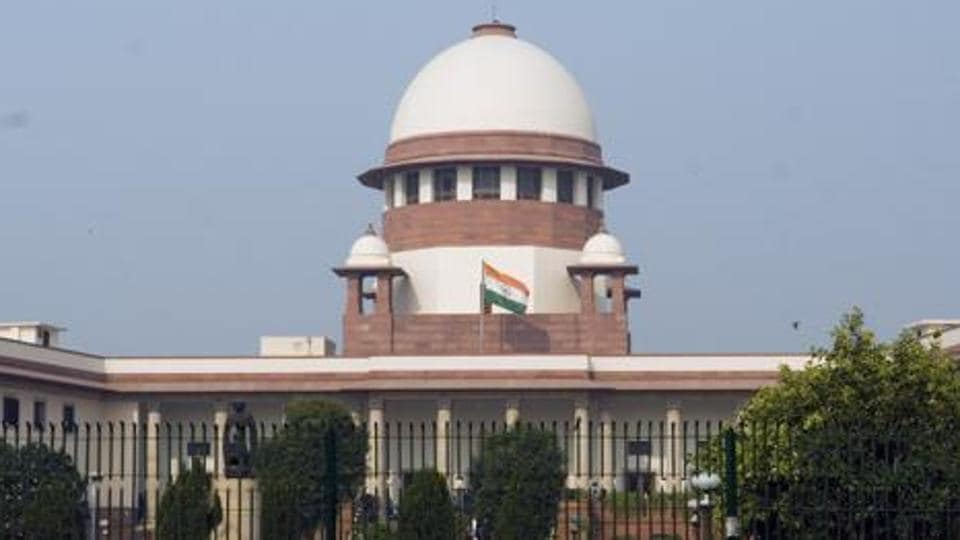
A bench of justices Sanjay Kishan Kaul and MM Sundresh called the situation “unacceptable”, with 16 of 26 judges in the Patna high court burdened with litigation related to the prohibition law, and added that some drastic orders would have to be passed if the state of affairs persist.
“Sixteen judges in the high court are sitting on the bail matters under this law. Find a way out. We will otherwise have to do something drastic. We would say that in failure of your finding a solution, everyone should get bail. We will have to pass some drastic orders if you cannot manage this,” the bench told senior advocate Ranjit Kumar, who appeared for the Bihar government.
Faced with a torrent of bail petitions arising out of the Bihar Prohibition and Excise Act and the 2018 (Amendment) Act, the bench , in the last week of February asked the state government to explain whether it conducted any study before framing the law and created a judicial infrastructure adequate to meet the additional quantum of litigation that was bound to follow. Amendments in 2018 watered down some of the provisions of the law relating to jail terms and confiscation of offenders’ properties.
The court underlined that apart from 16 judges in the Patna HC, almost every bench in the Supreme Court is also dealing with petitions under Bihar’s prohibition law, making it imperative to understand if the state government carried out a legislative impact study and upgraded the judicial infrastructure to meet the new requirement.
On Tuesday, the state’s lawyer Kumar requested some more time to answer the court’s queries. Kumar also informed the bench that the state government is contemplating some amendments to the prohibition law, and that additional time is required for approval of these changes by the legislative assembly.
To these submissions, the court responded: “Before you bring a law into force, you must have a legislative impact study. The purpose is to ascertain whether you have the required infrastructure to deal with the litigation the new law is likely to generate. The best example is the Negotiable Instruments Act (cheque bounce cases). The impact of the sheer litigation under it is still being felt across the board. Here, you bring in a law and make it a non-bailable offence but we don’t know if you made any assessment.”
Kumar sought to defend the law, submitting that not only has the high court upheld the validity of its provisions, 74 special courts have been earmarked to deal with the cases under prohibition law.
But the bench replied: “You are arguing on the principle of judicial order but we are trying to tell you that once a litigation begins, there is a continuity of it up to the Supreme Court. Also, we cannot countenance a scenario when one-third of the high court is hearing only bail cases under one law. You will have to do something or we will do something unusual that you may not like.”
The court added that designating subordinate courts to hear these cases will not solve the problem. “The mechanism you are talking about will not solve the problem. This is a fallout of your political decision and now you need to think how to regulate and put an end to the issues. The question that you need to ask is: Have you created enough courts? It is completely unacceptable that one-third of the high court is hearing only bail matters,” the bench told Kumar.
It also pointed out that the liquor prohibition law was enacted by the Tamil Nadu government several times between 1970 and 1990 but that the state eventually lifted the prohibition. “The whole concept was introduced and withdrawn by Tamil Nadu. Your government is entitled to have your own understanding. But you must also understand there is also an economic reason apart from the social reason for these issues. As a political dispensation, you have to decide how to address such issues. You may bring a social law into being but there has to be a legislative impact study first,” the court told the state’s lawyer.
In its order, the court recorded Kumar’s submissions that the state government is mulling amendments to the prohibition law, and therefore, wants more time. “What is of utmost concern to us is what was the legislative impact study done before the prohibition law was brought into force?. Every law has an impact in terms of the litigation it generates and there has to be an analysis done of the consequences before a law was brought into force,” stated the court order.
Directing the state government to file a detailed affidavit by April 25, the bench further asked the state government to adduce the latest statistics on the pendency of cases in trial courts as well as in the high court.
The state government was further asked to respond if it would be willing to introduce the provisions of plea-bargaining in the law so that accused can plead guilty to the charges in exchange for certain concessions by the prosecution in the punishment.
In July 2018, the state amended the law to dilute some of the stringent provision under the 2016 Act. For first-time offenders who store, manufacture or sell liquor, the punishment was reduced from 10 years’ jail term and ₹10 lakh fine to 5 years in jail and ₹1 lakh fine. The amendment also scrapped fine on an entire community in case liquor is found to be frequently manufactured and sold in particular areas, clarifying that only offenders will be booked. The 2018 amendment also did away with a mandatory jail term for first-time offence in case of consumption of liquor and replaced with a fine of ₹50,000 or three months in jail.
As per Bihar police records, 3,48,170 cases were lodged and 4,01,855 arrests made under the Bihar Prohibition and Excise law until October last year and about 20,000 bail pleas in such cases are pending disposal either in the high court or in trial courts.
In January, a bench led by Chief Justice of India NV Ramana dismissed Bihar government’s batch of appeals against the grant of anticipatory and regular bail to accused under the state’s stringent liquor law, saying these matters have choked the courts.
The constitutional validity of Bihar’s controversial liquor prohibition law is also under challenge before the top court. A bench, headed by justice AM Khanwilkar, is seized of a bunch of petitions, including one by the International Spirits and Wines Association of India. The petitions have raised issues of violation of an individual’s right to make choices, right to privacy, arbitrary and unreasonable restriction and draconian punishment under the law.
On February 14, this bench transferred similar petitions pending before the Patna high court to itself, and asked the state government to file its comprehensive response to the challenge to the 2016 law.