
 E-Paper



Will INDIA bloc boycott polls? Here's what RJD leader said as Opposition gathers against EC
“We so far have hope from Supreme Court. There is always the next day, and we hope EC also wants to maintain its image of unbiasedness,” said Manoj Jha

 Prefer HTon Google


As the INDIA bloc got together on Monday to press again its charges of irregularities by the Election Commission, the question of whether the Opposition would boycott upcoming polls, such as in Bihar, came up.
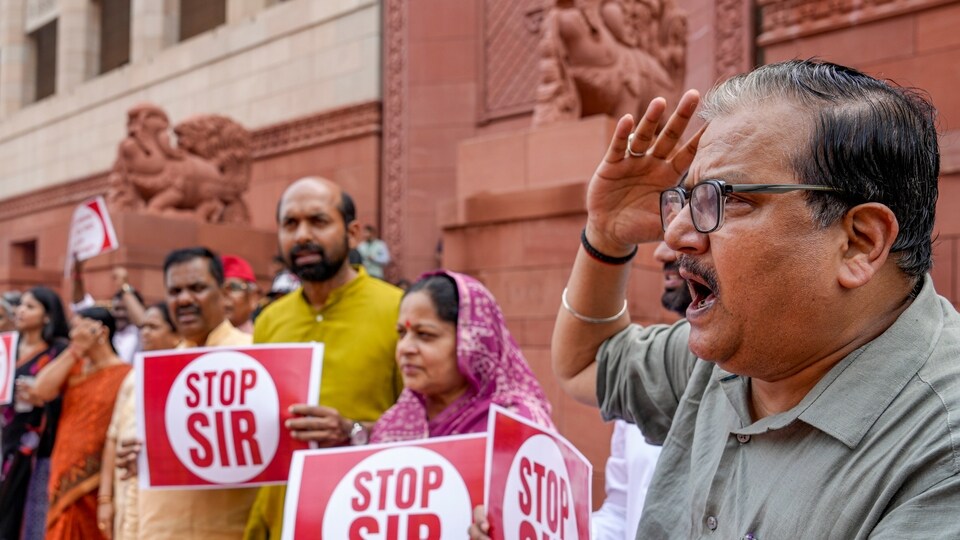
To this, Manoj Kumar Jha of the Rashtriya Janata Dal (RJD) responded: “You have to see the context in which (RJD leader) Tejashwi Yadav mentioned a possible boycott. We are following all the steps before any extreme step. We have already gone to the EC, and it has been stubborn so far.”
He added that the EC “heard us out, but did not listen to us”.
Moving to the specific question of a boycott of elections, Manoj Jha said, “We do as the public wants. We so far have hope from the Supreme Court. We also hope the EC wants to maintain its image of unbiasedness intact for the future. The EC should not have to assert that all parties are equal for it; that should reflect in its conduct.”
If there would indeed be a boycott, “that would be decided by the parties here after consulting with the public”, he said: “We represent the people; and the people decide.”
He further added, “But I am sure the EC would realise that there is another day, that is called the next day!”
The question and the answer took off from what Tejashwi Yadav said about three weeks ago, too. “We If the state polls are conducted in a partial and manipulative manner where it is already decided who would win what number of seats, what is the use of conducting such an election? We may consider boycotting the upcoming state assembly elections in Bihar after taking feedback from people and our (alliance) partners,” Yadav reportedly told a news agency last month.
The INDIA bloc held Monday's press conference at the Constitution Club in Delhi to respond to Chief Election Commissioner Gyanesh Kumar's press conference the day before, at which the CEC hit out at the opposition and accused the parties of spreading misinformation and lies.
Retorting, Congress MP Gaurav Gogoi accused the Election Commission of being "in hands of officers who are taking sides". The Congress leader further alleged that the poll body was not probing any charges made by Opposition.
The issue is two-pronged: one, the ongoing Special Intensive Revision of voter rolls in poll-bound Bihar, which the Opposition calls selective; and wider allegations leveled by Leader of Opposition Rahul Gandhi about “shocking” results in the 2024 Lok Sabha polls and in the assembly elections in Maharashtra, Haryana and other states.
The EC has asked him to give an affidavit with proofs under oath, to which he has said he has only shown EC's own records to make his points. Gandhi has alleged “lakhs of instaces of fake voters, multiple voter IDs, and fake addresses”.


