E-Paper



Can new minister Prakash Javadekar ensure environment comes first?
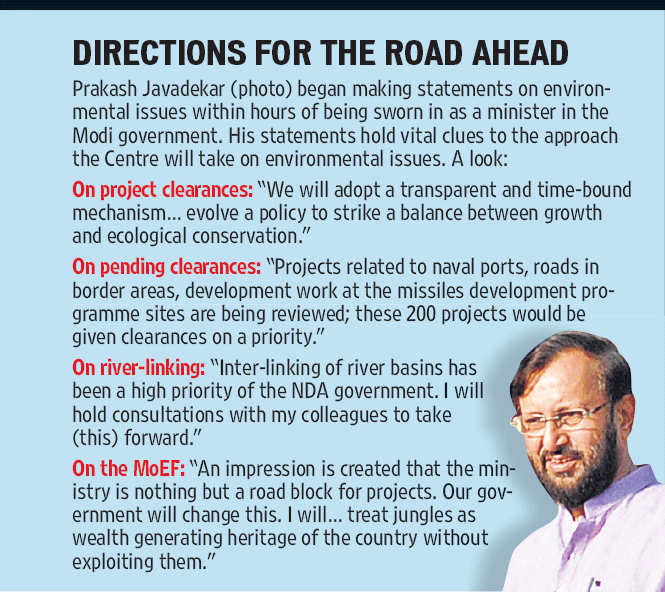
Prakash Javadekar, the new minister for environment and forests, has his task cut out. He must come up with a model that strikes a balance between environment and growth. The great folly of China: A lesson for India

 Prefer HTon Google


Prakash Javadekar, the new Minister for Environment and Forests, has his task cut out. He must come up with a developmental model that strikes a balance between environment and growth. The need for such a model is paramount at a time when the talk is all about the economy and growth.

With Prime Minister Narendra Modi’s emphasis on economic growth coupled with his earlier criticism of the MoEF and Javadekar’s repeated assertions about “speedy clearances” for big-ticket projects, environmentalists worry that the new government’s growth agenda will force heavy environmental costs on the country.
Javadekar indeed faces a few challenges.
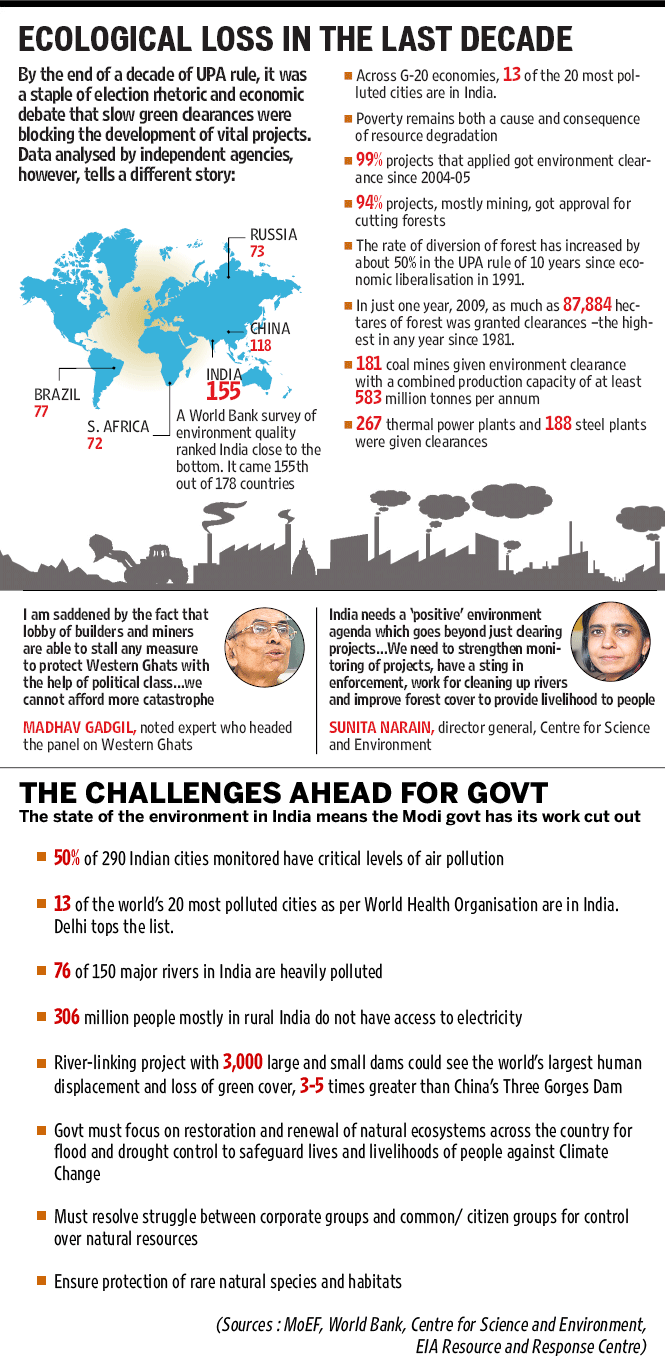
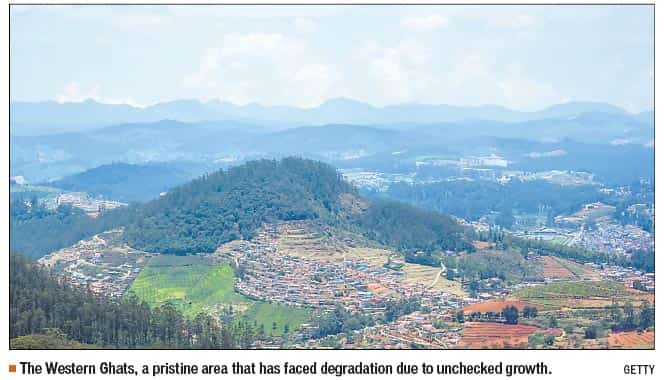
The record of environmental protection under the Congress-led UPA government is chequered. Despite the brouhaha over the ecologically-fragile Western Ghats, considered a natural heritage, the plans to protect it are still on paper. “I am saddened that lobbies of builders and miners are able to stall any measure to protect the Western Ghats,” said Madhav Gadgil, who headed an expert panel on the Western Ghats.
Read:The great folly of China: A lesson for India
The state of the environment in India is dismal too. Only two of 250 Indian cities have healthy air. Underground water from Punjab to Assam, including central India, is contaminated and one-third of the water in Indian rivers is not fit even for bathing.
A Lancet study in 2013 said that bad environment is the sixth big killer in the world and claims more lives than road accidents, resulting in death of 3.2 million people in India and its neighbourhood.
“Little has been done to check the rise in air pollution,” said Anumita Roy Choudhury of the Centre for Science and Environment. The government has continued with incentives to polluting fossil fuels, she added.
Most of mining or industrial zones in India are regarded as a health hazard with norms remaining on paper.
Javadekar will have to balance the PM’s growth agenda with the country’s environmental concerns; lift the veil of secrecy over approvals and reduce the discretion that his ministry now enjoys. A more inclusive, simple and transparent approval system for projects, one that also penalises environmental defaulters, is needed.
“It’s the PM who is the real power and an agenda. He’s the person, not so much Javadekar,” said noted Mumbai-based conservationist Bittu Sahgal.
Himanshu Thakkar of South Asian Network for Dams, Rivers and People (SANDRP) asked Javadekar to apply Modi’s call for “transparency, accountability and participation” in his ministry.
“Modi’s 10-point agenda provides scope to the MoEF to make governance compliant with environmental norms but the job is tougher than Javadekar thinks. He has to restore people’s faith in norms,” Thakkar said.
While many environmentalists do not doubt Javadekar’s ability to evolve the much-needed “environment first” policy, there are questions over the freedom he enjoys in a dispensation focused on economic growth. Will PM Modi allow him a free hand?