Sign in

Jairam Ramesh swims against India tide at Paris climate summit

Former environment minister and Congress leader Jairam Ramesh wants Paris to commit to a new generation of climate action plans by every country once in five years and India should declare a plateau year for its coal consumption.

Updated on: Dec 7, 2015, 03:02:41 IST
Hindustan Times | By , Paris
Share
Share via
  • facebook
  • twitter
  • linkedin
  • whatsapp
Copy link
  • copy link

Former environment minister and Congress leader Jairam Ramesh wants Paris to commit to a new generation of climate action plans by every country once in five years and India should declare a plateau year for its coal consumption.

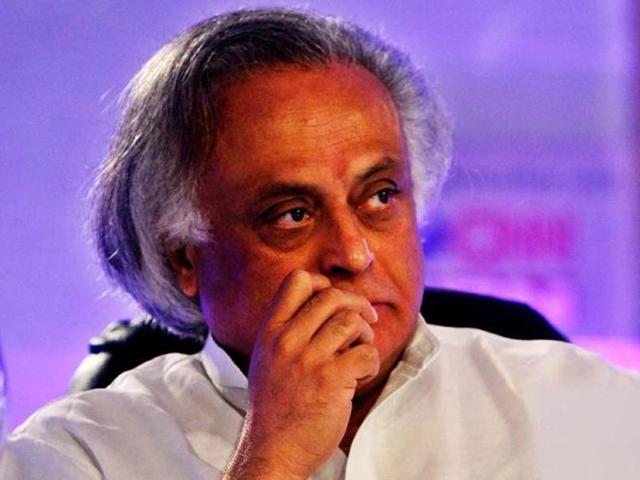
Former environment minister and Congress leader Jairam Ramesh said that we can voluntarily revise our INDCs depending on our national circumstances but it cannot be legally binding. (HT File Photo)

His views in Paris on Saturday contradicted India’s official position when nearly 200 nations were trying to forge a new pact on climate change.

The country has submitted its climate action plan for 2030, called Intended Nationally Determined Contributions (INDCs), and opposed the idea of mandatory enhancement of the contribution before the target year.

“We can voluntarily revise our INDCs depending on our national circumstances but it cannot be legally binding,” Ajay Mathur, spokesperson for the country’s team of negotiators in Paris. “We don’t have a problem with stocktaking and the present differentiated review process.”

Read | Coal dependence: India hits back, asks West for effective solutions

In 2011, then environment minister Ramesh agreed to a legally binding term for the first time.

He has a different take from India’s current position, saying the INDCs are not going to be “sufficient to meet the 2 degrees Celsius target”.

“We know that no country is going to unveil new INDCs in Paris, but what every country must undertake in Paris is to review the current portfolio of INDCs may be five years from now, revisit what it can do to increase the level of ambition of what it can do,” he said.

The government is against declaring any timeframe for its emission to maximise like China, but Ramesh advocated a different approach saying India can say that by 2030 it will announce its coal consumption plateau period.

Read | Rich nations should clear debt of carbon space overdraft: Javadekar

“The way prices of solar equipment are falling it is a possibility. We should explore it,” Ramesh told a group of Indian journalists, when told that India was receiving flak for its continued dependence on coal. “We have to tell the world in stronger words that coal for India is a reality and it will remain so for some time.”

The Rajya Sabha member complimented Prime Minister Narendra Modi for putting India in a leadership role in solar energy by announcing a global alliance in Paris last Monday. But did not find anything surprising in Modi’s speeches, saying his stand for the Paris talks was not different from what his predecessor, Manmohan Singh, took at the 2009 Copenhagen conference.

“Manmohan Singh for the first time declared a so-called peaking for Indian emissions saying our per capita carbon release will not increase from that of the western average. Modi just reiterated that. May be in a better way,” he said.

Ramesh said India needs to adopt a more “ambitious” approach because there was more awareness domestically about the country’s increasing vulnerability to climate change. The extreme weather events in the past five years are a marker of the vulnerability and, therefore, India should be “proactive” at the talks, he advised.

He felt that the head of states segment on the first day of the Paris agreement did not help because the countries stuck to their stands and negotiators to their positions. As a result, the draft for the Paris package from negotiators is highly contentious and needs burning of midnight oil to have an agreement by next Friday.

  • Chetan Chauhan
    ABOUT THE AUTHOR
    Chetan Chauhan

    Chetan Chauhan is the National Affairs Editor looking into all aspects of news and features from across India. A Chevening scholar with over three decades of experience in reporting and news management, Chetan has extensively covered all important aspects of the social sector, political economy, environment and climate change nationally and internationally. He did a journalism course at the Reuters Institute of Journalism in Oxford and Digital Media training at Nanyang Technological University in Singapore. He started as a reporter with The Statesman in 1996 and joined the Hindustan Times in 2000 in the metro bureau covering environment, crime and Delhi politics. He covered hot local news, from the Jessica Lal murder case to the rebellion of Delhi Congress MLAs against then Chief Minister Sheila Dikshit, to the replacement of toxic vehicle fuel with cleaner compressed natural gas (CNG) in the national capital. Some of his stories on air pollution became part of the Supreme Court’s landmark MC Mehta versus Government of India case in the National Capital Region (NCR), forcing the government to take corrective measures. As part of the national political bureau since 2004, he covered important central sectors such as environment, education, social justice, labour, rural development, water resources, renewable energy, agriculture, broadcasting and the Planning Commission for more than a decade producing several exclusive and investigative breaking stories. His specialisation is the environment, having covered at least a dozen United Nations global conferences on climate change, biodiversity and wildlife including climate summits in Paris, Copenhagen and Bali. He also covered India’s two five-year plans ---11th and 12th and reported on drafting and execution of right based laws such as Right to Education, Right to Information and rural job guarantee law, MG-NREGA, now being introduced in new format as VG-RAM-G Act. He has in-depth knowledge of social sector issues. He was one of the first to report on tigers vanishing from Sariska and Panna wildlife reserves in 2004 and 2008, respectively, leading to the setting up of the National Tiger Conservation Authority (NTCA) and the introduction of stringent penal provisions for poaching. He has written extensively on the rising human-animal conflict in India and the degradation of India’s biodiversity hotspots because of mining and other activities. Since 2004, Chetan has covered Parliament comprehensively and participated in training on the nuanced coverage of Parliament proceedings. He has travelled extensively across India to cover national and provincial elections since 1998, especially in the Hindi heartland states, considered India’s road to power. He writes a regular column for Hindustan Times, Ecostani, on important national politics, economy, Himalayan ecology and environmental issues. His other responsibilities include providing inputs for edits and edit page articles for the publication, apart from managing news flow from across India.Read More

Get the latest India News, breaking headlines and real-time updates from across the country. Stay informed about politics, government policies, crime, weather and major national developments.