E-Paper



Coal dependence: India hits back, asks West for effective solutions
India hit back at developed nations on Friday over criticism of its coal dependence while asking them to provide “effective solutions”.


India hit back at developed nations on Friday over criticism of its coal dependence while asking them to provide “effective solutions”, but faced a possible setback with demands growing for a tougher temperature goal to combat global warming.
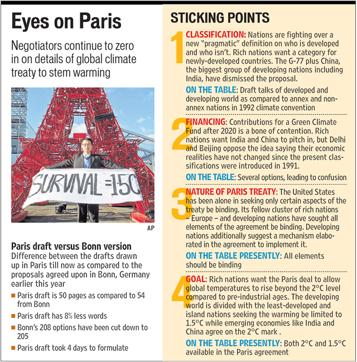
India had insisted for a 2°C limit for temperature rise by the turn of the century, but many countries are now pushing for a 1.5°C goal, which New Delhi considered just an aspiration.
A senior Indian negotiator expressed concern that the issue could drive a wedge between India and the most-vulnerable developing nations who are campaigning for the more aggressive target.
“As far as we are concerned, there is an agreed political text that the world will move towards a 2°C rise or less. Neither 1.52°C nor 2°C is scientifically backed,” he said, adding that there would be more clarity on all outstanding issues for India in the next couple of days.
US chief climate negotiator Todd Stern also backed India on the 2°C goal saying it was the globally accepted norm.
Read | New climate agreement in Paris may end 1997 Kyoto Protocol
Countries most at risk are arguing that a relaxed temperature target would seal the fate of millions of people living in low-lying and coastal areas.
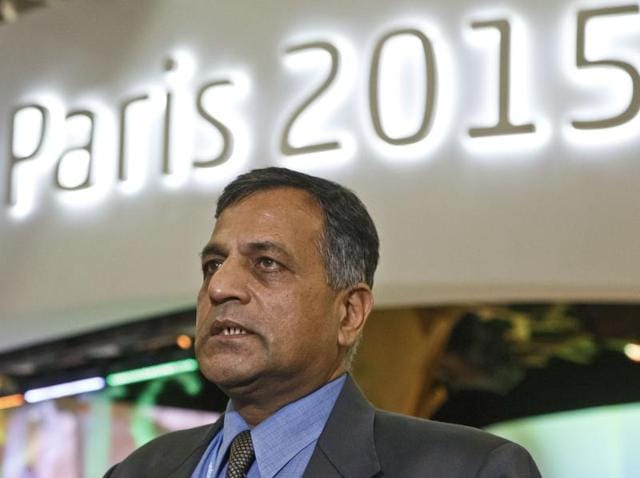
“The important thing is there is recognition, there is acceptance and there is a resolve that let the limit be not more than 2 degrees,” environment secretary Ashok Lavasa said.
Greenpeace International director Kumi Naidoo has written to Prime Minister Narendra Modi, urging him to consider the plight of the most vulnerable people in India and around the world by embracing a long-term goal of 100% renewable energy access for all within 2050.
“This is the best way of keeping global temperature rises to below 1.5°C – which the most vulnerable countries have called for,” he said.
Another worrying factor for New Delhi is that the coal debate spurred by continuous coverage in the Western media has overtaken all the good word spread by India over the past week.
“We have data to show that by 2030 all major developed economies will still be dependent on fossil fuels,” said Chandra Bhushan, deputy director general of the non-profit Centre for Science and Environment. “Like them, we will also rely on coal as India does not have cheap gas like the United States or Germany has.”
Lavasa said India’s per capita coal consumption is five times less than the western world’s and will be reduced further by 2030. “I don’t understand on what moral ground they (US and Europe) are asking us to shun coal,” he said.
Friday’s draft proposals also made it amply clear that negotiators had stuck to their countries’ initial positions without giving much away, leaving the compromise to the ministers.
Indian negotiators are happy that all their issues are still part of the text. But they identified climate finance by rich nations and differentiation between the developed and developing world as “deeply dividing” issues for the next week’s ministerial- level discussions.