
 E-Paper



Poll | Should gay sex be legalised in India?
The Supreme Court on Tuesday said it will review a decision over whether to uphold a colonial-era law that criminalises gay sex in a victory for homosexual rights campaigners at a time when the nation is navigating a path between tradition and modernity.


The Supreme Court on Tuesday said it will review a decision over whether to uphold a colonial-era law that criminalises gay sex in a victory for homosexual rights campaigners at a time when the nation is navigating a path between tradition and modernity.
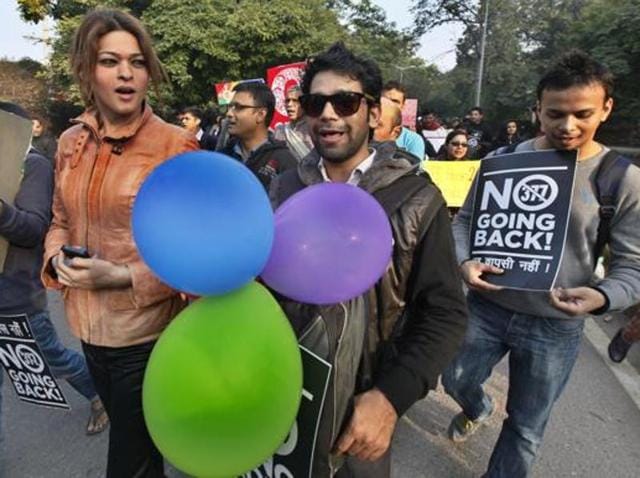
The apex court set up a five-judge panel to reconsider its 2013 ruling that only Parliament can change the 1861 law banning gay sex.
Section 377 of IPC -- which came into force in 1862 -- defines unnatural offences. It says, “Whoever voluntarily has carnal intercourse against the order of nature with any man, woman or animal, shall be punished with imprisonment for life, or with imprisonment of either description for a term which may extend to 10 years, and shall also be liable to fine.”
Tuesday’s decision is the latest chapter in a long-running legal battle between India’s social and religious conservatives and the gay community over the law passed by British colonial rulers in the 1860s.
Gay sex has long been a taboo subject in conservative India, where homophobic tendencies abound and some still regard homosexuality as a mental illness.


