
 E-Paper





Follow the latest breaking news, major developments and agenda-setting stories from India and around the world with the newsdesk at Hindustan Times. Operating round the clock, the desk brings together experienced editors, reporters and correspondents to deliver fast, accurate and contextual reporting across subjects that influence public policy, governance, business, society and international affairs. The HT News Desk covers politics, elections, government policies, the economy, business and markets, science and technology, the environment, law and order, infrastructure, education, climate issues and geopolitics, while closely tracking developments across states, institutions and global capitals. The team also leads coverage of major breaking news events, policy announcements, court proceedings, natural disasters, public emergencies and significant international developments. Reports published by the newsdesk are based on information gathered from reporters on the ground, official statements, government agencies, court records, regulatory filings, recognised institutions and other authoritative sources. Stories undergo editorial scrutiny and verification processes to ensure accuracy, fairness and relevance, and are updated as events evolve and additional information becomes available. Whether covering a key political decision in New Delhi, an economic policy shift affecting millions, a landmark court ruling or a major global event, the HT News Desk aims to provide readers with reliable, fact-based journalism that delivers not only the latest developments but also the context and analysis needed to understand their wider implications.
Pranab signs ordinance circumventing SC order on medical exam NEET
President Pranab Mukherjee signed on Tuesday an ordinance to keep state boards out of the ambit of a uniform medical entrance examination NEET for this year.


President Pranab Mukherjee signed on Tuesday an ordinance to keep states out of the ambit of a court-mandated single, all-India medical entrance test this year.
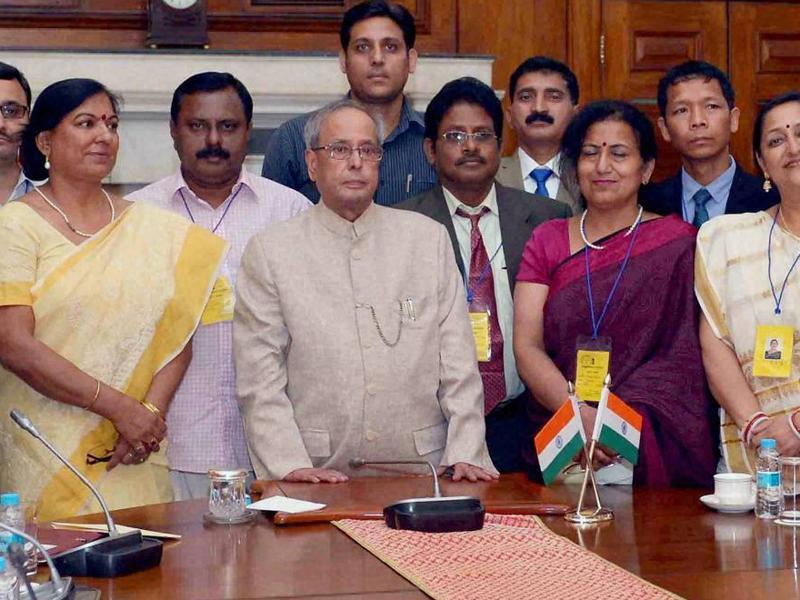
The ordinance, cleared by the Union Cabinet last Friday, is aimed at “partially” overturning a Supreme Court verdict that said all government colleges, deemed universities and private medical colleges would be covered under the single examination called NEET.
The court ordered a single medical test, benefiting aspirants who juggle clashing exam schedules and differing admission norms by private colleges. The test was allowed to be held in two phases — the first phase was conducted on May 1 and the second phase is scheduled for July 24.
But many oppose the NEET on the ground that students affiliated to state boards would find it tough to deal with a test based on a central curriculum and conducted in English.
Read:Nadda meets Pranab over NEET: What the controversy is all about
Mukherjee sought an explanation for the reasons behind bringing in the ordinance against the apex court decision on making participation mandatory for all medical colleges — state, deemed universities and private colleges — to admit students from the academic year 2016-17 and reprtedly consulted in-house experts before clearing it just ahead of his trip to China.
Attorney general Mukul Rohatgi was at the President’s Secretariat early this morning along with top health ministry officials to respond to the questions.
Clarifying that the exemption is only for the state government seats, government sources said the state seats that are earmarked in private medical colleges have also been exempted.
Different states earmark anything between 12-15% seats in various private medical colleges for state quota so that students from one state can get seats in another state. The remaining seats in such colleges are reserved for domicile students. With the Ordinance, the remaining seats meant for domicile students will come under NEET.
More than 15 states were opposed to NEET and had raised issues such as different syllabus and languages during a recent meeting among state health ministers’.
Representatives from 18 states met Union health minister JP Nadda a week ago and informed that NEET would put non-CBSE candidates at a disadvantage as there was too little time left for students to bridge the difference between state board syllabi and the central curriculum.
The next phase of the exam is scheduled for July 24. Nearly 6.5 lakh students have already taken the medical entrance test in the first phase of NEET held on May 1.
Once the ordinance is issued, students of state government boards will not have to sit for NEET on July 24.
They, however, will have to become part of the uniform entrance exam from next academic session, government sources said.
The exam will be applicable for those applying for Central government and private medical colleges.
They said the students affiliated to state boards will find it tough to appear for the uniform test as early as July and such students will be at a loss compared to those who have followed the central board.
“State governments wanted exemption and the issues were related to parity of syllabus and option of giving exam in regional languages,” Nadda said.
“After due consultation, we came out with an ordinance which provides NEET a statutory basis and where we give state governments an option to conduct examination and those who have conducted exams to go forward in that direction,” he said.


