
 E-Paper



‘Working for orphans helped us overcome the trauma of losing children’
“Out of the eleven of us who went, only I returned,” Parameswaran recalls of the day he lost his three children and the 7 relatives who were visiting. The day, a Sunday, was also his birthday. His wife had stayed back.


Nagapattinam: Parameswaran and Choodamani’s children loved the beach. The couple had moved to Nagapattinam after being transferred in their respective jobs – he was an engineer with ONGC and she an accounts manager with LIC. They built a home near the beach.
On the morning after Christmas ten years ago, they went to the beach as they would every now and then. “Out of the eleven of us who went, only I returned,” Parameswaran recalls of the day he lost his three children and the 7 relatives. The day, a Sunday, was also his birthday. His wife had stayed back.
The devastation drove them numb “On the third night I asked my wife if we should take some poison. We had lost everything,” he said.
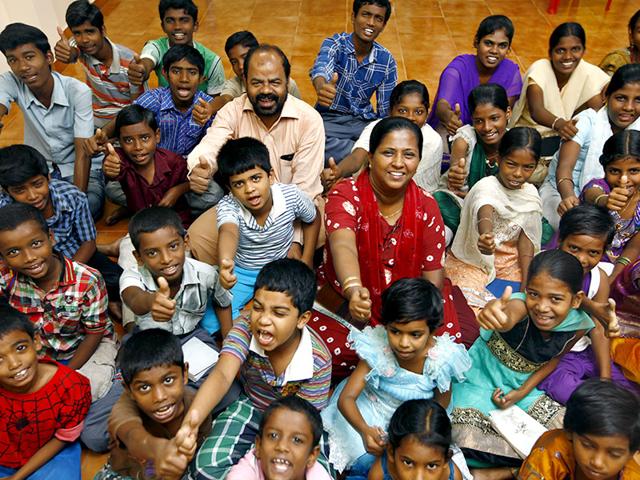
Their house, Nambikaai (Tamil for hope), now bears a sight that is the stark opposite of death and destruction – it bustles with the laughter and excitement of 32 children, which includes two boys aged 8 and 6 born to the couple after the tsunami.
Immediately after the tsunami, the couple met many orphans. “I thought if we died, who would take care of our children?” Choodamani said.
Watch: He lost 3 children, but was gifted with 36 more
“We asked the villagers to send some children. We said we could help them”, Parameswaran said. Soon, they had four children to look after.
“They made us recover from the trauma. They filled the void,” Parmeswaran said. “Earlier, the loneliness would invariably bring back the pain,” Choodamani said.
“We could see our children through them (the orphans)”, Parameswaran said, as he recalled how working for the children was therapeutic for the couple.
The youngest at Nambikkai is 5 years old and the oldest 17. “They all sleep on the first floor in case there is a tsunami again”, Choodamini said, explaining how the home runs like clockwork.
The children at the home — the last house in a narrow lane before a railway crossing — wake up at 5:30am, go for morning prayers and head off to school. “After prayer, we meet every child. That’s when we can tell if a child is bothered by something and help" Parmeswaran said.
After school, there are hours set aside for homework, play and meals. By 9pm, the children are tucked into bed.
“All the kids sleep on the first floor, lest there ever be a tsunami again”, said Choodamani.


