
 E-Paper



‘Barwani tribals prone to Down’s syndrome’
Down’s syndrome among tribals in Barwani is higher than the national average, according to a latest study.

 Prefer HTon Google


Down’s syndrome among tribals in Barwani is higher than the national average, according to a latest study.
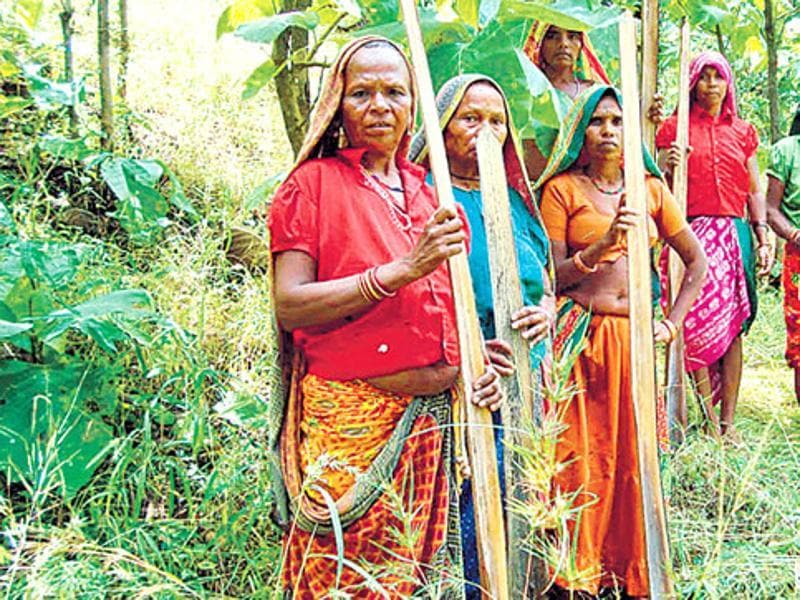
The study, by US-based Jackson State University research scholars Ram Lakhan and Madhavaram Thomas Kishore, was conducted in Chikhalia village near Barwani. Spread in 4 km the village has a population of 2,767.
The study found down’s syndrome of 1.45/1000 which is higher than national figure 0.88/1000. The national figure is from a study “Burden of Genetic Disorders” conducted in Mumbai, Delhi and Baroda.
Down’s syndrome is a genetic condition that typically causes some level of learning disability and characteristic physical features. Many babies born with Down’s syndrome are likely to have eyes that slant upwards and outwards, a small mouth with a protruding tongue and a flat back of the head.
“So far, we don’t have any research in India on this topic except the one that was done in metro on newborns which is not representative of general rural and tribal population,” said Lakhan.
“For rare cases disorders/disease epidemiologists study incidence rather prevalence. Ours is also a prevalence study. So it is more alarming and concerning as we are counting only children with DS who were present at that time. We don’t know how many were born with the condition. Probably a few of them might have died. In case, if all survived, probably prevalence may be further higher on that time than what I have found,” he said.
Down’s syndrome usually is an outcome of advanced maternal or paternal age at the time of a child’s birth, consanguinity marriage between couples, who had a family history of down’s syndrome or developmental disability, but interestingly none of these correlates were present among patients in Chikhalia.
“All the factors, which are usually associated with down’s syndrome, were absent in the result of the study. In fact, it was found that women whose children had down’s syndrome had an early motherhood (18-24 years). Also, children born were the first child of the couple,” said Lakhan.
Mentioning that the findings should be taken up seriously by the government to map mental health parameters of tribal population, Lakhan said data needs to be probed further.
“We need to study incidence of down’s syndrome in tribal and non-tribal population. It should be an epidemiological study. Also, study needs to be done to find out potential and probable causes of down syndrome in both population.”


