Sign in

In a rare sight, four snow leopards captured on camera in Uttarakhand’s Nanda Devi National Park

The sightings were caught in a camera trap set up in Malari area of Nanda Devi National Park.

Updated on: Apr 14, 2020, 19:46:03 IST
Hindustan Times, Dehradun | By
Share
Share via
  • facebook
  • twitter
  • linkedin
  • whatsapp
Copy link
  • copy link

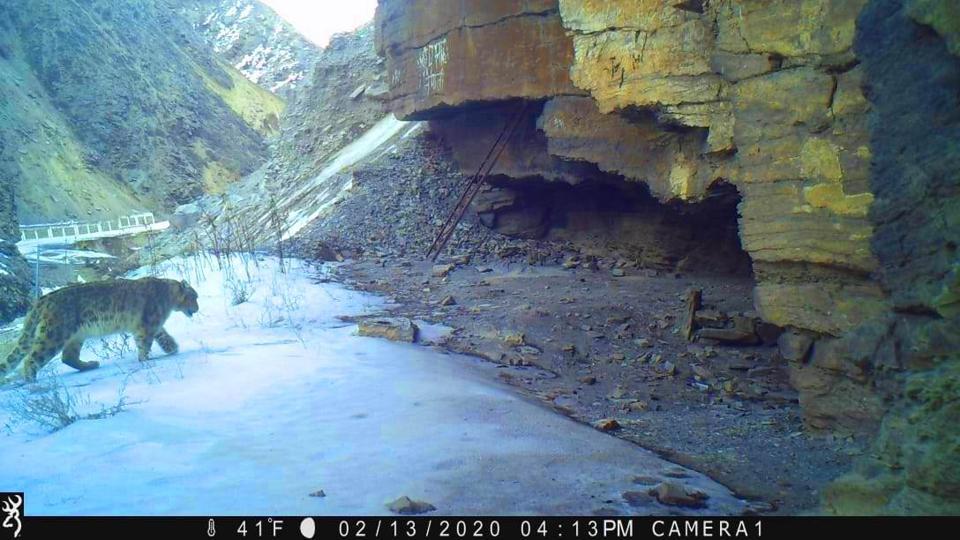
In a rare sight, four snow leopards including a pair have been caught on camera trap in Uttarakhand’s Nanda Devi National Park.

Snow leopard spotted in Nanda Devi National Park. (Uttarakhand forest department)

DK Singh, director of Nanda Devi Biosphere Reserve where Nanda Devi National Park is located said these sightings were caught in a camera trap from January to March and came to light when recently forest officials checked it.

“We set up camera traps in areas where we think there is a maximum probability of snow leopard movement. Then after two to three months, we check these camera traps. Around 10 days ago, we checked a camera trap that we had set up in Malari area of Nanda Devi National Park. To our surprise, it had recorded four sightings from January to March and also caught a of snow leopard pair, which is very rare. We are very elated with these sightings”, he said.
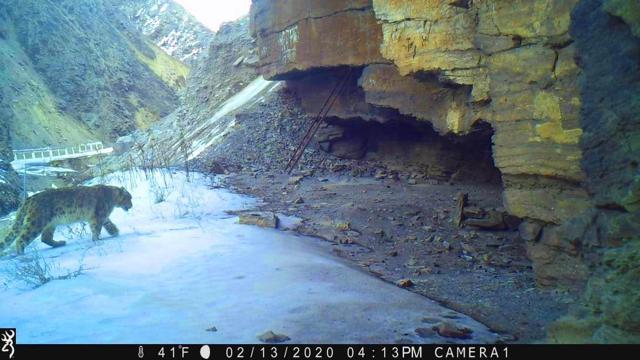
Snow leopard spotted in Nanda Devi National Park. (Uttarakhand forest department)

Parag Madhukar Dhakate, chief conservator of forests (CCF) western circle Kumaon said these rare sightings of these snow leopards were caught by the camera trap set up by the state forest department at an altitude of 3100 metres (10170 ft). It recorded the ‘Crepuscular’ behaviour of these elusive leopards.

“Crepuscular means snow leopards are most active during dawn, dusk and night, which also helps them hunt their most preferred prey, the Blue Sheep, which uses the same habitat at night. Snow leopards are highly agile, adaptable and solitary big cats and prefer steep rocky broken terrain close to natural vegetation. For travelling and resting, they use cliffs and major ridgelines. That is where we generally set up camera traps”, said Dhakate.
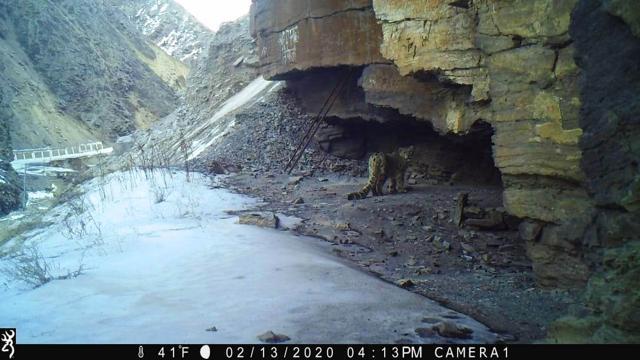
A snow leopard was captured on a camera trap. (Uttarakhand forest department)

Dehradun based Wildlife Institute of India (WII) has made an estimate of snow leopards based on an extrapolation from habitat quality and snow leopard density. According to S Sathyakumar, senior scientist at WII, India likely has around 516 snow leopards, with the current estimated distribution of 86 in Uttarakhand, 90 in Himachal Pradesh, 285 in Jammu and Kashmir, 13 in Sikkim, and 42 in Arunachal Pradesh.
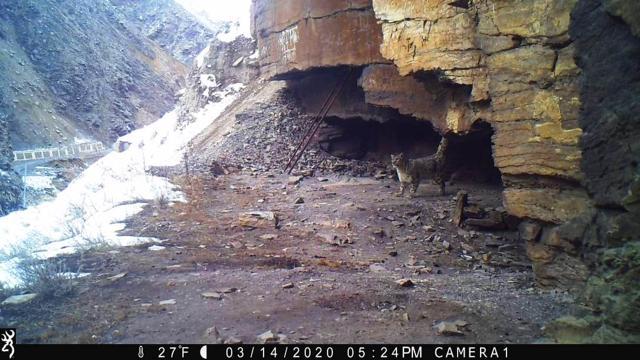
Snow leopard spotted in Uttarakhand. (Uttarakhand forest department)

Snow leopard (Panthera uncia) is facing threats to its existence due to poaching and habitat destruction. It inhabits the Himalayas at elevations ranging from 3,000 to 4,500 metres. It is a Schedule I animal under the Wildlife Protection Act of India and is listed as “endangered” by the International Union for Conservation of Nature.
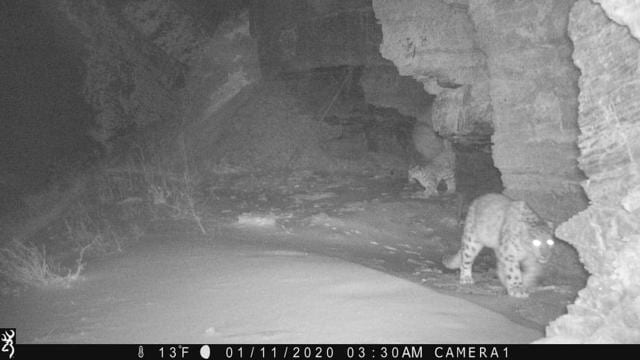
Image shows a snow leopard. (Uttarakhand forest department)

Earlier this year, a national protocol for snow leopard population assessment was undertaken by Dehradun based WII along with Karnataka-based Nature Conservation Foundation. The project is on the lines of the global project named ‘Population Assessment of World’s Snow leopards (PAWS)’ carried out by 12 countries where the highly rare animal is found.

  • Neeraj Santoshi
    ABOUT THE AUTHOR
    Neeraj Santoshi

    Neeraj Santoshi is the Chief of Bureau for Hindustan Times in Uttarakhand, where he leads the state reporting team while covering government, politics, environment, wildlife, Uttarakhand High Court, and issues shaping the Himalayan region. With more than two decades in journalism across conflict zones, he has covered politically sensitive regions and environmentally fragile landscapes, and focused on stories that combine public interest with in-depth storytelling. An alumnus of Pune University with a Master’s in Communication Studies, he has reported extensively from Jammu & Kashmir (2003-2010), Madhya Pradesh (2010 to 2018 ) and Uttarakhand (Since 2018), covering subjects ranging from insurgency, elections and governance to wildlife conservation, mining, climate change, agriculture, human rights and social justice. He has covered politics and legislative assemblies of both Jammu & Kashmir and Madhya Pradesh over more than a decade. Before taking over as Chief of Bureau in Uttarakhand, he served as Special Correspondent with Hindustan Times in Madhya Pradesh and earlier reported for both Hindustan Times and The Indian Express in Jammu & Kashmir, where he covered state politics, environment and insurgency-related developments. Over the years, his stories have focused on environmental degradation, wildlife, illegal mining, governance and the changing social fabric of Himalayan states and Central India. He is particularly interested in long-form explanatory journalism, and stories that explore the intersection of ecology, conservation, governance and society. Outside the newsroom, Neeraj enjoys reading widely on neuroscience, consciousness studies, Artificial Intelligence and quantum physics, with a special interest in Kashmiri Tantric Shaivist traditions. He is also passionate about wildlife, mountaineering and the Himalayas, interests that continue to inform his reporting and deepen his understanding of the region he covers.Read More

Discover the latest Trending News, viral videos, social media stories and unusual events from India and around the world. Stay updated with the topics everyone is talking about.