
 E-Paper



A Wknd special: How close are we to interplanetary travel?

 Prefer HTon Google


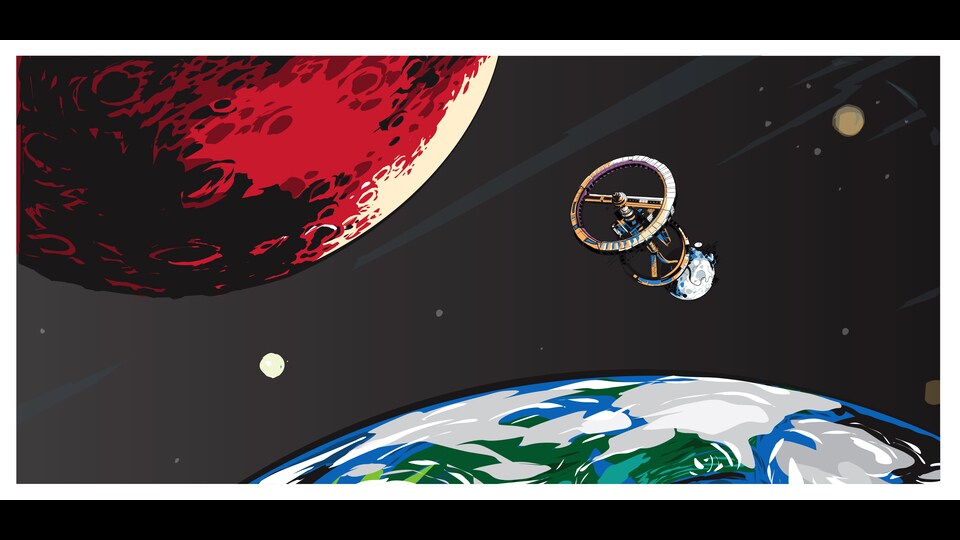
There are concrete plans to build on the moon and send humans to Mars within the decade. Check out plans for extra-terrestrial farms, Lunarcrete and more.
This will be an era of astro-politics.
The first manned mission to Mars may happen as early as 2033. That’s when the red planet will be on the same side of the Sun as Earth, making a round-trip just 570 days long instead of over 900. The crew could even take the scenic route back and fly by Venus, for a slingshot hurtle back to Earth. (This window of aligned orbits opens up once every 15 years.)
NASA (the US National Aeronautics and Space Administration) looks set to be the first to undertake such a journey. It has announced no dates, which is understandable, since many key questions remain unanswered.
The why is clear. “It is in our nature to explore,” says Dibyendu Nandi, head of CESSI (the Center of Excellence in Space Sciences India) at the Indian Institute of Science Education and Research (IISER), Kolkata. “As humans, we’ve been migrating from the beginning of our time here. We came out of Africa and scattered in search of resources, or to escape conflict. We’ve been exploring the land, sky and seas ever since.”
Our migrations have always been driven by curiosity and necessity (perhaps that should be the name of the next rover). Now, on a planet losing equilibrium, new horizons are crucial. Certain planets in our solar system hold the promise of minerals, rare earth metals, even an alternative home. But it’s a short list of options.
There’s Mars, which is one of our closest planetary neighbours, and is somewhat Earth-like, though much colder (with temperatures reaching lows of -153 degrees Celsius) and with a very thin atmosphere.
Saturn’s largest moon, Titan, is Earth-like too, but it’s about five times as far as Mars. Its seas and lakes are full of methane. Its atmosphere is heavy with nitrogen. And temperatures can fall to -179 degrees Celsius.
Another potential destination is Proxima Centauri b, but it sits outside our solar system, 4.24 light years away. It would take us about 6,300 years to get there, using current technology.
And so, the race to build on the moon and get humans to Mars has intensified. In addition to NASA, Elon Musk’s SpaceX is readying to travel there within the decade. Russia’s Roscosmos and the European Space Agency (ESA) have been conducting long-term simulations to assess the physical and psychological toll of such a journey.
What hurdles have yet to be overcome? Where are we on building extra-terrestrial housing, finalising life-support systems, or indeed, using wormholes to get around? Take a quick tour.
.
To the moon!
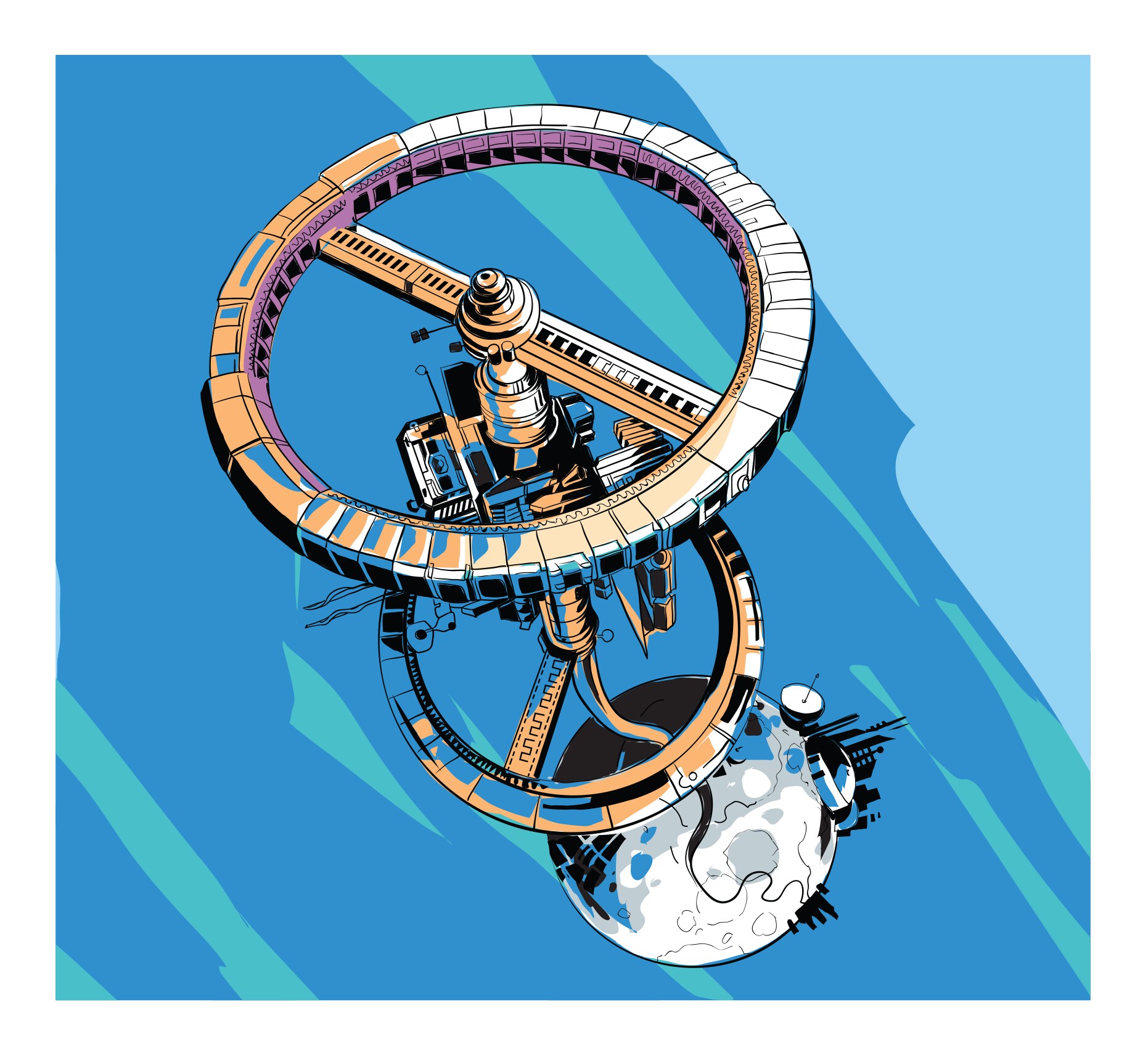
“We have to demonstrate human settlement on the Moon first, before we can colonise Mars,” says Dibyendu Nandi, of IISER, Kolkata. “It will be a proof of concept of what long-term living modules on an astronomical body would look like.”
The moon, less than 400,000 km away, would then act as a stepping stone and a refuelling station. A colony could potentially be nuclear-fuelled, since the helium-3 isotope – of which there is very little on Earth – can be found here in abundance. However, nuclear fusion reaction as a source of power, incidentally, far less polluting than the more common nuclear fission, is a concept still in its infancy even here on Earth.
NASA, ESA, China and Russia all plan to start building moon bases over the next two decades. NASA has plans for regular landings from 2028 on.
A concrete-like construction material, dubbed Lunarcrete, will be made using dust, rocks and mineral fragments from the moon’s surface, with urea from urine acting as a plasticiser.
Lunar soil, rich in iron and titanium oxides, would be mined for oxygen.
.
Lift-off

NASA is testing nuclear-powered rockets, which would allow for faster transit times over longer journeys, and provide more power for on-board instruments.
Meanwhile, SpaceX has begun testing its Starship, a stainless-steel spacecraft capable of carrying super-heavy loads and up to 100 people. Starship is designed to be reusable, and when it gets off the ground, will be the largest, most powerful, launch system in the world.
The vessel has had two test launches so far, in April and November. Both failed.
“In space science, every failure is a key to success. You need mavericks with a lot of money, who are willing to take chances that public institutions such as NASA or ISRO would never dare to,” says Nandi. “You need to be slightly crazy to make transformative leaps.”
A third Starship test flight is tentatively scheduled for early next year. This one may also seek to demonstrate the vessel’s ability to refuel in orbit, a first for any spaceship.
The refuelling is key because most existing spacecraft spend most of their fuel jettisoning themselves away from Earth’s gravity. The ability to refuel in orbit would make it possible to go much farther, much more easily, at a far lower cost.
.
Powering up
The most obvious source of power for interplanetary spacecraft is the Sun. But the Sun becomes an erratic, unreliable and inconstant source in the absence of an atmosphere.
Enter RTGs or radioisotope thermoelectric generators. These nuclear-powered generators have been used by deep-space probes such as NASAs Voyager probes, which have exited the solar system and gone interstellar.
Powering a colony on another planet would be another matter, given that power would be required for every aspect of life, from artificial gravity (gravity on Mars is about 38% that on Earth), air and water, to communication, temperature control and food production and preservation.
A paper by scientists from the University of California, Berkeley, published in Frontiers in Astronomy and Space Sciences, compared the two methods of generating power – solar and nuclear – and found that an efficient, flexible, lightweight photovoltaic array that uses compressed hydrogen to store energy would be the most effective source across at least half of Mars, factoring in how gases on that planet’s atmosphere might absorb and scatter light. Nearer to the poles, which don’t receive much sunlight, nuclear would be a better option, the report stated.
.
Life support

The International Space Station (ISS) is providing valuable insight into how water and air might be recycled on an interplanetary journey.
This June, the levels of water recovery on ISS hit a milestone when they rose from 93-94% to 98%, after the installation of a brine processor that now filters leftover urine brine.
Moisture from breath and sweat are recycled on board too.
Air is more difficult. About half the oxygen on the ISS is still brought over from Earth. The rest is recovered from the carbon-dioxide exhaled by the crew, or made by passing electricity through water and spitting it into hydrogen and oxygen.
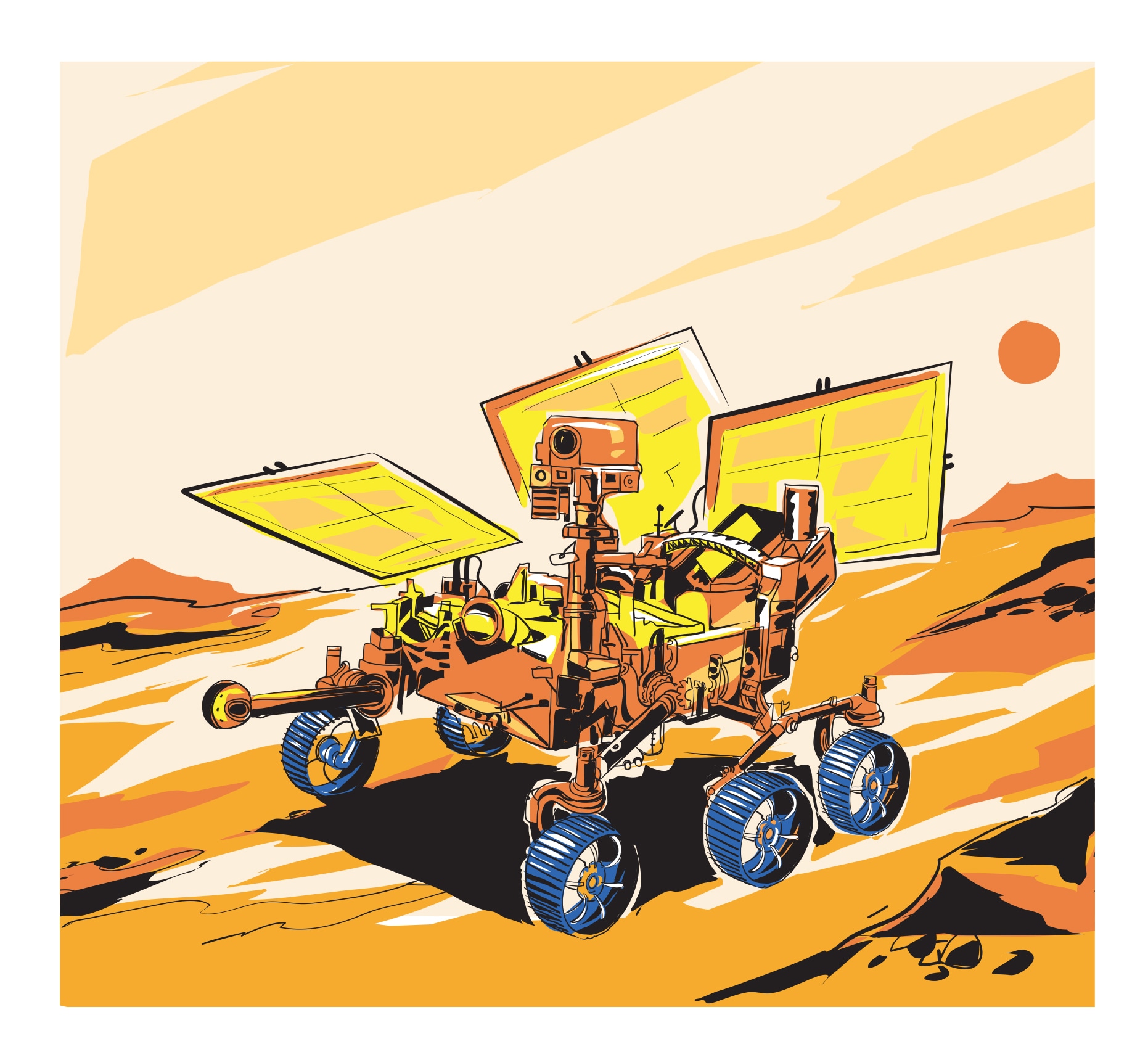
On Mars, water could potentially be extracted from the water ice buried beneath the surface of the red planet. And fresh oxygen is already being extracted from the carbon-dioxide in its thin atmosphere. Since 2021, NASA’s Perseverance rover has been extracting oxygen from CO2 on Mars using a Mars Oxygen In-Situ Resource Utilization Experiment or MOXIE device. They have, admittedly, been trace amounts so far.
.
On the menu
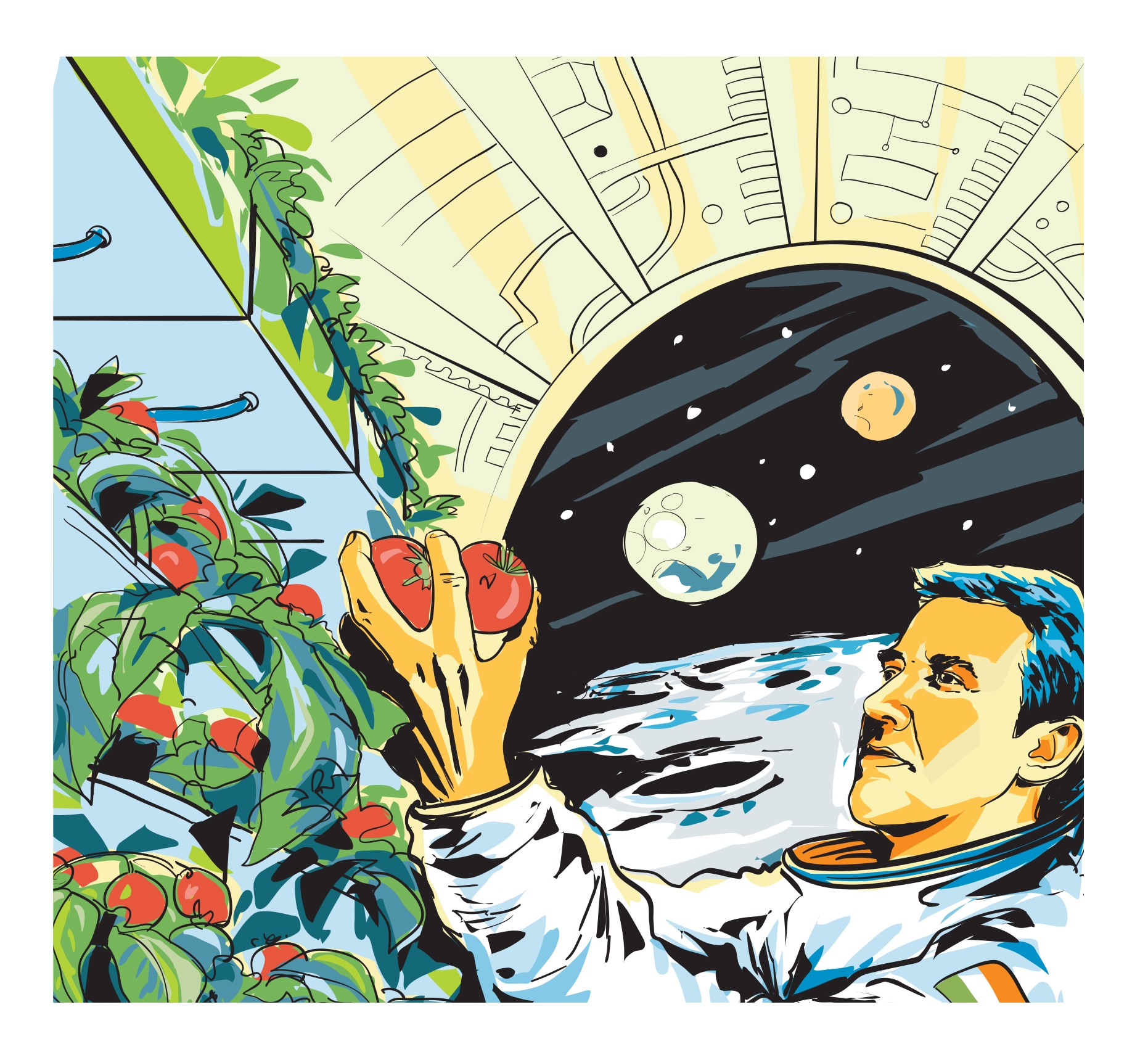
In 2019, a leaf sprouted on the moon. It belonged to a cotton seed planted in China’s Chang’e 4 lunar lander biosphere. The little leaf died less than 14 Earth days later, as the moon rotated on its axis and lunar night fell, and temperatures plunged to -170 degrees Celsius. Seeds of potato and thale cress did not germinate.
But plants have been growing successfully in space since the early 2000s. Various types of lettuce, cabbage, mustard, cress and kale, and zinnia flowers, have been grown on the ISS, as part of experiments to assess the impact of space and microgravity on genetics, nutritional values and other parameters.
Fresh tomatoes, peppers, berries and beans could be on the menu next.
Plants would be crucial on a long-haul journey because they also produce oxygen, purify water through transpiration (which can be captured from the atmosphere and consumed), and would be a vital psychological element, providing a reassuring reminder of home.
On Mars, cyanobacteria, a type of microscopic algae found abundantly on Earth, could help get hydroponic kitchen gardens started, since these bacteria break down carbon-dioxide to produce organic molecules.
A 2021 study by scientists at the University of Bremen, Germany, published in the journal Applied and Environmental Microbiology, showed that cyanobacteria could potentially be grown in a low-pressure, toxic environment such as that of Mars, and could also help neutralise toxic compounds found in Martian soil.
It would likely be a limited diet on that planet, however, since vegetables rich in carbohydrates need more space to grow, and all protein would have to be made by fermenting genetically modified microbes in a lab.
.
Talk time
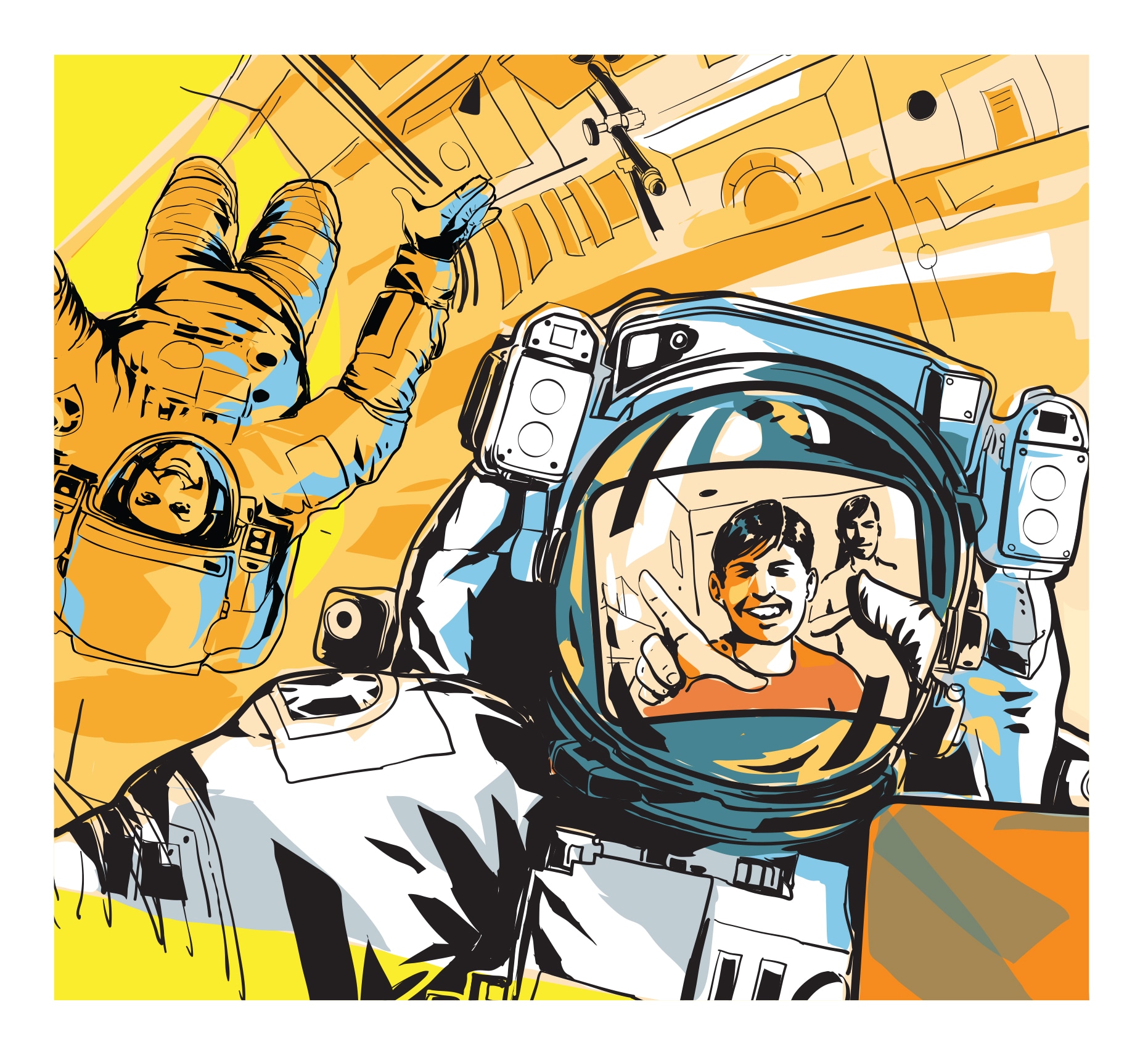
It would take about 20 minutes for a message from Mars to reach Earth, when carried by radio waves travelling at the speed of light. This is not accounting for solar flares, technical disruptions, and extreme distances at different points in both orbits.
A key effect of lags and breaks in communication, experiments conducted here on Earth have found, is that the isolated space travellers become more cohesive and collaborative as a group but more autonomous in their decision-making, and less communicative with ground control.
This has potentially severe ramifications for an eventual colony of humans on Mars.
For now, NASA’s Deep Space Network, set up in 1958 and expanded and upgraded dramatically over time, is using an array of giant antennas in California, Madrid and Canberra, to maintain steady communication with multiple spacecraft as Earth rotates.
DSN will be used to communicate with the Artemis missions when they travel to the south pole of the moon in 2024-25.
The next generation of DSN will move beyond radio-frequency communication as well, to include communication through high-powered lasers, which would carry more data at far higher speeds. Memes on the moon? It can’t be ruled out.
.
Blue genes
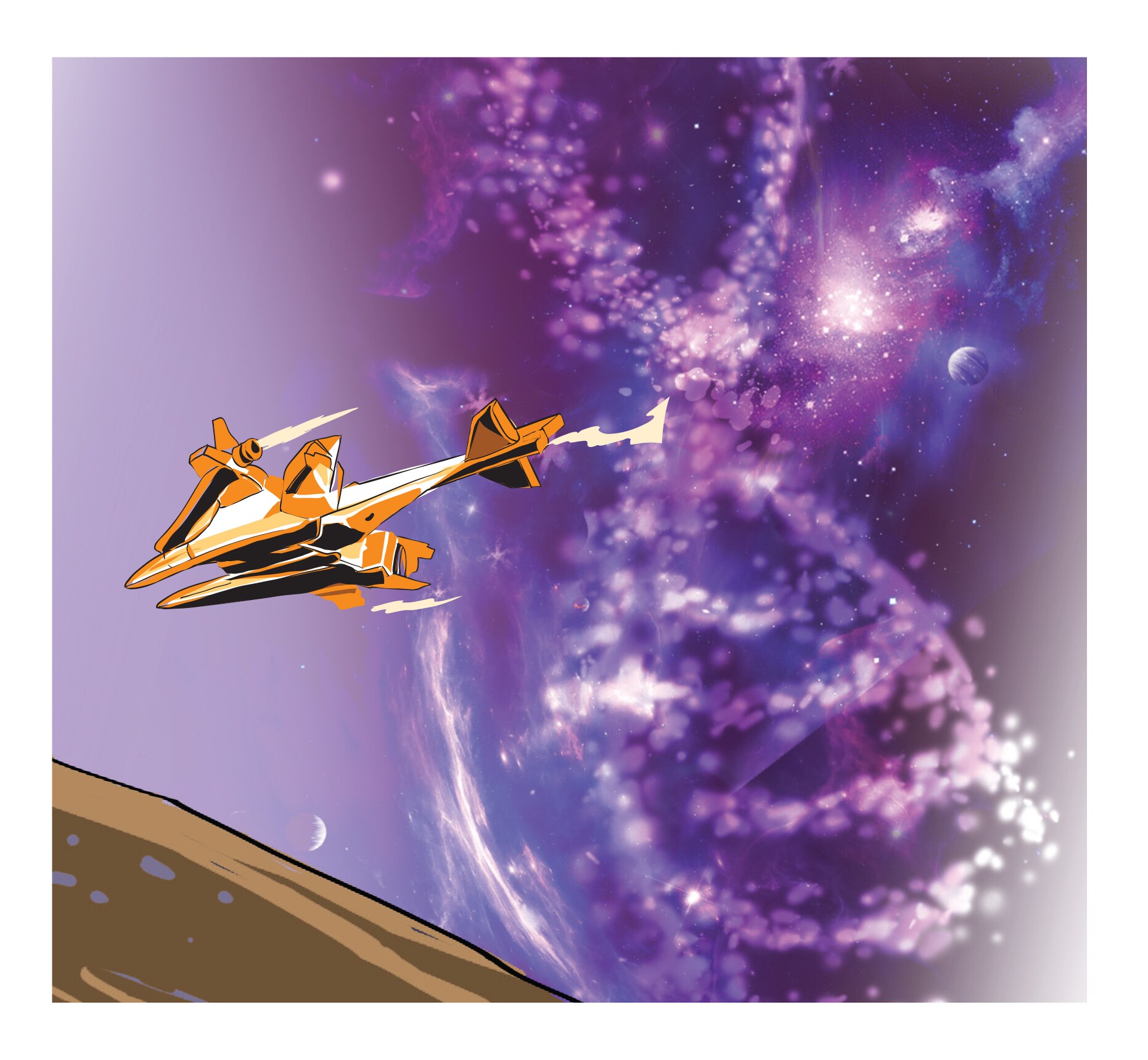
NASA’s landmark twin study — which examined the genetic make-up of astronaut Scott Kelly, who spent a year in space between 2015 and 2016, and the genes of his identical twin Mark Kelly, an astronaut who never left Earth — showed how remarkably the human body can adapt to the extreme environment of space.
Researchers found that significant molecular and physiological changes were reversed by as much as 90%, after Scott returned to Earth.
On a trip to Mars, astronauts would experience three different gravity fields: weightlessness on the way there and back, a third of Earth’s gravity while on Mars, and Earth’s gravity when they return. Bone and muscle mass typically fall by as much as 1.5% a month in space, because of the low gravity fields.
As for having babies on Mars, NASA sent the first samples of frozen human sperm to space in 2018, which showed DNA damage and moved differently after the journey. That same year, astronauts from Japan successfully cultured mouse embryos aboard the ISS, which developed normally into blastocysts, or cells that develop into the foetus and placenta. The experiment was then ended.
As on Earth, plant life would likely come first. It will likely be at least a few generations before mice or men are born on Mars.
.
OUT-THERE TECH
Terraforming, cryogenics, wormholes… where are we on the more extreme routes to interplanetary travel?
- Terraforming is the idea of being able to trick a planet into changing its atmosphere to resemble Earth’s. In 1961, astronomer Carl Sagan first proposed injecting Venus with photosynthetic bacteria to absorb the planet’s carbon-dioxide.
Mars would need to be pumped full of carbon-dioxide to thicken its thin atmosphere and kick off a greenhouse-gas effect that would raise its temperature and support the existence of liquid water. Only, that would require an atmosphere about 100 times as thick as its current one. And a 2018 NASA-sponsored study by scientists from the University of Boulder showed that, even if we could source all the carbon-dioxide needed, it would take 10 million years for Mars’s atmosphere to just double.
- NASA and ESA, among others around the world, are studying induced torpor as a means of reducing the strain of interplanetary travel, and the resources required for it. In this approach, a person would be kept in suspended animation by lowering their core temperature, reducing metabolic rate, and feeding them intravenously. A 2018 study by Russian scientists showed that it is possible to induce torpor in non-hibernating animals such as rats and return them to their normal state a few days later. The risks are so high with a system as complex as the human brain and body, however, that there has been no talk of human trials.
- Think of it like a piece of folded paper, they say of wormholes. Poke a pencil through and it goes from points A to B instantly. The concept has been discussed by physicists such as Albert Einstein and Nathan Rosen. No evidence of an actual wormhole has ever been found. Could we make one? Even in quantum theory, studies have emerged with findings that are incompatible with each other.
-
HOW EARTH-LIKE DO WE WANT IT?
They’re calling it the lunar Anthropocene.
Researchers at the Kansas Geological Survey argue, in a paper published this month, that a new geological age for the moon has begun, one defined by the activity of humans.
On Earth, it is generally considered that the Anthropocene began in the 1950s, with a century of post-Industrial-Revolution activity pushing the planet into a new geological age defined by human actions and their impact. The peak of that impact has been the intensifying climate crisis.
In the coming 50 years, missions and projects already planned will change the face of the moon, the Kansas paper, published in the journal Nature Geoscience, states.
There is a need, “to dispel the lunar-static myth and emphasise the importance of our impact, not only in the past but ongoing and in the future,” lead author Justin Holcomb, a postdoctoral researcher, added in a statement.
Already, bags of human excrement sit on the moon. There are plans to begin construction there, using a version of concrete called Lunarcrete.
“It is important to understand the vulnerability of these sites and discuss our impact before it begins, especially since they are not currently protected by any firm laws,” says Anil Bhardwaj, astrophysicist and director of the Physical Research Laboratory, Ahmedabad, a unit of the union government’s Department of Space.
Harnessing natural resources mindfully and efficiently will be key. Sustainable in-situ resource utilisation (ISRU) is a step in that direction, Bhardwaj adds. But ISRU is unlikely to yield the habitats and changes humans require long-term (or short-term).
“The question then is, how do we avoid the mistakes we’ve made on Earth? And with multiple superpowers vying for space domination, aiming to establish colonies and mine for resources, the challenges are manifold.”
— Anesha George


