
 E-Paper



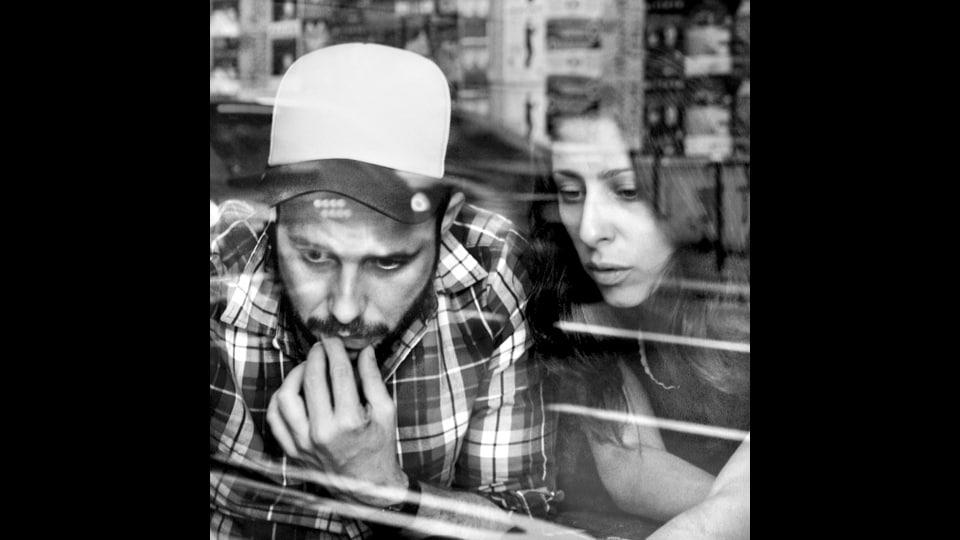
An art work driven by empathy just won €35,000: Wknd chats with artists Brognon Rollin

 Prefer HTon Google


Previous works explored paralysis and loss, through the beacon of a lighthouse, and silent tracks in a jukebox. This installation uses sobriety tokens, in an arcade-game setup.
Time is universal, we are told; it operates the same way for all of us on Earth.
But is it really that simple?
In a layered art installation that has won the €35,000 Marcel Duchamp Prize, artists David Brognon, 48, and Stephanie Rollin, 46, explore how differently time unfolds, for those battling addiction.
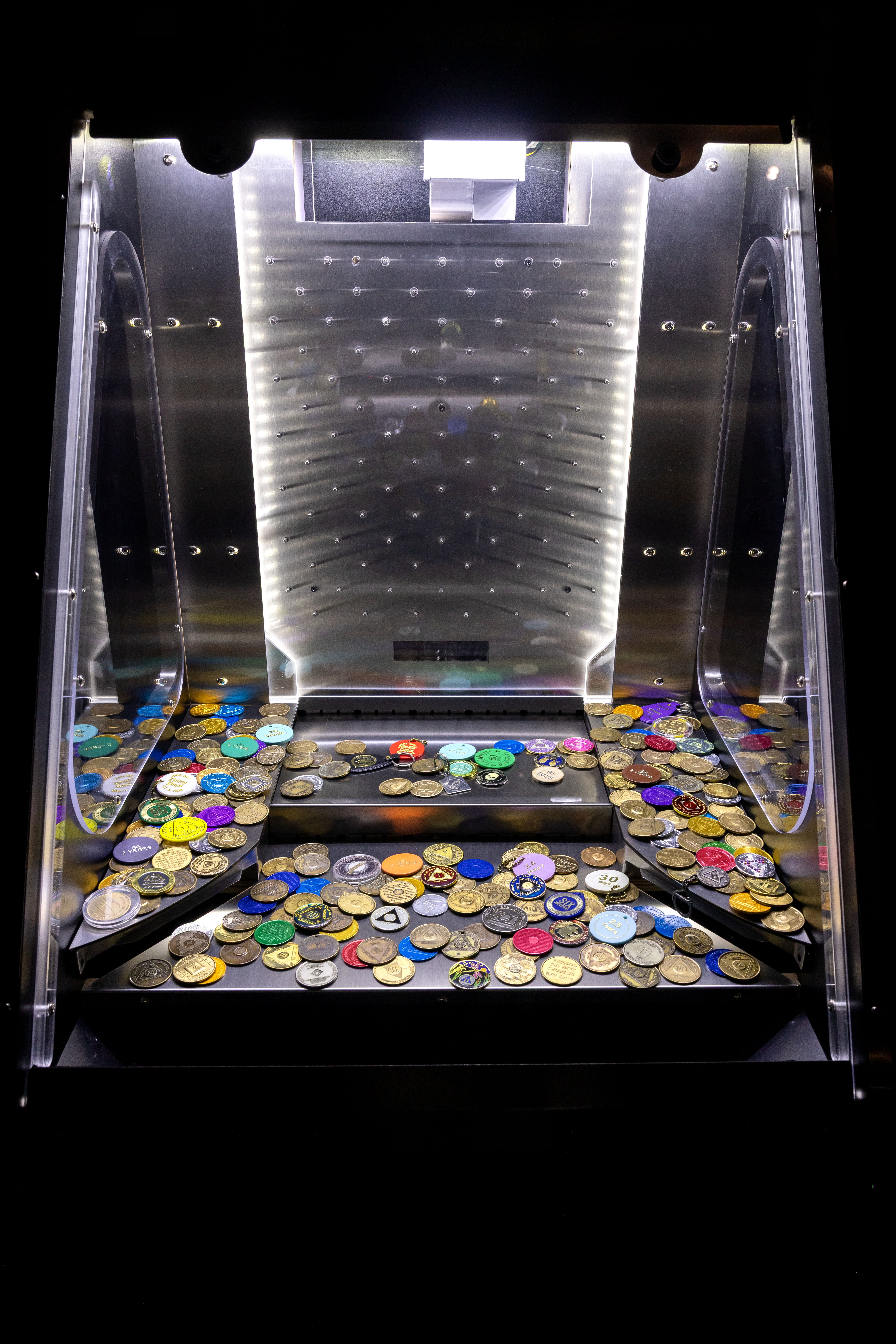
The installation is made up of over 1,000 sobriety tokens from around the world, representing dependencies on alcohol, narcotics, nicotine, gambling and food. It is titled 5,376 Years, 1,892 Months, 1,110 Days, 1,201 Hours (the amount of time the tokens, together, represent).
There are two aspects to the installation. First there are the chips, distributed across four glass-encased stands reminiscent of coin-operated arcade-game machines. The machines self-activate at sporadic intervals, tossing the tokens about, inviting the viewer to contemplate how time can be a gift, a prize, a source of chaos or an unending challenge, for those in various stages of addiction.
The second element involves three illuminated wall fixtures, controlled by an unseen volunteer named Kate, now eight years sober. She changes the intensity of the white light, in keeping with her mood. It is up to the viewer to interpret what a fluctuation might mean, but given that Kate can adjust the light from wherever she is, the sense of connection with a real-life subject is rendered immediate and tangible.
The exhibit opened to the public at Musée d’Art Moderne in Paris in October and will be on view until February.
Brognon Rollin, who create art in one voice and speak as one too, say they want their art to “remind people that we are all in this crazy world together, and that we must listen more and have more empathy.”
Excerpts from an interview.
How did you come up with the idea for this?
We started thinking about this a long time ago, when certain people close to us were struggling with addiction. We always keep the human as our primary focus. We are also interested in how time can be different for all of us. This work unites those two themes.
If one is looking for drugs all day, on the street, or is ill or an inmate in a prison, the way one consumes time is really very different, even more intimate. This project explores different perceptions of duration in this way.
How did you get your hands on so many tokens?
We started work on the project almost five years ago. We now have 1,033 tokens, from Canada, the US, Britain, Switzerland, France, Russia and Denmark, and one from Mexico.
We just kept collecting them until we were asked the title of our project, which is when we had to do the math. We think the number we got to at the end was like the fate of the work.
Some tokens were donated or sold to us, by people moving on to a new chapter in their lives. Others, we bought on eBay.
The commonality is that they stand for hope, sadness, resilience, failure and courage. And every coupon has a story. It was important to us that each of these was once held by a person; they were not just a theoretical duration but a lived time in someone’s life.
You talk a lot about the role of empathy, in your art.
We want to talk about subjects that people don’t want to speak about or even acknowledge. Many would rather just avoid what is dark and painful. As artists, we have realised that when you whisper something, lay it out gently and say it softly, it’s easier to understand than when you shout. So we use art and materials and mediums to discuss fragility and vulnerability, and to remind people that we are all in this crazy world together, and we must listen more and have more empathy.
How do you end up with works of this scale, though? Previous installations have included a lighthouse, and moments of silence from around the world, playable on a jukebox.
What’s important to us is that we find that common thread that connects people, through which human fragilities and failures can be shared.
Just after the Paris attacks of 2015 (coordinated attacks by Islamic State that left 130 dead), we observed a minute’s silence for the victims at a terrace café on a crowded street. We started thinking about sharing with the world such moments when people collectively held their breath in the aftermath of different situations: violence, death, disaster.
How could we do that? We were reminded of a jukebox in a bar, where you choose a song for everyone, and everybody has to listen to it.
We replaced the music in the jukebox with moments of silence observed and recorded around the world. People interacting with the work could choose the silence they wanted to listen to. It’s not really all quiet either. There are always ambient sounds.
The coin pusher too is like the jukebox. One gets to engage with the stories of thousands of people one would otherwise not hear about, through these tokens.
The Light House did something similar too…
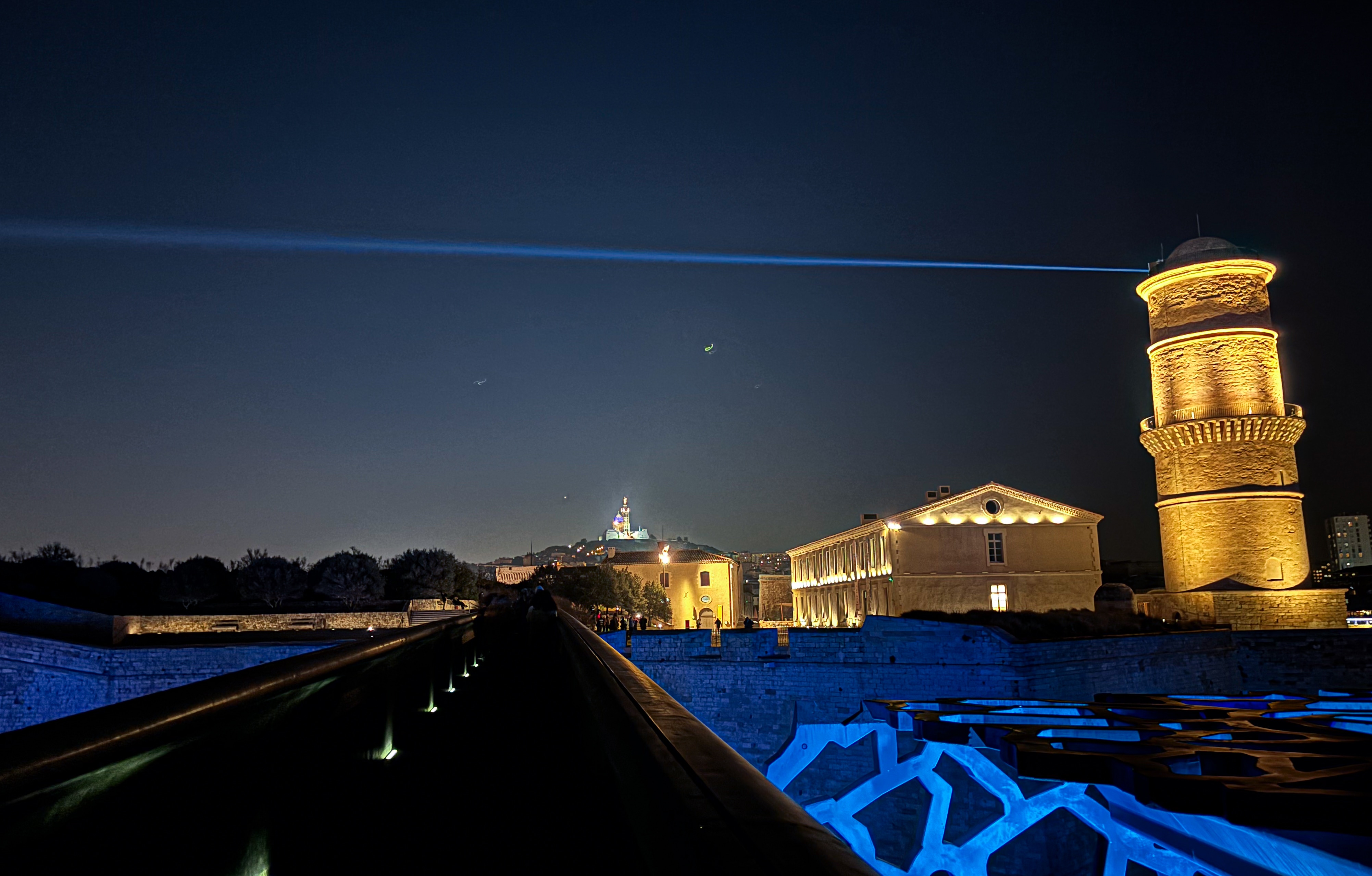
Le Phare (The Light House) was a temporary public-art installation in Marseille, France, in which a historic lighthouse was reactivated, with the movement of its light altered to match the eye movements of a paralysed musician.
We collaborated with French hip-hop producer Pone of the band Fonky Family, who has been paralysed and deprived of speech, amid a battle with amyotrophic lateral sclerosis (ALS). Pone uses computerised eye-tracking technology to communicate, and to browse the internet. We digitally tracked the movements of his pupils during a conversation, and relayed the data to the tower’s lighting system, so that the lighthouse beam mirrored his eye movements in real time.
You have worked together for 20 years, after meeting somewhat by chance. Did you both know immediately that you had met your artistic soulmate?
We met as an art-school graduate from Luxembourg (Rollin), and a former graffiti artist from Belgium (Brognon), working at the Mudam Museum of Modern Art in Luxembourg. And we immediately had this “intellectual crush” on one another.
We eventually collaborated on our first work in 2006.
We have been working together since. But it took us about five years to give up our jobs and the security that comes with that, to focus only on creating art.
Is it true that you don’t work on projects unless both fully agree on every aspect?
Yes. Unless we both think that an idea is great, and that we cannot find a better one, we don’t work on a project. The only way this works is because we totally trust each other. So if either of us thinks something is a bad idea, we drop it. There are no negotiations.
And until the completed work gives us goosebumps, we do not stop.
What inspires you?
Different things. I (Brognon) walk around at night, observing how people behave. I am also inspired by history books that tell me how we are making the same mistakes.
I (Rollin) am obsessed with protocols and theories, and an art work called As Slow as Possible, by John Cage in Germany. He has slowed down a musical piece to such an extent that it will run for 639 years. It started in 2001 and will end in 2640. Nobody will ever hear the entire melody. This works inspires me to build something we won’t see the end of either.
What shape will that take next?
We are in the process of creating a monumental sculpture on the Belgian coast for the Beaufort Triennial. It is one of the most ambitious projects we have worked on so far. It will be on display from late March, but we can’t say much more about it yet.
What do you like most and least about working together?
Most: When we put our two minds together, we produce better work.
Least: Having to agree on everything all the time makes production much slower. But at least we can be sure the piece is right.


