
 E-Paper



Bob Dylan and the Bauls, an India story

 Prefer HTon Google


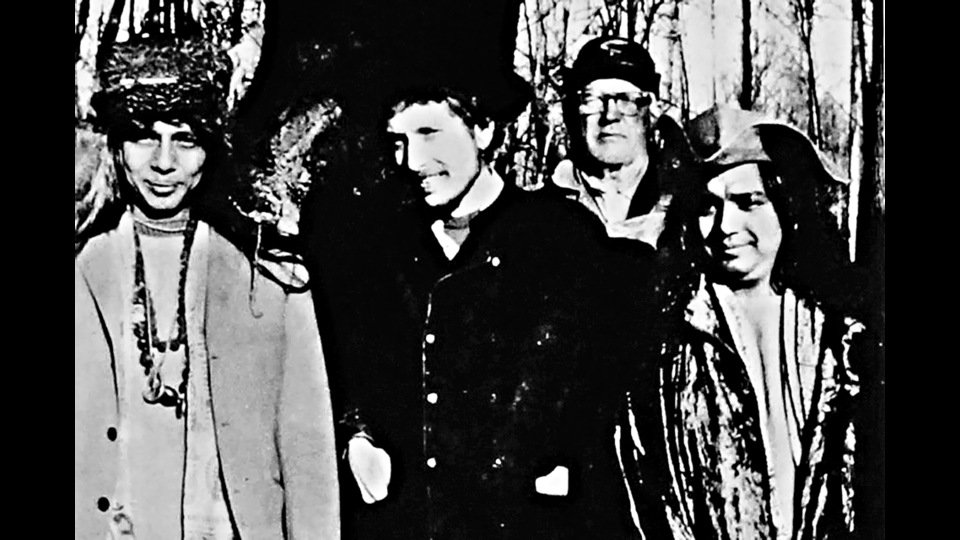
See how the wandering minstrels of Bengal forged a lasting connection with the bard. He even visited Kolkata in 1990 to attend a wedding in the family.
It’s the winter of 2017 and it’s reassuring to find Sally Grossman back in Kolkata, seated on her favourite settee in her favourite room at the Oberoi Grand. Everything seems fine and constant — restaurants brimming with families out for pre-Christmas dinners; the warm aroma of coffee, cream and cocktails; the mellow strains of jazz, and Grossman back on her annual visit to the city.
Everything except the “gift” she’s picked up for me at the airport in New York, on her way here from her home in Bearsville, Woodstock — November 2017’s special collector’s edition of Rolling Stone magazine featuring the Complete Album Guide of Bob Dylan with a black-and-white photograph of a much younger, clean-shaven troubadour on the cover.
I’m thankful. And I’m intrigued. Dylan hasn’t been Grossman’s favourite person by a long stretch. Over our many meetings across nearly a decade, the wife of Albert Grossman — the erstwhile legendary manager of Dylan and a man widely credited with having hastened the American singer-songwriter’s ascension to stardom — has consistently shied away from any discussion of her relationship with the bard.
There was a time when they were fast friends, as captured gloriously on the cover of one of Dylan’s early shape-shifting albums, 1965’s Bringing It All Back Home, where Grossman is the only other person featured. There she is, in a flaming-red dress, on a chaise lounge at the Grossman home, delicately holding a cigarette as Dylan looks out piercingly from the foreground — an iconic image in popular culture.
She would light up when speaking about flying in a chopper with her husband and another one of his clients, Janis Joplin, over a crowd of 300,000 gathered at 1969’s historic Woodstock festival; laugh remembering that George (Harrison, the Beatle) made her sit with the thuggish bikers’ gang Hells Angels at the equally epochal Concert for Bangladesh in 1971; rage over guitarist Jimi Hendrix’s fans trampling the vegetable bed at the Grossman home.
But she wouldn’t discuss Dylan. Having shepherded the musician to stratospheric celebrityhood, Albert and he had an acrimonious and mud-slinging fallout in 1970, never to reunite. “Dylan is not a social person,” Grossman told me back in 2009. “Rather, I’d say, he is asocial. It’s a dysfunctional thing. I have nothing to say.” Nothing, not even when in 2013 I visited Grossman in Bearsville, during a visit to the US. “Ah, Bob! He lived around there,” she replied cheekily, more keen on showing us the area and her then-late- husband’s grave (he died in 1986).
Now this gift. Why, I asked, laughing. “You are from Kolkata and I thought people here have this thing for Dylan and you might enjoy,” Grossman replied.
It’s true. Three drinks down at parties, you can’t sing Blowin’ in the Wind without a dada interrupting with his rendition of singer-songwriter Kabir Suman’s Bengali take, Kotota Poth Perole. The more cultish will go with Arunendu Das’s interpretation. The absolute geek, coming off classes at Jadavpur University where Dylan’s music has been part of the English syllabus, will point at Purna Das Baul’s esoteric and joyful deconstruction of Mr Tambourine Man in Bengali.
Within this cultural tic for Dylan, Sally Grossman plays a cementing role. It goes back to a common friend of the Grossmans and Dylan, the American Beat poet Allen Ginsberg, who visited Kolkata and Bengal in the early 1960s and was taken in by the city’s cultural life as well as by the music and lifestyle of the Bauls, the wandering minstrels of Bengal, specifically the ailing Nabani Das Baul.
Ginsberg returned to the US and narrated “his mind-altering” experiences to the Grossmans. So powerful was the imagery that the busy Albert made the time, on the egging of his wife, to come to Kolkata. Nabani Das had died by then, but his son Purna Das kept alive the fire of Baul music. “Albert was stunned on hearing Purna sing in our hotel room and immediately decided to get the Bauls over to the US. It was sheer, sparkling magic,” Grossman told me in 2009.
Staying at the sprawling Bearsville estate of the Grossmans, the Bauls — Purna Das, his brother Luxman and their entourage — befriended a wiry young Dylan, also a neighbour then. At Albert’s exalted Bearsville Studios they would loll around and exchange cultural capital over sessions of drinking and smoking, Purna Das told me in 2016. The American was especially intrigued by the Baul instruments, the dotara and the khomok, and would fiddle with them.
“One evening, Dylan told me that if I’m a Bengali Baul musician from India, he is an American Baul,” Purna Das said. “We both sing music of the roots. Our objectives, he told me, were the same: To sing for people, tell their tales and spread love through music.” The famously reclusive musician, Purna Das said, would later make a furtive visit to Kolkata in 1990 to attend Das’s son’s wedding at their Dhakuria home. He abruptly ended that visit, as the story goes, on being peeved at the news of it leaking out.
Though Dylan’s musical oeuvre remained avowedly attached to American folk-rock traditions, the America-visiting Bauls found a permanent and curious spot in American music history when they made it to the cover of Dylan’s 1967 album, John Wesley Harding. Dylan was then recovering from a motorcycle accident and undergoing a spiritual curve helped by discussions on Baul philosophy. He underlined an era of cross-cultural exchange when he painted the watercolour art for the cover of The Band’s influential 1968 debut album, Music from Big Pink, with representations of an elephant and a musician playing a misshapen sitar. The Baul musicians also performed at about 30 concerts across America, some co-billed with Joan Baez and Dylan.
Sally Grossman, for her part, built a comprehensive compendium at Baularchive.com, a result of decades of research. But she won’t return to Kolkata any more. On March 11 this year, Grossman died at her home in Bearsville, having spent 54 of her 81 years helping build bridges across continents and cultures, one of which included in its span Baul musicians, Woodstock, Kolkata and Bob Dylan.


