For endangered species, the International Union for Conservation of Nature (IUCN) maintains a Red List of Threatened Species. For crumbling monuments and vanishing cultural artefacts, there’s Unesco’s List of World Heritage in Danger.
What happens to foods on the verge of being lost forever? For at least 25 years, Slow Food, a global organisation that champions local food and traditional cooking, has maintained Ark of Taste, a catalogue of endangered heritage foods. There are ingredients, preparations, livestock breeds, and vegetable and fruit cultivars. Chef Joel Basumatari, founder of the Nagaland chapter of the Slow Food movement, calls the Ark “a documentation of the vast and exciting range of indigenous edible products”. But consider it also as a database of Earth’s biodiversity, a measure of how we eat, and a menu of what we stand to lose amid templatised development.
These are foods that rarely make it to touristy cafés or Michelin-star pop-ups. Few people have tried them, even in their home countries. There’s tchoukou a cheese traditionally made by women farmers in Niger, to preserve dairy surplus for the lean season. There’s the rare black Cerdagne turnip, which grows in the sparsely populated valley between France and Catalonia. Zazamushi, an entry from Japan, literally means “insects under the slow current”, and refers to larvae collected from the undersides of river rocks. People in the landlocked Nagano Prefecture, with no access to the ocean, traditionally enjoy the larvae with soy sauce and sugar.
More than 5,700 foods from 150 countries are now part of the Ark. Only 112 are from India, and range from peanut chutney powder from Andhra Pradesh to regional grains and the hard chhurpi cheese made by Himalayan communities. Most entries come from the states of the north-east, which Basumatari says has helped small farming and indigenous communities that are otherwise overlooked by commercial food networks. Every entry is accompanied by a list of resources for those wishing to buy or grow them, which provides easier opportunities for collaboration.
“After we added Meghalaya’s Khasi mandarin to the Ark in 2013, Presidia [Slow Food’s action wing] stepped in to promote the crop and conduct scientific studies,” he says. The fruit is small, sweet, hard to peel and more aromatic than standard varieties. The North East Slow Food And Agrobiodiversity Society sent samples to Slow Food’s festival in Italy in 2016. Growers traded tips, shared distribution networks. “It spread awareness about its distinctive flavour. We got support for farming self-help groups.”
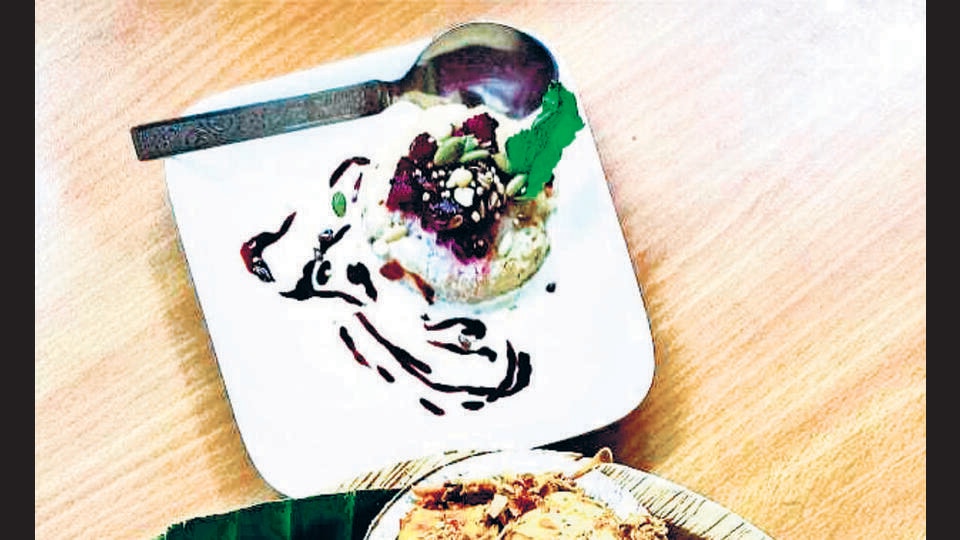
In Nagaland, Basumatari has worked with local growers and indigenous communities to have millets and preserves added to the Ark. “My favourite items on the list are the many Naga pickles and fermented soy pastes,” he says. “I just did a Naga cuisine pop-up event in Mizoram, at which I showcased some of the region’s food. Nagas have no dessert tradition, so there are no local desserts. But there’s always room to innovate. We made one using millets.”
The ark’s catalogue is online (fondazioneslowfood.com/en/ark-of-taste-slow-food/) and searchable. Anyone can nominate a food, and offer proof that it is threatened by industrialisation, genetic erosion, changing consumption patterns, climate change, the abandonment of rural areas, migration or conflict. Local Slow Food chapters review and recommend additions to the panel that administers the Ark.
“In some cases, products need to be rediscovered and put back on the table, and producers need to be supported and to have their stories told,” says a Slow Food international statement. “In others, such as the case of endangered wild species, it might be better to eat less or none of them in order to preserve them and favour their reproduction.”

 E-Paper