
 E-Paper



Gabbar Singh!!!: Wknd celebrates the timeless classic Sholay

 Prefer HTon Google


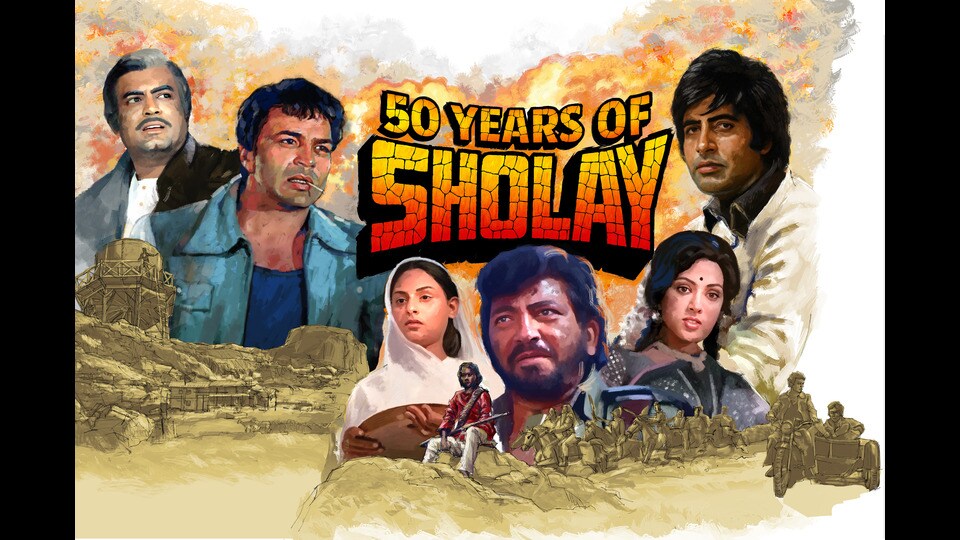
Everyone has a favourite line of dialogue, even if they haven't watched the film. See how it signalled youth, freedom, rebellion – and why it lives on still.
“You cannot plan a phenomenon, it just happens on its own,” Sholay director Ramesh Sippy once said.
He certainly didn’t expect the movie, his third after the hits Andaz and Seeta Aur Geeta, to be the one he would be remembered by.
He didn’t expect that phrases from it would resonate, half a century later, among people, including many who hadn’t seen the film, but somehow knew exactly what it was about.
At nearly two-and-a-half years, Sholay took an age to make. Friends and peers began to make jokes about this epic saga in the making, out on the arid fringes of Bangalore.
When it was finally released, on August 15, 1975, it wasn’t an instant hit. In the second week, bookings were still so low that trade magazines began to estimate how much the distributors would lose.
Then it began.
By the fourth week, audiences were mouthing the dialogue with the characters. By the third month, not only was it still running, balcony tickets that cost ₹15 were selling on the black market for an unheard-of ₹200.
What Sholay was, was lightning in a bottle, and the stopper had come loose.
The film captured a youthful exuberance and recklessness — in young men and, crucially, women too — in a manner that was both gentle (and therefore palatable) and revolutionary.
There was more to the plot than two men who only have each other in the world. There is a simmering anger to Sholay, about the lawlessness that goes unchecked, prisons that act as revolving doors, and systems that cannot be relied upon, leaving people to choose between evils as they fend for themselves.
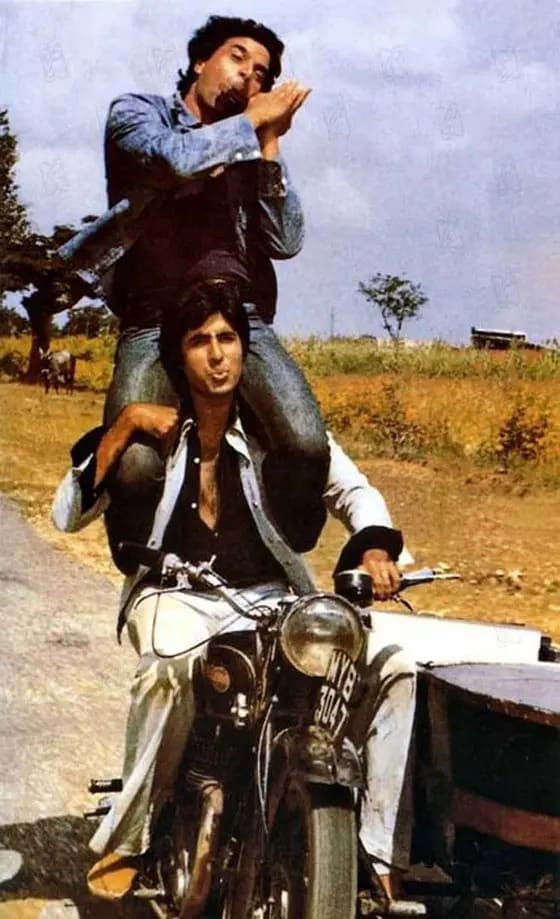
The film gave 1975 India — a country with an average age of 18 — two young, self-defining heroes (in Amitabh Bachchan’s Jai and Dharmendra’s Veeru) who navigated the world on their terms, but were good men nonetheless. It gave this young India Basanti (Hema Malini), a woman who did things her way as well and, highly unusually, ended up better off as a result.
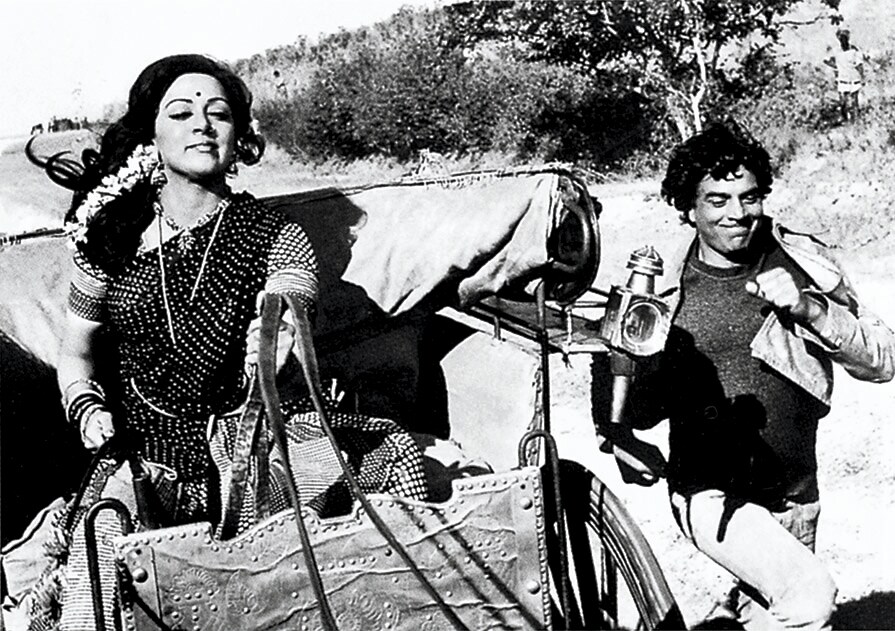
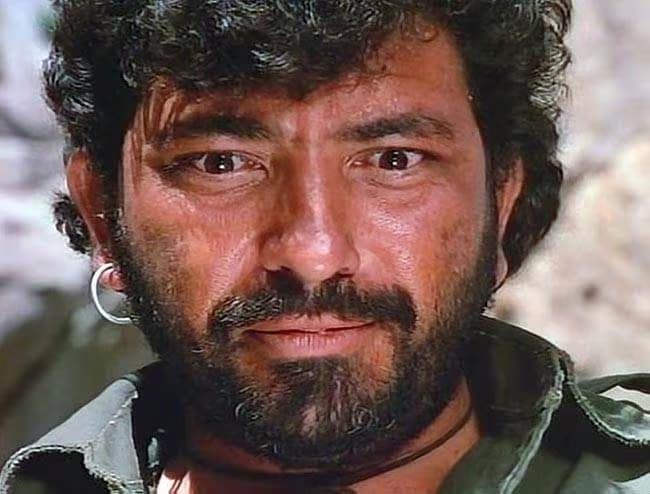
It made stars of its principal cast: Dharmendra, Hema Malini, Amitabh Bachchan, Sanjeev Kumar (Thakur Baldev Singh), Jaya Bachchan (as his widowed daughter-in-law, Radha) and the newcomer Amjad Khan (as the notorious Gabbar Singh).
Even the actors who played tertiary characters such as Kaalia (Viju Khote), Sambha (Mac Mohan) and Soorma Bhopali (Jagdeep) would be known for the rest of their lives by these names.
Technologically, Sholay broke new ground. It was a rare film shot on 70-mm film (as opposed to 35 mm), which meant a wide-open view for audiences as Veeru and Jai trundled down a road in their scooter, or raced up a hill on horseback to fight dacoits.
It was shot in stereophonic sound, so that the horses’ hooves seemed like they were resounding all around the viewers, as did the singing and the echoing cries. (This technology was so new that the sound-mixing had to be completed in London.)
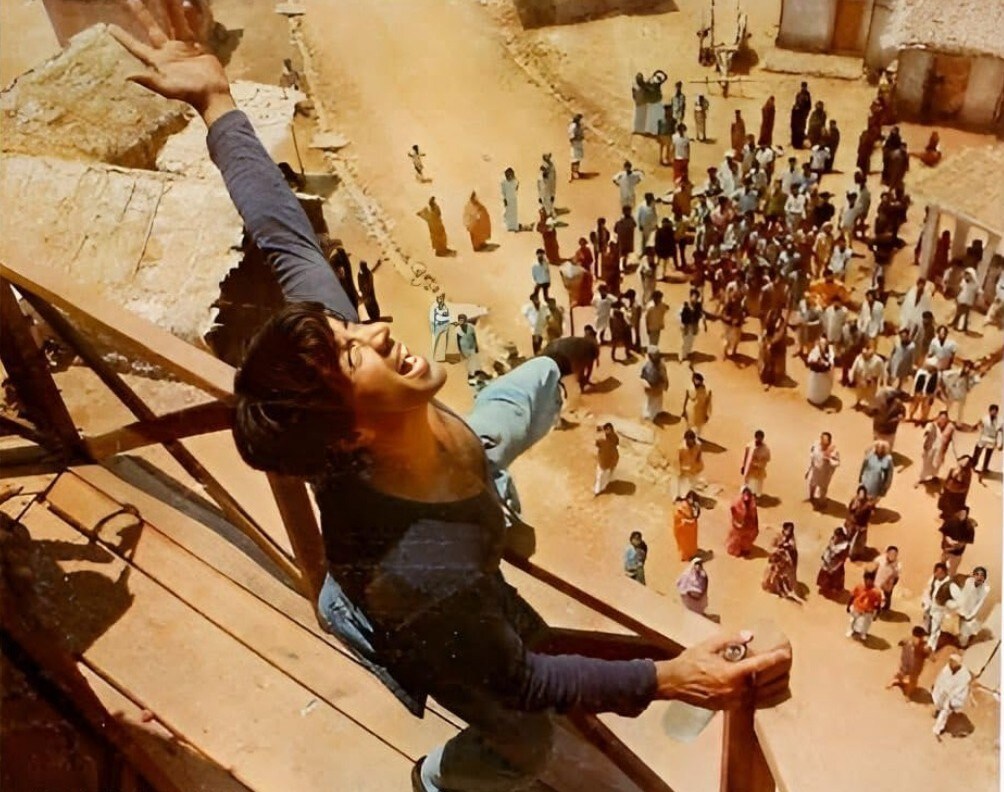
All this put together created a sort of alchemy and, 50 years on, echoes of the film still resound. A drunk man talking rubbish atop a water tower? That’s Sholay. A fast-talking woman in a two-boys-and-a-girl friendship? That’s Sholay too.
“Kitne aadmi thhe”, “Gabbar Singh!!!” and “Arre o, Sambha” still feature, in jokes, memes, YouTube videos, jingles and TV commercials. To mark its golden jubilee, here’s a look at the story of Sholay, in trivia.
IN THE BEGINNING…
* GP Sippy was the third producer to be offered the script. Two others passed on it before him, one citing a lack of time, the other, of inclination. Sippy and his 26-year-old son Ramesh Sippy, meanwhile, were looking for their next hit after Seeta Aur Geeta (1972). They had also been looking for a plot that could be shot in 70-mm, with stereophonic sound. When writers Salim-Javed (Salim Khan and Javed Akhtar) narrated the outline of the story to him, GP Sippy felt immediately that it checked all the boxes. “This is going to be a hit,” he famously said. “This film will run for five years.”
* Salim-Javed had worked with the Sippys before. Both had been resident writers at Sippy Films, at a salary of ₹750 per month. Working together, they wrote the screenplays for Andaz (1971) and Seeta Aur Geeta. It took the duo 10 weeks to write the plot, screenplay and dialogue for Sholay. They were paid a flat fee of ₹1.5 lakh.
* Salim named the small-time crooks Jai and Veeru after two friends from Indore. Thakur Baldev Singh was inspired by his father-in-law, a respected dentist in Mumbai. Gabbar Singh was inspired by Gabbar Singh Gujjar, a real-life dacoit who spread terror in the Gwalior region of Madhya Pradesh in the 1950s. He was known for cutting off the ears and noses of captured policemen before letting them go.
* As casting began in early 1973, everyone the Sippys reached out to had their own ideas for who they wanted to play. Salim-Javed had written Gabbar Singh with Dilip Kumar in mind, but the thespian wasn’t interested. Sanjeev Kumar wanted to play Gabbar, but ended up unforgettable as the sombre, armless Thakur. Dharmendra wanted to play Thakur, but few actors of his time could have made Veeru more life-like and likeable.
* Amjad Khan, son of the character actor Jayant, was an exception. Aged 32 at the time of casting, with only a few small roles to his name, he was desperate for a breakout role, was so committed to the character of Gabbar that he walked into the audition with crazy eyes, a scraggly bread and blackened teeth. He was cast on the spot.
Khan would go on to act in scores of films, but would be recognised, for the rest of his short life, as Gabbar Singh. (He died of congestive heart failure, less than 20 years later.)
* Rather ironically, the Sippys were unsure about casting Amitabh Bachchan. His breakout film, Zanjeer (1973), had not yet been released at the time of casting. All the actor had to his name were 16 flops. It was Salim, who co-wrote Zanjeer with Javed, who pushed for him to be cast. He even organised a special screening of Zanjeer for the Sippys. What they saw there sealed the deal.
THE MAKING OF A BLOCKBUSTER
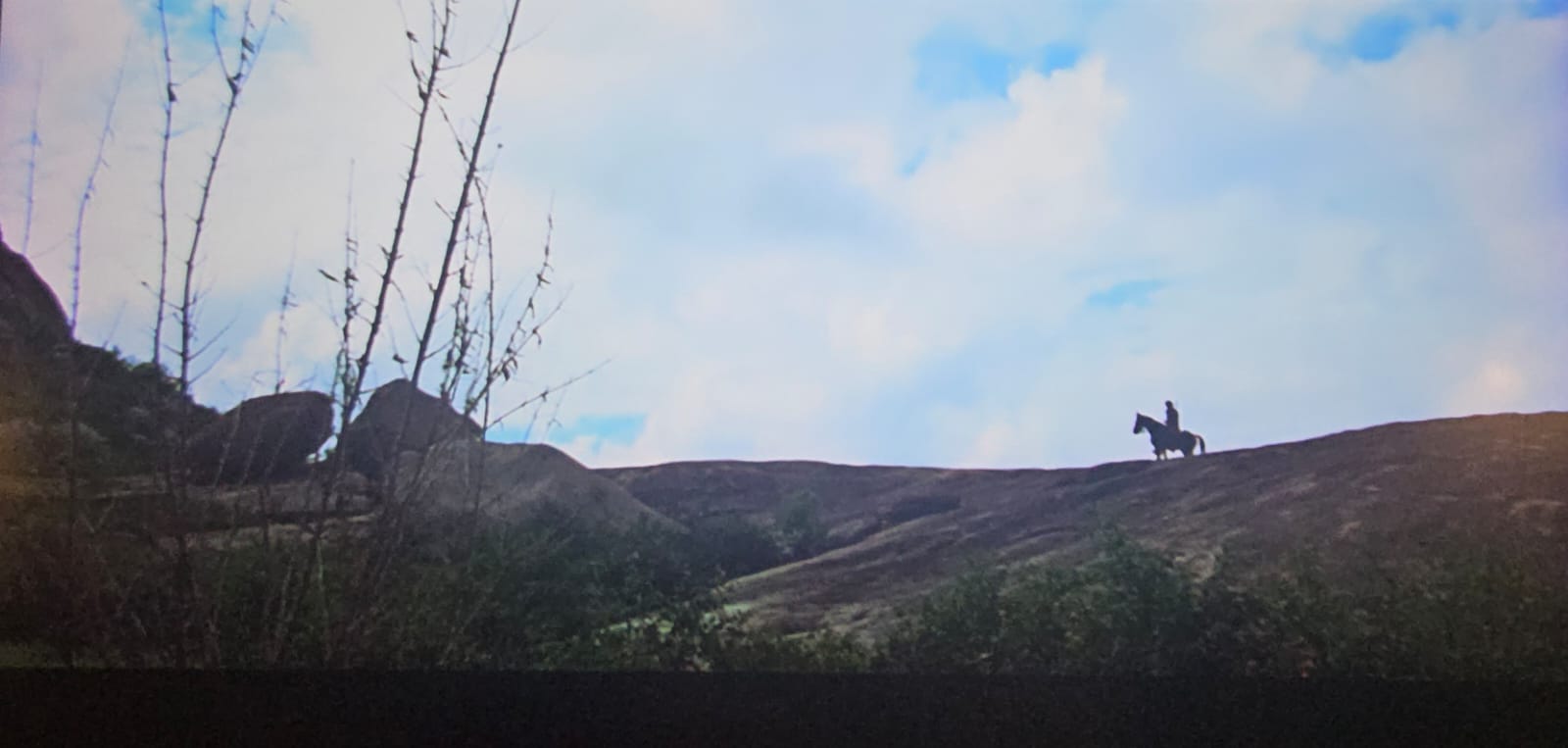
* The where of Sholay proved to be problematic. Most dacoit films of the time were set in the Chambal and shot across sets in Rajasthan. Ramesh Sippy and art director Ram Yedekar wanted their film to look different, so they decided to scout for locations in south India instead.
The rugged terrain of Ramanagara, near Bangalore, seemed perfect. But it was so remote that the production team had to build their own road from the highway to the set, and had to have telephone lines installed. Make-up rooms with attached bathrooms were set up within the sets . Barns were erected for the horses and a kitchen and pantry set up, large enough to feed a cast and crew of hundreds.
* Most of the key cast stayed in suites at the new Ashoka Hotel in Bangalore. Each had a car assigned to them, and every morning a cavalcade would head out of the city, snaking its way to Ramanagara.
* Amitabh Bachchan and Jaya Bhaduri had been married four months when filming began, in October 1973. She was in fact three months pregnant at the time. The first scene shot features just them: Bachchan walks up to the widow in white, to return the keys to her father-in-law’s safe. He has had a change of heart. He won’t sneak in at night, take the money and run.
* The shooting of Sholay also famously, and hilariously, shaped another film being shot in nearby Yelahanka: The comedian-director-producer Mehmood’s Kunwara Baap (1974). He was known for stacking his films with A-list cameos and took to shooting scenes with Sholay stars, whenever they weren’t required by Ramesh Sippy. Bachchan ended up with a whole role in Kunwara Baap, as a mechanic named Augustine.
MUSIC AND DIALOGUE
* With music by RD Burman, lyrics by Anand Bakshi, an orchestra featuring Pt Shivkumar Sharma on the santoor and Pt Hariprasad Chaurasia on the flute, the music made money even before the film was done. The Sippys sold the rights to Polydor Records for ₹5 lakh for five songs, in the biggest such deal of its time.
* It was always the dialogue that would live on most brightly, though. Almost a month after the film’s release, executives at Polydor were surprised to find that the album wasn’t selling. They re-released a 58-minute record with selected lines from the film, and sales figures rose. Gabbar featured prominently in that version. The label would go on to release multiple such versions, featuring the dialogue of Veeru, Jai, even Soorma Bhopali.
THE RELEASE
* Thirty months in the making and vastly overbudget, Sholay was finally ready for release in July 1975. Then the Censor Board watched it and told the Sippys it was far too violent. A former policeman could not, in the midst of Emergency, be shown kicking a man to death with hobnailed shoes made specifically for that purpose.
After multiple meetings in which they pled, cajoled and attempted to pull strings to keep their ending, the Sippys agreed to re-shoot it. Thakur Baldev Singh would stop himself just short; listen glaringly to a speech made about virtue and honour, delivered by a cop in uniform flanked by earnest havaldars; and Gabbar would get to live another day.
* In the last week of July, the cast and crew came together to re-shoot, re-edit and re-dub the new finale. The movie was finally released on August 15.
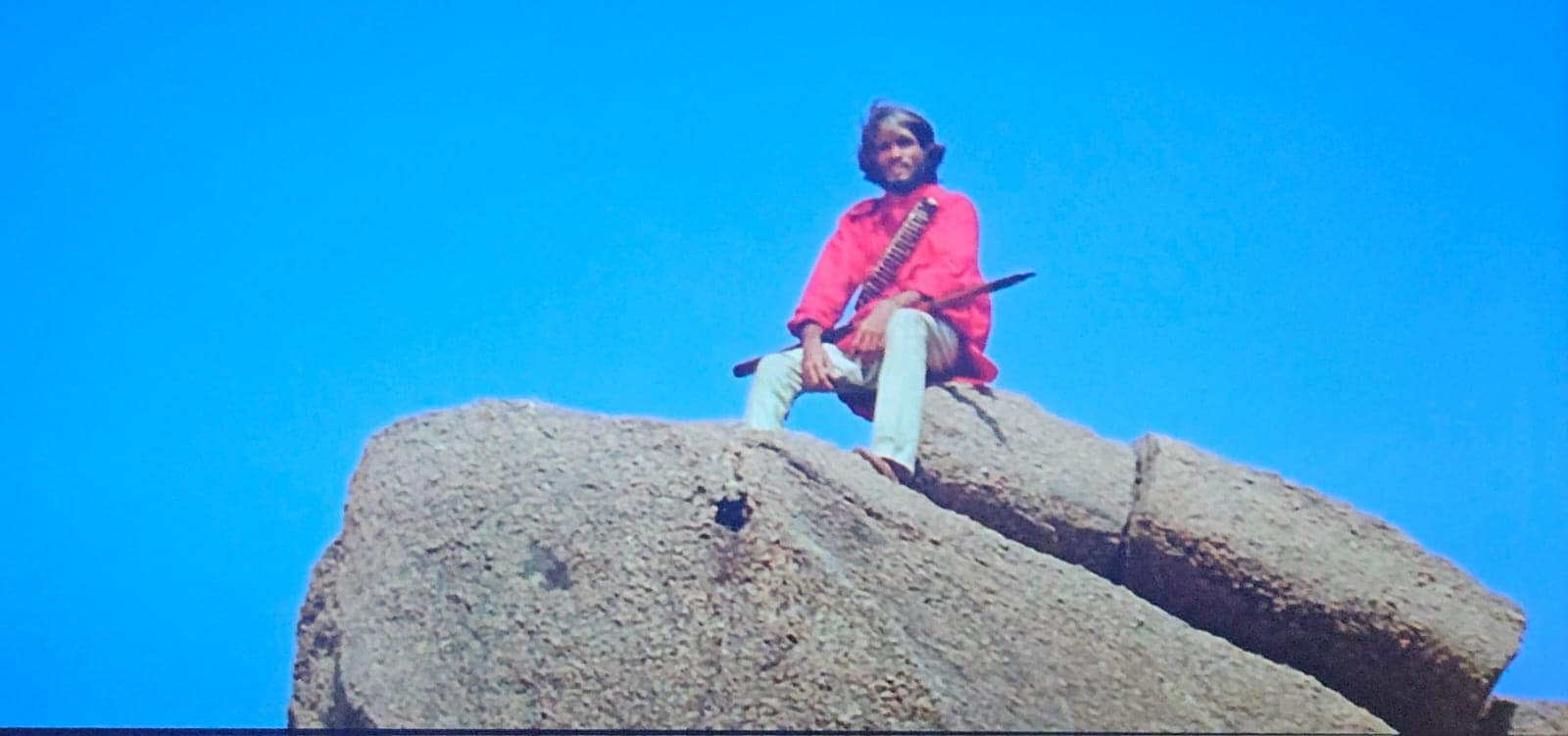
* Mac Mohan, incidentally, was livid at the first screening for cast and crew. Almost all his lines had been cut to reduce the film’s run time (which still stands at three hours and 15 minutes). He asked Sippy why he didn’t just cut Sambha out completely. The director promised him the audiences would remember his silent, pivotal, gun-toting character. All his life, Mac Mohan would be remembered as Sambha. It certainly helped that Gabbar Singh kept calling out, “Arre o, Sambha”, so the camera could pan to the lone gunman perched pensively atop a giant boulder.
* The August 15 release date, meanwhile, wasn’t at all what the makers had planned. It put Sholay in direct contest with Vijay Sharma’s Jai Santoshi Maa, about a long-suffering, pious woman. The movie drew devoted hordes.
Also released on that day was Kamal Haasan’s breakout Tamil film Apoorva Raagangal, a romance directed by K Balachander that also marked the debut of Rajinikanth.
Even accounting for all this, Sholay did badly.
By the second week, trade magazines were estimating how much the distributors would lose. Then it all shifted. By the fourth week, audiences were mouthing the dialogue with the characters. Three months in, balcony tickets worth ₹15 were selling on the black market for ₹200.
* Sholay’s theatrical run eventually did last five years. It would be screened on and off for decades, to mark anniversaries or simply in response to perceived demand. It is currently running still, on multiple streaming platforms.
To mark its 50th anniversary year, a digitally restored version had an open-air world premiere at the Piazza Maggiore in Bologna, Italy, in June. (The restoration took three years and was conducted by Shivendra Singh Dungarpur’s not-for-profit Film Heritage Foundation, in collaboration with Sippy Films.)
THE LEGACY
* Sholay’s success proved that it was possible for East to meet West in an action film. The movie married the visuals and spectacle of the Spaghetti Western with the ideas of dosti, dharm and badla (friendship, duty and vengeance) already deeply embedded in Indian cinema.
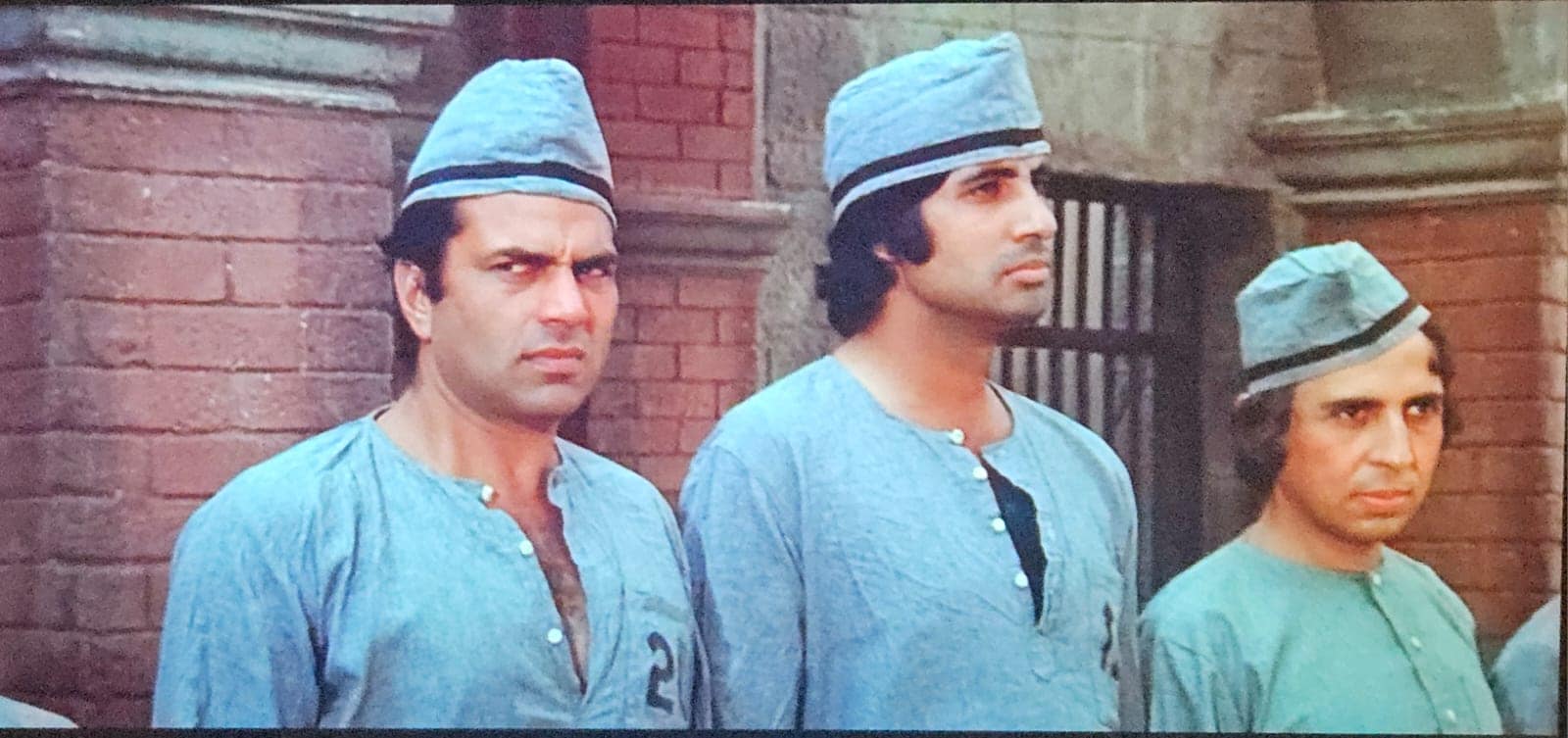
* In addition to innovating with the action template, Sholay reinvented ideas of male friendship in Bollywood. Jai and Veeru didn’t just ride around and fight bad guys together. They shared vulnerabilities and silences; talked about their feelings. They clearly knew each other’s backstories, and shared a bond shaped by this. They hugged and comforted each other. They looked forward to softer lives in which they would help raise each other’s children.
* What made this unusual mix of bluster and tenderness relatable, even aspirational, was the way Jai and Veeru were written, directed and enacted.
These were sharpshooters and heedless risk-takers, but they were also just two regular guys from the city. Their banter was easy; their emotions recognisable. They had only each other in the world, and they stuck together. They had only a few belongings, and held on to them with care.
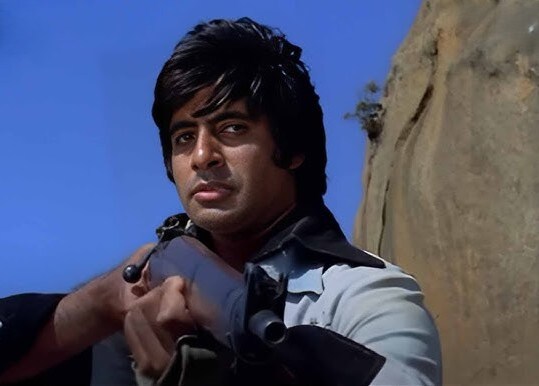
In Bachchan’s case, these include a red cotton T-shirt he wears over and over, and a denim jacket with little silver stars on the back. In his final scene, he is in his favourite jacket still. As he is thrown from his horse, forced into a gully and crouches there, fighting alone, a subtle frame shows some of the stars have been scraped off. On screen, he won’t outlive them by long. He doesn’t know it yet, but in another sense, he is about to become immortal.
(Karishma Upadhyay is a film journalist, critic and author of Parveen Babi: A Life)
.
LOOKING BACK: The key players
* “Sholay is the eighth wonder of the world. Every character became a star. But the real hero was the (two-headed) coin… One of my favourite scenes was the tanki scene.”
Dharmendra, now 89, speaking ahead of the release of the digitally restored version of Sholay earlier this year
.
* “Some things in life remain permanently etched in your mind. Sholay is one such film.”
Amitabh Bachchan, now 82, ahead of the release of the digitally restored version
.
* “I will never come out of the Basanti shadow.”
Hema Malini, now 76, to PTI
.
* “You cannot plan a phenomenon, it just happens on its own.”
Ramesh Sippy, now 78, speaking at the Pune International Film Festival in 2018
.
LOOKING BACK: The fans
* Sholay was the best iteration of the “stranger comes to town” trope. This trope existed long before it, but this was the best version in a very long time.
Vir Das, comedian and actor
.
* I believe Sholay fandom is inherited. I had heard the whole story multiple times before I actually watched the film. Though I first watched it in the mid-’90s on a VHS and a 21-inch TV, the hype matched the experience. It was magical. The reason Sholay is this popular is perhaps because the makers broke all rules of filmmaking. Before this, we either had very urban inspired, Western-looking thrillers or very desi, grounded, heartland epics. Sholay merges the two in a way that had not been seen before.
Vasan Bala, director of Mard Ko Dard Nahi Hota (2018) and Jigra (2024)
.
* I used the song Mehbooba, Mehbooba in an ad for Strepsils in the 1980s. Made by Prahlad Kakkar, with animation by the legendary Ram Mohan, the ad featured a singer who has a bad throat. The tagline was “Gale mein kharash? Strepsils”. It’s very difficult to pinpoint why the film continues to have such an impact decades later. The fact that so many ads have referenced Sholay over the years has also contributed to its long shadow on pop culture.
Ambi Parameswaran, advertising veteran and author of Nawabs Nudes Noodles: India through 50 years of advertising


