Wildlife photography is all about the timing. Photographers spend hours, sometimes days, waiting for the perfect picture — of a white-throated kingfisher unfolding its iridescent blue wings against the sky, a cobra going for the kill, a tiger leaping into a pond. A microsecond too late, a hint of an angle off the mark, and you’ve missed it.
The upside of shooting creatures that don’t care for your lens is that you can end up with images that are surprising, endearing, absurd, and ridiculously human. Like a shocked squirrel holding its hands up in seeming surrender, a playful cub leaping to grab a lion’s drooping genitals, or a turtle seemingly flipping someone the bird.
These were the images that won the overall Comedy Wildlife Photography award for each of the last three years. The Comedy Wildlife Photography Awards were launched in 2015, by British photographers Paul Joynson-Hicks and Tom Sullam, to showcase the lighter side of wildlife photography and use it as a tool for conservation.
The contest is open to all; there’s even a junior category for children. A jury of established nature photographers picks finalists, as well as eventually one overall winner and winners in other categories — creatures of air, land and water; best portfolio; best video. There’s a people’s choice award too, for which votes are collected online.
This year’s winners will be announced on October 22. The shortlist of 42, whittled down from 7,000 submissions, features a number of Indians. The prize is bragging rights and a week of safaris in Kenya’s Masai Mara. Meet four Indians hoping to make the cut.
WATER BABIES
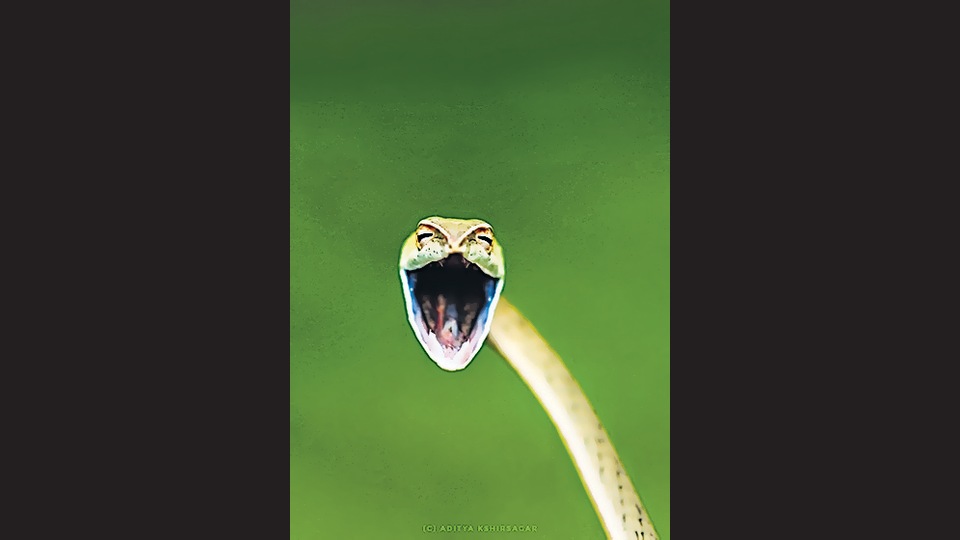
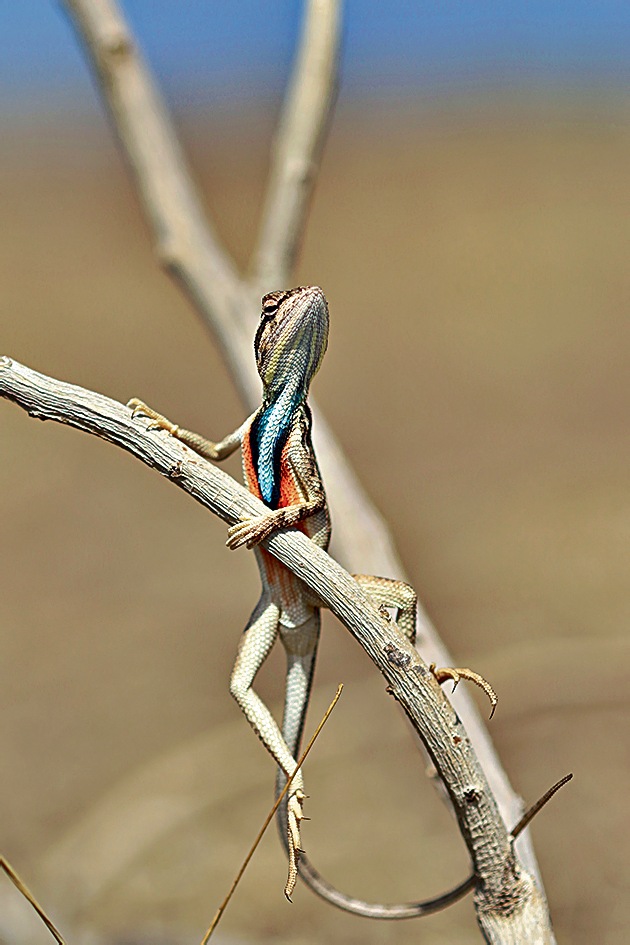
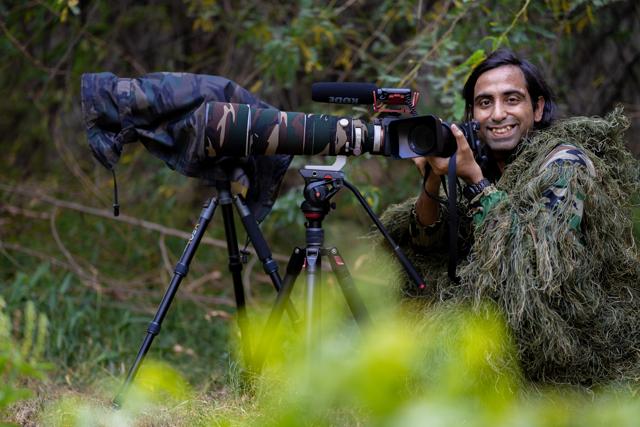
Aditya Kshirsagar, 32, a marine engineer from Solapur in Maharashtra, has two images on the shortlist: a vine snake that looks like its laughing uproariously, and a grumpy fan-throated lizard.
“I found the lizard near a lake in Solapur, which has a good population of them,” Kshirsagar says. “In breeding season, they puff out the colourful fan near their throats, to impress females and show dominance over a territory.”
Kshirsagar found this lizard resting on a twig, taking a break from all the showboatery, seeming for all the world like someone not having very much luck at a singles’ bar.
“The funny moments are all about how you perceive them,” Kshirsagar says. In the case of the vine snake, it’s a highly deceptive photograph. The snake isn’t cheerful at all; it’s actually rather annoyed. A craned neck, puffed-up body and wide-open mouth are a defensive stance it takes when it feels threatened. “But they are beautiful harmless creatures,” says Kshirsagar. “And at this angle, it really does look like the snake is laughing.”
Kshirsagar has been a hobby photographer for 15 years, and has focused on the flora and fauna of Solapur for the last 10. “Grasslands are considered wastelands, but I want to show people that they really are not,” he says.
THE HUGGER
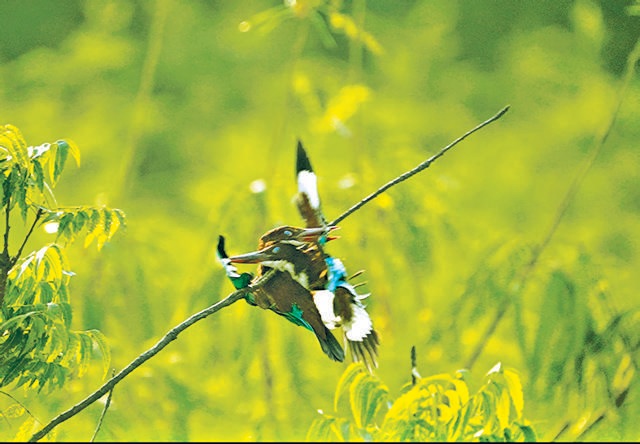
Rahul Lakhmani’s shortlisted video shows what looks like a white-throated kingfisher going in for a massive hug. The 30-year-old entrepreneur shot the video from the terrace of his Delhi home. “When I slowed it down and watched it on my monitor the first thing it made me think of was hugging my friends after the Covid lockdown.”
The video is all of 0.2 seconds long, but slowed down by up to 20x, it shows the two birds colliding in what looks like painful joy.
Lakhmani says he’s asked around and this doesn’t seem to be typical behaviour for these birds, so in all probability the little guy just miscalculated his landing, lost his balance, or was actually expecting his mate to get out of the way.
Lakhmani has been a hobby landscape photographer for nearly four years. In the pandemic, with no trips to plan, he began training his lens on the birds around his home. “I used to be a night guy and fall asleep only by 10 am. Photographing wildlife around my house has changed my life,” he says.
THE DANCER
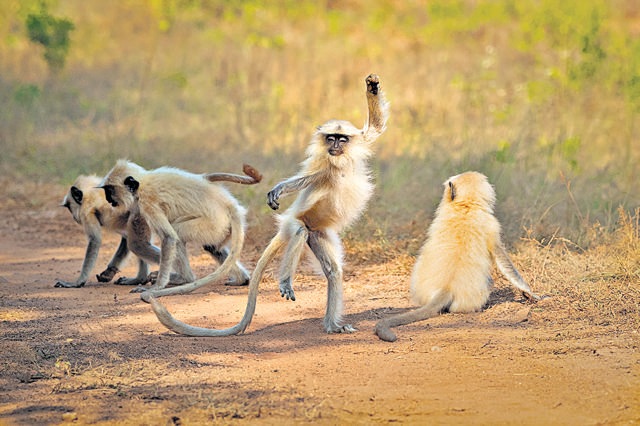
While Lakhmani’s video was a happy accident, Sarosh Lodhi’s image of a dancing langur was much more calculated. Lodhi, 48, an entrepreneur from Nagpur in Maharashtra, has been a hobby wildlife photographer for over two decades. While on a safari and waiting for the larger animals to appear, he always makes it a point to park near the nearest group of langurs.
“They’re always monkeying around and doing something you can watch and photograph while you’re waiting,” Lodhi says.
On this evening at the Tadoba tiger reserve, Lodhi and his group had heard the alarm calls from langurs, deer and peacock, indicating that a big cat was near. So they stopped near a watering hole. “The big cat never showed,” says Lodhi. But he kept himself busy training his lens on a particularly mischievous langur. And walked away with an image of what can only be described as joyous revelry. What was the monkey thinking? Who knows.
THE LOGGER
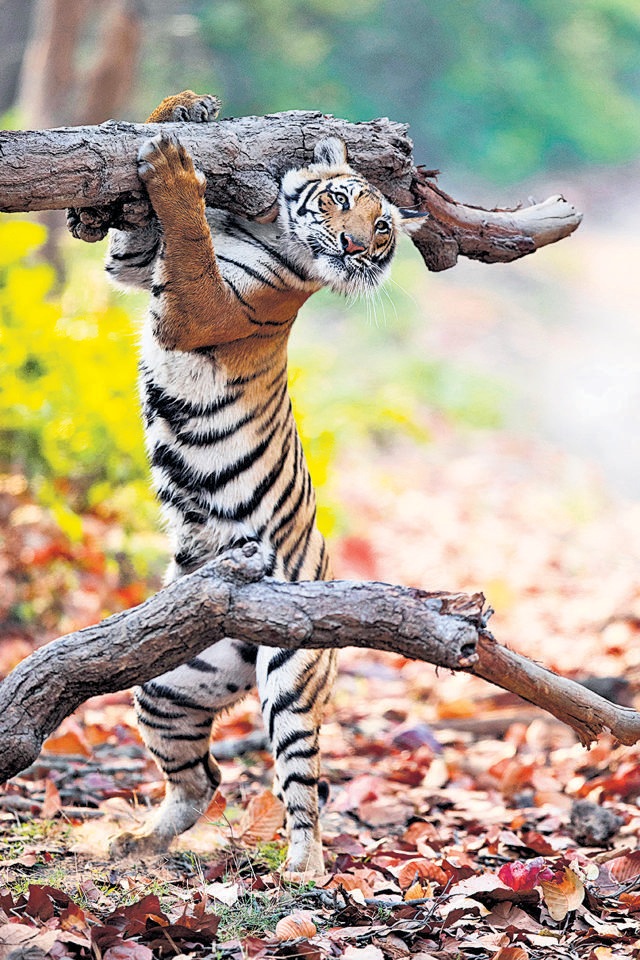
A tiger does make an appearance on the shortlist: Chhattisgarh medical student Siddhant Agrawal’s photo of Chhoti Paro, daughter of the famous Paarwali of Corbett National Park, Uttarakhand. In the image, the tigress looks like she is carrying a log home on her shoulders, perhaps so she can start up a fire for dinner.
“We were expecting to see Paarwali, but it looks like in the last year, she has given up some of her territory of her daughter,” says Agrawal, 20. Chhoti Paro had just crossed the river, the sunlight still shimmers on the water behind her. She came up to fallen tree and began rubbing her neck against its bark, as tigers often do to mark their territory with their scent. In that split second, Agrawal captured the frame that looks like she’s heaving a log home.
As the child of wildlife enthusiasts, Agrawal has been immersed in forests since he was five. He began taking pictures at 10, and has a particular interest in tigers. “I even track their activities on social media… who gave birth to cubs and how the territories change over time,” he says.
Other images in the running this year include whispering raccoons, a pied starling in a Monday morning mood, a giggling seal and a golden silk monkey letting out a scream as he finds himself in the unfortunate position of having a wire wedged between his hind legs. May the best critters win.

 E-Paper