E-Paper



Inclined to greatness: A Wknd chat with Bhutan PM Tshering Tobgay

 Prefer HTon Google


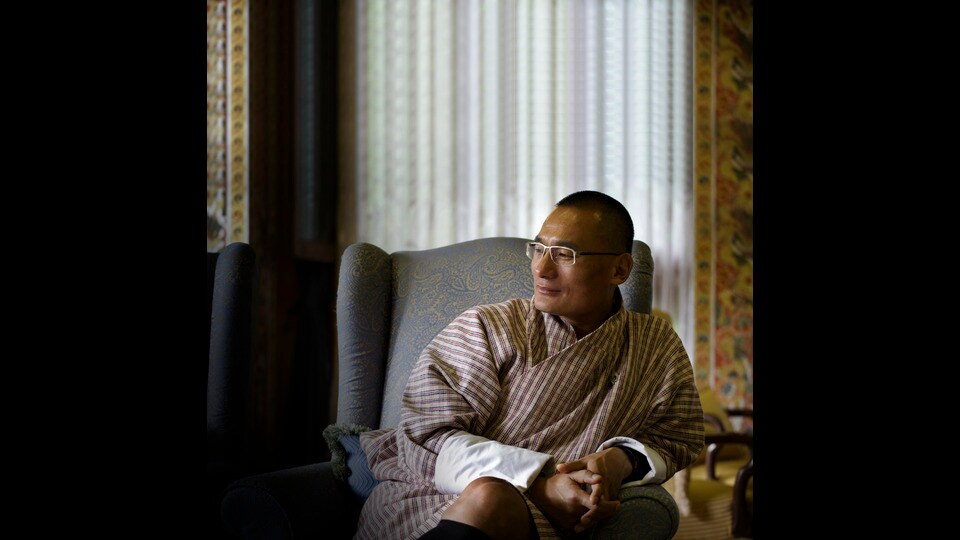
In a new book on leadership, he stresses on a shift from conquest to responsibility in an overheating world. ‘It’s time to reset what it means to be a leader.’
Humans shouldn’t be allowed to conquer everything, says Tshering Tobgay, Prime Minister of Bhutan.
In his tiny country on the eastern edge of the Himalayas, more than half the land area is protected as nature reserves. At the cost of tourism dollars, the mountains are left alone. Climbs above 6,000 metres were banned in 1994, because of the damage caused to these delicate ecosystems. Since 2003, mountaineering has been banned altogether.
“These peaks are sacred to us. Why should they be ‘conquered’? Just the knowledge that we can do it should be enough, shouldn’t it?” Tobgay says. “We need to learn not just to live in harmony with nature, but in harmony with what has always been.”
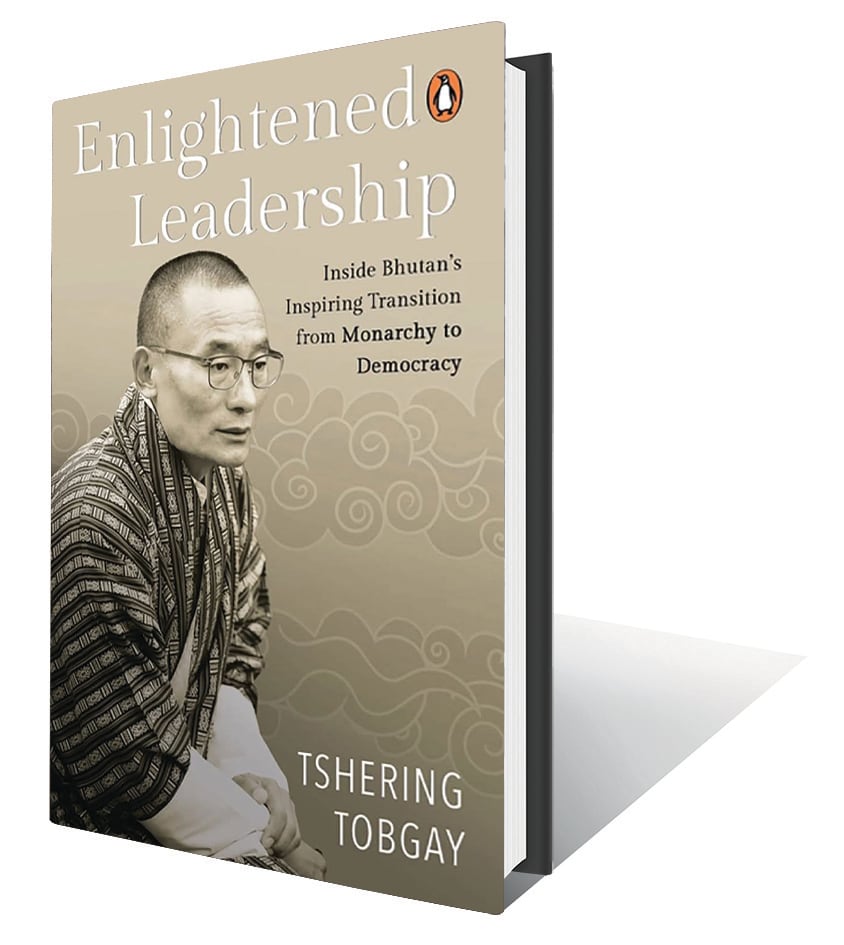
Tobgay, 59, began his second five-year term as PM last year. In his new book, Enlightened Leadership (due for release by Penguin Random House in March), the environmental advocate (he won the German Sustainability Award in 2016, during his first stint as PM) and former civil servant (with the departments of education and labour and human resources) writes about some of the issues his country has had to address in recent years — including the core one of commerce versus ecology.
The book explores peace, wisdom, stability, happiness, sustainability and service as ideas rooted in Bhutanese culture.
Even accounting for how tiny the country is — smaller than the state of Kerala and home to fewer than 8 lakh people — could such a culture offer lessons for a flailing and overheating hypercapitalist world?
It is time to reset what it means to be a leader, Tobgay says.
Amid dwindling glaciers, flooding, forest fires and landslides in his country and around the world, environmental stewardship must be a crucial part of any idea of leadership, he adds. “We are constantly trying to conquer and acquire. We need to look at how much humanity and the planet can absorb.”
Excerpts from an interview.
What was it like to be the first leader of the Opposition (2008-13), in a newly democratic country?
Ahead of the first-ever election, I was the first civil servant to resign and help start the first political party of Bhutan. But in the polls, we got thrashed. That was a very sobering lesson in democracy.
The next election was a surprise. We won and I served as PM. We worked hard to deliver on our promises and thought we would win again. Not only did we lose (in 2018), we lost in the primaries (the first of two rounds), which meant we couldn’t even contest in the general election. Last year, we won again and are serving.
Our democracy is as vibrant as it gets, without being disruptive. I think it can sustain this rapid change, while on a path of continuity, peace and progress, because of the strong democratic institutions in place: the election commission, anti-corruption commission, civil service commission, judiciary, media. We have a guiding light in our king (Jigme Khesar Namgyel Wangchuck).
One of my biggest takeaways through it all has been that democracy is not an end in itself. A huge problem with politicians is that we act as if democracy is the only goal. But it is a means to a larger goal: the well-being and happiness of the people.
Bhutan makes it seem almost easy. What does it take for a country to keep these larger goals in focus?
More than half our country is protected as nature parks, wildlife reserves and sanctuaries. We consider the mountains sacred. We do not want them desecrated. In most countries, such rules would be a big debate. Here, they aren’t. This is a matter of great pride for us.
So, as a leader in Bhutan, the balancing act is as easy as it gets. Because conservation and climate action are part of the Bhutanese DNA.
We believe that human beings need to learn not just to live in harmony with nature, but in harmony with what has always been.
You write, in the book, of an Eightfold Path to good governance, drawn from the Buddha’s teachings…
Yes. This sort of enlightened leadership is an exercise of courage, compassion, wisdom and selfless service. These ideas are enshrined in the principle “tsa wa sum” (king, country, people), which all Bhutanese people grow up with. It is the bedrock of our peace, stability, happiness, continuity and progress.
You’ve said it helps to ask: Is money an end or a means to an end…
If money becomes an end in itself, then any culture is in trouble, because that goal is not well-defined. How much money do we generate to finally be happy with what we have?
Money, and by extension economic growth, need to be seen as a means to a larger end: the happiness and welfare of society. The sooner governments accept this, the better it will be for people.