E-Paper



Mightier than the sword: A chat with International Booker Prize jury member Sana Goyal

 Prefer HTon Google


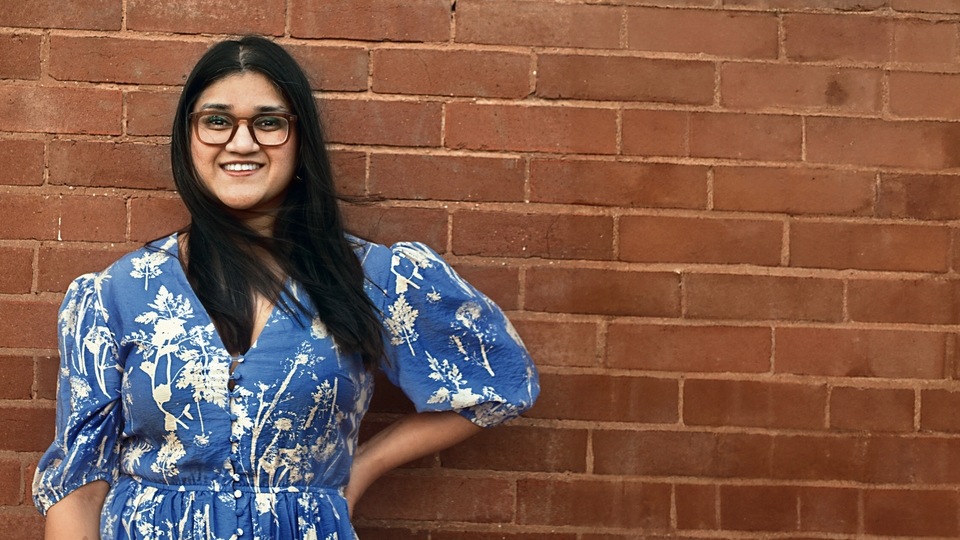
Goyal, a magazine editor, is uniquely qualified, with a PhD in the politics of literary awards. ‘The Global South has been invisible for far too long,’ she says
“I feel like I’ve been walking around with this large secret,” says Sana Goyal, laughing.
Earlier this month, when the jury for the 2025 International Booker Prize was announced, she heaved a sigh of relief. “I got the news in early spring, and had to keep it in for about four months.”
Goyal, who grew up in Mumbai and now lives in Birmingham, is editor and publishing director of the British literary magazine Wasafiri (Swahili for Travellers), which spotlights diverse contemporary writing from around the world.
She joins a small but mighty honour roll of Indian-origin people who have helped pick the winners of one of the world’s most prestigious awards in fiction. Others have included the writer and poet Amit Chaudhuri (2009), novelist and essayist Pankaj Mishra (2019), poet and novelist Jeet Thayil (2020) and author Neel Mukherjee (2021).
Originally known as the Man Booker International, the prize was established in 2005 to be awarded every two years, to a body of work. In 2016, it was restructured to be awarded annually, to a single book translated into English and made available in the UK and / or Ireland.
This year’s jury also features the British author Max Porter; Nigerian-origin poet, filmmaker and photographer Caleb Femi; Korean-origin author and translator Anton Hur; and British singer-songwriter Beth Orton.
“It’s exciting to be able to delve into at least 100 entries, if not more,” says Goyal, 32, who completed a PhD on the politics of literary prizes from SOAS University. “Of course, my husband has no idea that we’re going shopping for new bookshelves soon!”
***
Goyal always knew she had to “live a life of reading”. Growing up, she spent hours at local bookstores and lending libraries. She moved to the UK at 19, for a graduate degree in English and comparative literature at University of York, and then a Master’s in postcolonial studies at SOAS.
“I couldn’t see myself doing anything else… being ‘good’ at anything else,” she says.
Between those two degrees, she returned to Mumbai for a year, during which time she worked with Vogue India and then as a freelance writer, covering primarily books and authors, for publications such as Vogue India, Scroll.in, and Mint (the sister publication of the Hindustan Times).
She continues to write, with a focus on the Global South, for publications that include The Guardian, Financial Times and Los Angeles Review of Books.
When she pitches a book for review (or commissions a writer for Wasafiri), her mission, she says, is to get the work or writer on the radars of more editors and readers.
Wasafiri was launched with this aim, in 1984. In her five years there, she has risen from digital editor to serve on the magazine’s board of associate editors, then as deputy and reviews editor. In January, she was appointed editor and publishing director.
“The voices and perspectives of the Global South have been historically and multiply marginalised,” Goyal says. Given that this population now constitutes a global majority, “it is high time we had proportional representation in publishers’ catalogues, prize lists and festival panels. In today’s increasingly polarised world, this mission is more vital than ever.”
***
Goyal has previously served on the jury for the 2022 Orwell Prize for Political Fiction and the 2023 Republic of Consciousness Prize. The former is one of the world’s most prestigious awards for political writing. The latter is aimed at works published by small, independent British and Irish presses (ones that publish eight or fewer original titles, or have four or fewer full-time employees).
“At a moment of increasing precarity in the arts, we need to do everything we can to support such missions,” Goyal says.
What does her work on such juries entail? “Reading is subjective, of course,” she says. “We bring ourselves and our worldview to each reading experience. It has been inspiring to read alongside my fellow judges; to learn more about what makes us each want to speak up for a book, give it space.”
With the Orwell Prize, she also had the chance to reconsider what “political” can mean, and what shapes and textures it can take in fiction. “With the Republic of Consciousness Prize I saw first-hand the trailblazing and risk-taking work being done by independent presses in the UK.”
Each year, the longlist, shortlist and eventual winner of the International Booker Prize are much-anticipated announcements. The £50,000 (about ₹54 lakh) award is divided equally between the author and translator. Recent winners have included Olga Tokarczuk and translator Jennifer Croft (2018; for the Polish work Flights); Geetanjali Shree and translator Daisy Rockwell (2022; for the Hindi work Tomb of Sand); and Jenny Erpenbeck and translator Michael Hofmann (2024; for the German novel Kairos).
With each jury one serves on comes a deep sense of responsibility, Goyal says. “As literary and cultural tastemakers and, dare I say, gatekeepers, we need to not take this privilege for granted, and instead use our platform to support and champion marginalised voices, or voices that may be overlooked or pushed to the peripheries of the mainstream publishing industry.”
Despite the pitfalls and criticisms — of bias, subjectivity, reliance on commercial success and lack of diversity — literary prizes remain pivotal, she adds. “They exist, first and foremost for writers. And we can’t deny the benefits they provide.”
In her newest role, she hopes to “listen to the books keenly”. A good book, she says, is one that refuses to be easily summarised or categorised. “I’m looking for books that will ‘live rent-free in my head’, as the kids say. Tomb of Sand was one such work.”
In a world of rising hate speech, communal divides and censorship, reading can open up the world for young readers, Goyal adds. It goes beyond knowledge-seeking and learning. “It can be a joyful act of community and solidarity.”