


Rahul Dravid: The pitch-perfect match maker
What Dravid did was ensure that every youngster with skill and commitment got a fair shot. People who have worked with the teams, or been a part of the teams, say that under his supervision, both skills and perseverance are given equal importance.


Five years ago, in front of aspiring engineers at Kolkata’s Jadavpur University, a man with the first hint of grey in his sideburns walked on to a manicured cricket ground. Leased to the Cricket Association of Bengal, it had a rolled pitch, a tiny 700-sq-ft clubhouse, a manual scoreboard, and three temporary shelters for electronic scorers and the local media.
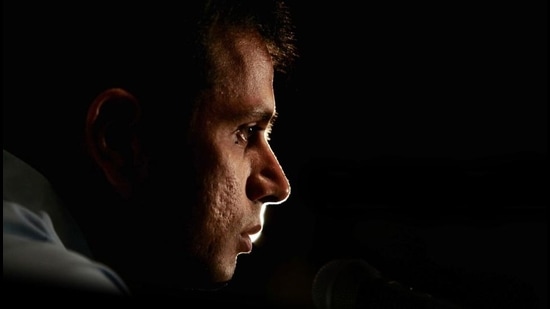
This was November 2015. A 16-member India squad was preparing for the 2016 Under-19 World Cup by playing a tri-nation series with Bangladesh and Afghanistan. It was just another tournament, meant as practice for a slightly bigger tournament. But the man with a hint of grey in his sideburns and a disarming smile had other ideas. He wanted to use this squad, this tournament, and this stage, as the foundation for something much larger.
It was uncharted territory, but this man knew a thing or two about laying a foundation and erecting innings, and careers on it.
He was, after all, The Wall himself.
Six members of this squad, the first to be managed by Rahul Dravid three years after retiring as a talisman of India’s finest batting unit ever, have gone on to play for the country.
Two — Rishabh Pant and Washington Sundar — are now part of cricketing lore.
On January 19, at the Gabba — the iconic field in Brisbane where Australia had not lost in 32 years — an India team made up largely of rookies (Pant and Sundar included) chased down an improbable total to win the Test and tour.
Who were these relative rookies, and how did they get there?
THE NEW NORMAL
Jasprit Bumrah is a sparkling example of how freakishly Indian cricket can sometimes work. He was picked by the Mumbai Indians scouting system and moulded into a devastating T20 bowler before he had even started playing first-class cricket for Gujarat. Mohammed Siraj is another. He was 20 when he first bowled with a proper cricket ball and was spotted almost immediately by coaches from Hyderabad’s first-class set up.
But generally, the steps to a career in Indian cricket are more gradual and well-defined — a player starts playing divisional club cricket or in the academies, gets selected for the state age-group teams through trials, plays more cricket before signing up for the U-19 trials or takes the more circuitous and fairly laborious route of playing first-class cricket until their performance is noticed by a zonal selector.
An Under-19 team berth is like an early pass — do well there and the senior selectors will keep checking on you for at least the next two years. The system worked to a degree in the past. Some outstanding players came through (like Virat Kohli, who led India to victory in the 2008 U-19 World Cup). But there were those that fell through the cracks; languishing in the wilderness at a time they needed guidance and specialised training the most.
But until that November 2015 morning in Kolkata, the system had one missing ingredient -- Dravid.
The new coach decided to make a farsighted change. Instead of focusing only on the sure shots who were set to break through, he created a process of building an enviable bench for the senior team, a second-string of young but supremely capable players waiting to grab their chance. Winning U-19 tournaments became secondary, unearthing talent and keeping it on track became all-important.
Pant, Sundar, Prithvi Shaw, Shubman Gill, Shardul Thakur, Hanuma Vihari, and even Siraj once he was scouted — all of whom played in the Australia series — have all came up through Dravid’s system.
If there was a starting point to this quiet change, it was that November 2015 morning in Kolkata, five months after Dravid became the U-19 and India ‘A’ coach.
THE MENTOR
Dravid, then 42, told the team that he had no magic wand to ensure every player made it to the next level, but he could offer them another route. “Every two years there are 15 or 16 new U-19 players coming up. But there won’t be 15 or 16 slots in the Indian team every two years,” he said in a rare press interaction on the sidelines of that 2015 tri-nation series.
“If [Cheteshwar] Pujara, [Virat] Kohli and [Ajinkya] Rahane keep scoring runs, tough luck for a lot of guys. That’s the way it works... That’s what I tell these boys. Not all of them are going to make it. That’s a reality. Only two or three guys will make it from here and the rest should aim to have really good successful first-class careers.”
What Dravid did was ensure that every youngster with skill and commitment got a fair shot. People who have worked with the teams, or been a part of the teams, say that under his supervision, both skills and perseverance are given equal importance. Data is collected assiduously and used to support and inform coaching instincts. And Dravid then turns up himself -- to support, encourage, explain.
India paceman Khaleel Ahmed, a graduate of the U-19 camp, still treasures a conversation in which the former India captain helped him understand fast-bowling from the batsman’s perspective. “One day, I asked Rahul Sir what bothered him the most in his playing days. He said, ‘when a fast bowler could consistently swing the ball both ways from one spot’. That feedback mattered a lot. We were 18 or 19, but it was instilled in us that these are things you will face in the future so it’s best we start working on consistency.”
Dravid demands absolute professionalism and dedication to the team’s cause, says former Saurashtra batting stalwart Sitanshu Kotak, who was coach of the India ‘A’ team under Dravid’s supervision. “The only thing Rahul dislikes is if anyone takes a tour for granted.”
Almost every coach HT spoke to swore by the workload management model in place at the National Cricket Academy (NCA; Dravid was named its head in 2019), which is where U-19, ‘A’ team and senior team cricketers get assessed, and by Dravid’s scientific approach to evaluating a cricketer physically.
“Say a young bowler arrives at the camp. The first thing he does is undergo a battery of tests and fitness checks after which every coach gets a separate report,” said former India pacer Subroto Banerjee, who worked as bowling coach under Dravid. “A coach must know the extent to which a cricketer can physically take in the changes he wants. Accordingly, the trainer needs to be alerted about strengthening certain elements. Nothing very big, but the attention to detail increased after Dravid joined.”
THE COMMUNICATOR
At the core of Dravid’s approach was better communication; strange given how he wasn’t always hailed for his glibness off the field.
For example, when India went into lockdown in March and all sporting activity came to a halt, he brought together about 15 coaches from Indian cricket’s various teams for a two-hour Zoom call every Friday, to brainstorm over how to proceed and to evaluate progress. At these meetings were India bowling coach Bharat Arun, fielding coach R Sridhar, women’s coach WV Raman, U-19 coach Paras Mhambrey and several NCA coaches.
Technical and tactical growth of the players were monitored closely as well. “We note down players’ strengths and weaknesses, their strategic prowess. There is a plan for every bowler, but we also kept an eye on how they react. Not everything can be spoon-fed. After a match is over, we ask players what they were thinking at specific moments. That way we know a player’s tactical acumen,” said Banerjee.
Also important to Dravid is imparting the personal touch when coaching young impressionable minds. Ahmed remembers a time during the 2016 U-19 World Cup when he started doubting himself. “One day, during nets, Rahul Sir came and told me, ‘you don’t become a good or bad player because of one match or one tournament. Never doubt yourself.’ That boosted my confidence from zero to 100,” he says. “As a young player you tend to doubt yourself once performances don’t go your way. I still remember those words.”
Abhay Sharma, who was fielding coach with the U-19 team, recalls how the Board of Control for Cricket in India (BCCI) readily agreed to the management’s request to double the dearness allowance in 2016, after it was found that some players were compromising on their diet for want of money. “That was a very good call,” Sharma said “These are small things which matter a lot. Players also got better hotels, physio training facilities. They were told ‘you will be looked after nicely’. Rahul Dravid would go and eat with them too. The development process started to change from here.”
THE SEER
Dravid is now head of cricket at NCA, but for almost four years he juggled the duties of the Under-19 team with those of the more senior ‘A’ team. This meant a two-pronged approach — Under-19 teams were to be part of a constant process while with the ‘A’ team, it was all about timing their tours just before a senior team’s, so a good performance could result in an immediate call-up to the senior team.
“The way Rahul bhai, and obviously the BCCI, set it up helped,” said Kotak. “Winning or losing isn’t his priority. He wants to create a good bench. I remember how Hanuma Vihari wasn’t in great form during the first two ‘A’ tour matches [he scored 31, 19, 0 & 1] in the West Indies [in 2019]. But in the third game he played well [55 & 118] before going on to score heavily in the senior Test series. The process worked in his favour.”
Dravid also ensured that a large number of Under-19 players got their chance to tour with the ‘A’ team, absorbing critical lessons in playing on overseas pitches.
“My instructions were to give opportunity to everyone,” said Kotak. “It’s never about playing the strongest team. Like against Sri Lanka [in 2019], when we rested Shubman Gill for the third match after he scored back-to-back hundreds.”
The message hasn’t changed at the Under-19 level either. “He (Dravid) would tell every player ‘As long as I am here, you won’t have to worry about selection. Even if you are not succeeding, enjoy your team’s success. You are part of it. At the end of the day a team won’,” said Banerjee. “This allowed the boys to play without any fear and keep learning. He is always available for a conversation with any player at any time. He would attend every meeting, give you the freedom to work and take updates from every coach. These are the things that make Rahul Dravid different.”
So, yes, it was a confluence of factors, many with low probabilities, that helped some of Brisbane’s winning 11 make the team -- but they were ready for it. Their foundation was strong. And The Wall was watching.
(With input from Sanjjeev K Samyal)


