
 E-Paper



Rakesfall: Read an excerpt from the winner of the Ursula K Le Guin Prize

 Prefer HTon Google


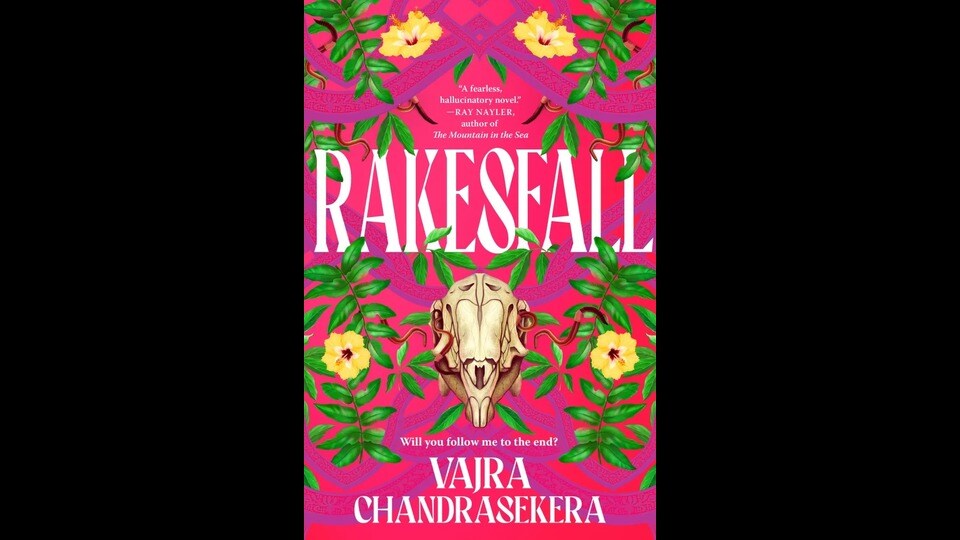
Time twists, arcs and bends backwards; screens look in on themselves; nothing is what it seems. Read the opening section of Vajra Chandrasekera’s newest novel.
Season one, episode one, minute thirty-one and thirty-five seconds: Leveret chases Annelid into the jungle. They are laughing, because they’re teenagers playing a game. The jungle is not quite a jungle. In a much later episode, we learn via a minor subplot about 1970s land reform that it was once a colonial-era rubber plantation, abandoned and gone feral. It will gradually grow wilder and more overgrown through the seasons. We know another year has passed when the new year birds hoot in the background. Leveret and Annelid will grow older, too. This is that kind of show. There are only two kinds of show: the kind where people grow older and the kind where they don’t. We, the fandom, love the first kind best. We love this show so much.
Leveret and Annelid aren’t their real names—that is, not the given names of the characters in the show, which we never learn—but nicknames they took from old textbooks they found gathering dust in a cupboard in their little school that never seems to hold exams or parent-teacher conferences. There are no ordinary school lessons. All they do at school is sit in a darkened classroom with the other kids, watching a show about us on TV.
We think this is appropriate. We watch them; they watch us. The wheel turns.
She runs into the jungle, the balls of her bare feet barely touching the ground, running so that he will follow. She pushes aside branches that snap back at his face, leaps over roots that she knows he’ll trip over, laughs so hard it echoes around him like a haunting. Annelid, and a lid, she’s keeping a lid on it. She hiccups and can’t stop giggling.
The TV in their classroom is an Australian-built Philips colour TV from the late 1970s or perhaps the early 1980s: twenty-six-inch pale grey screen with rounded edges; fake wood finish on the chassis; black plastic grille on the right that you can take out with a clickto expose the control panel where you can tune channels by turning tiny knobs. We remember those from life, too. Getting the channels right used to be one of our chores. Child-sized fingers were better with the knobs. (A hundred thousand childhood chores unfold in our memory. Husking coconuts on an iron spike. A fire between three blackened bricks. A short-bladed scythe through the long grass. A tire rolling down a dirt path by a lake, under a dry blue sky.)
We watch them watch us. The picture on the TV screen looks grainy and out of focus, but the kids don’t seem to have any trouble with it. We suspect this avoidance of perfect fidelity is an intentional device to avoid opening an abyss of mirrors. Nature abhors an infinite regress.
(Excerpted with permission from Rakesfall by Vajra Chandrasekera, published by Tor; 2024)


