
 E-Paper



Speaking in Morris code: Where the designs on our phone covers, mugs and clothes came from

 Prefer HTon Google


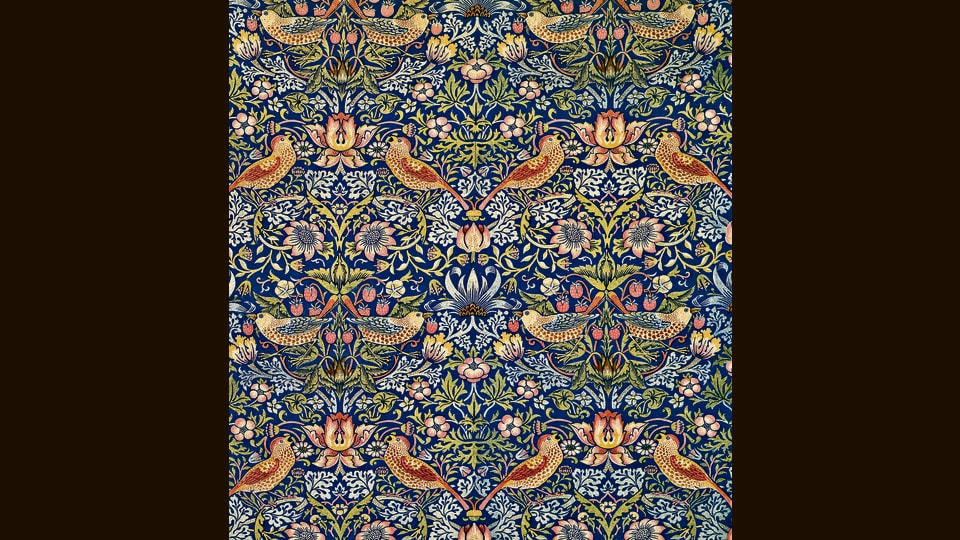
130 years after the death of William Morris, a London gallery is exploring his legacy of designs, inspired by nature and by a range of cultures, that live on.
His floral patterns are still everywhere. You’ve likely seen them; it’s possible there are some at hand near you right now.
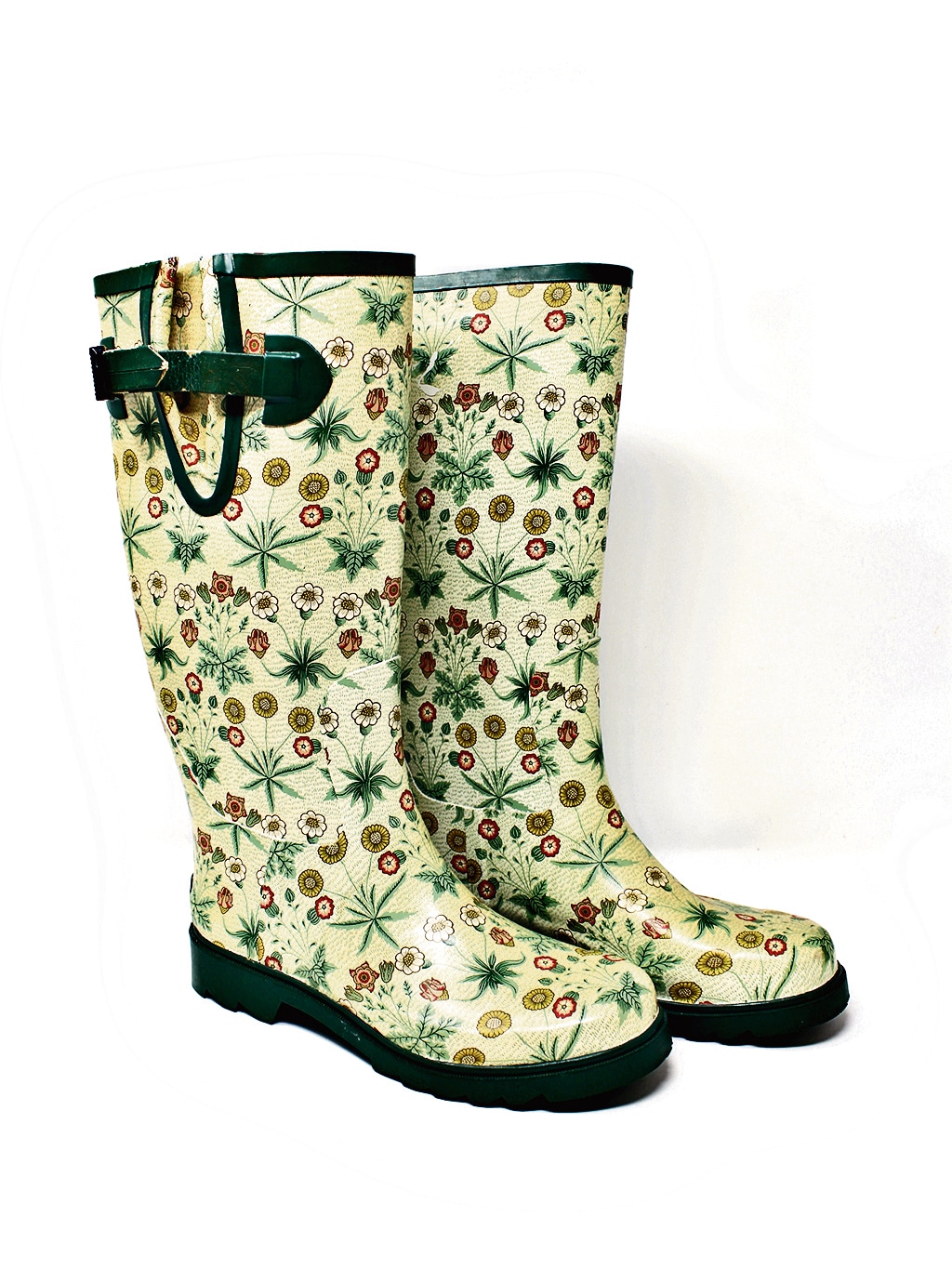
They appear on phone cases, mugs, boots, blouses, shower curtains, carpets, upholstery.
Anyone can use them. It has after all been nearly 130 years since William Morris died (aged 62, on October 3, 1896).
To celebrate his ubiquity, and mark its 75th anniversary, London’s William Morris Gallery is hosting an exhibition that seeks to capture the 19th-century designer’s legacy through a curated display of about 200 items that represent the range of his influence.
“The show is really us exploring where one can find Morris in the world. We find him on the high street, in the pound shops. We find him in Japan in a really big way. We even found one of his patterns on a seat cover used in a British nuclear submarine,” says Hadrian Garrard, director of the gallery and curator of the show. “The fun is in tracing these appearances but also in asking: What would Morris have made of it all?”
That is a complicated question that hints at the contradictions of his life and legacy.
The artist was an avowed socialist, for instance, but designed wallpaper for Queen Victoria and the Russian tsar Nicholas II. He was a radical activist, but his work has become synonymous with staid traditionalism. He championed craftsmanship, but his designs are embedded in templates for mass-produced merchandise in a hyper-capitalist era.
Would he have been thrilled or appalled? Likely a bit of both.
Fine print
Born in 1834, into a wealthy middle-class family, William Morris was one of Victorian England’s many polymaths. He was a poet, artist, designer, writer and social activist.
He helped found the Arts and Crafts movement, in response to the cheap, overdecorated consumer goods churned out by industrial capitalism. Beauty ought to be rooted in craft, nature and ethical production, he argued.
Central to Morris’s philosophy was the idea of “joy in labour”. He believed the objects people lived with ought to be made by workers who took pride in their products, not by labourers exploited on a factory floor. He also believed beauty was a human right, and that art should be woven into the world at all levels.
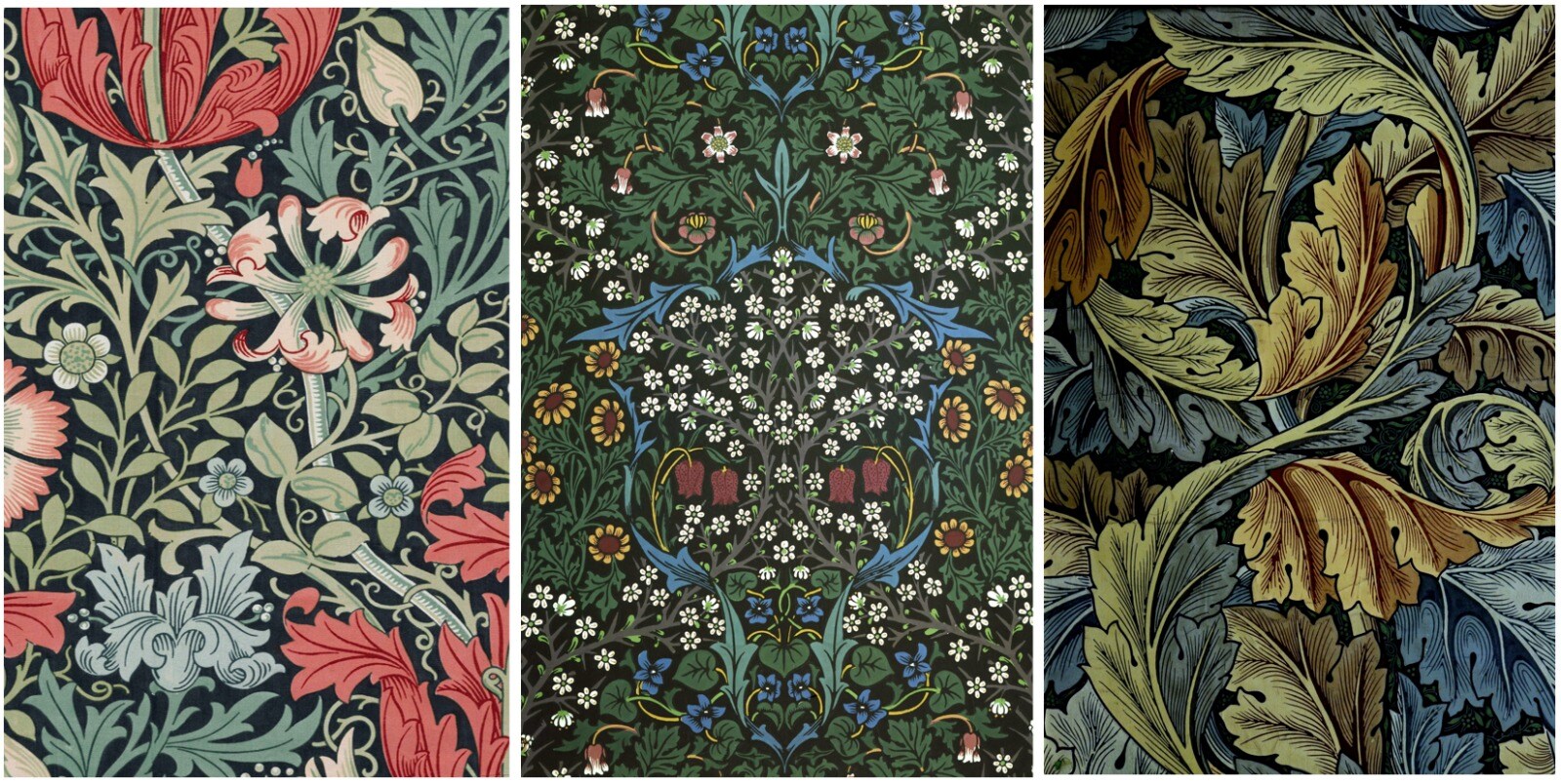
But Morris was a businessman too, and a highly successful one. The wallpapers and textiles his studio crafted by hand were aimed at the elite, priced accordingly, and remained the preserve of the wealthy. It was here that the patterns still in use today were born: twisting vines, acanthus leaves, birds and berries.
The exhibition at the London gallery, titled Morris Mania, leans into their ubiquity. A centrepiece of the show is a film named Wallpaper that contains nearly 100 instances of his designs popping up in TV shows and films that range from My Fair Lady (1964) and Coronation Street (1960-) to Django Unchained (2012) and Sex Education (2019-23). In these instances, the patterns have stood in for nostalgia or eccentricity, Britishness, or simply aesthetic design.
What makes them endure? Unlike a lot of the overwrought decorative design of the time, whether on fabrics and carpets or wallpaper and stationery, Morris’s patterns were simple, resonant and versatile enough to be both universal and timeless.
As Garrard puts it: “He was able to translate his very sincere love for the natural world into repeating patterns that just work.”
A nod to India
What else inspired the man?
Look closely and some interesting details stand out: shades of blue / indigo, the slightly smudged effect of hand-worked block print (especially on his fabrics), nature in miniature, the paisley…
Morris was strongly influenced by Indian and Islamic art. The ancient Indian handicraft traditions of working with natural materials, to make items that were meant to last, fed into his own design philosophy.
Morris was in fact considered an expert on Indian art, and collected artefacts from the subcontinent on behalf of the South Kensington (now Victoria and Albert) museum.
The fact that he combined influences is part of what gives his art its enduring resonance.
One can see within his designs elements of the Indian aesthetic and the Mughal miniature, Gothic architecture, Europe’s autumn colours, and England’s beloved landscapes, down to its trellises and garden birds.
Over the past 130 years, his patterns have been embraced by groups ranging from the flower-power hippies of the 1960s to Thatcherite conservatives (who viewed him as a symbol of Victorian values) and Japanese designers (who have remixed Strawberry Thief with Hello Kitty).
When the gallery invited people from across England to loan them pieces, as a result, they received nearly 1,000 submissions, ranging from a luxury carpet by Axminster to Covid-era masks, biscuit tins, fast-fashion items, intricate wedding-wear and a maneki-neko or auspicious Japanese waving cat.
In including this wide a range of objects, the exhibition playfully explores the tension between Morris’s global reach and the capitalist mass-production that made it possible.
“We aren’t saying expensive handmade things are inherently better than mass-produced goods,” Garrard says. “I think that’s an oversimplification and it ignores the question of accessibility. But there is something about having too much stuff, that I think Morris was very aware of. He believed that we should make things well, and keep them for a long time. But we don’t live in that world. And, environmentally speaking, we’re now living with the consequences of that.”
Incidentally, it isn’t just his designs that have survived. Morris & Co, the company he founded, still makes wallpaper, fabrics and lifestyle products. In recent years, it has released collections in collaboration with brands such as Zara Home and Habitat.
Though he once wrote, in Prologue of the Earthly Paradise (1868)
“Remember me a little then I pray, /
The idle singer of an empty day…”
he is more than a little remembered.


