
 E-Paper



Through heartache and grief, running has been my loyal friend: A Wknd chat with ultra runner Ashwini Ganapathi

 Prefer HTon Google


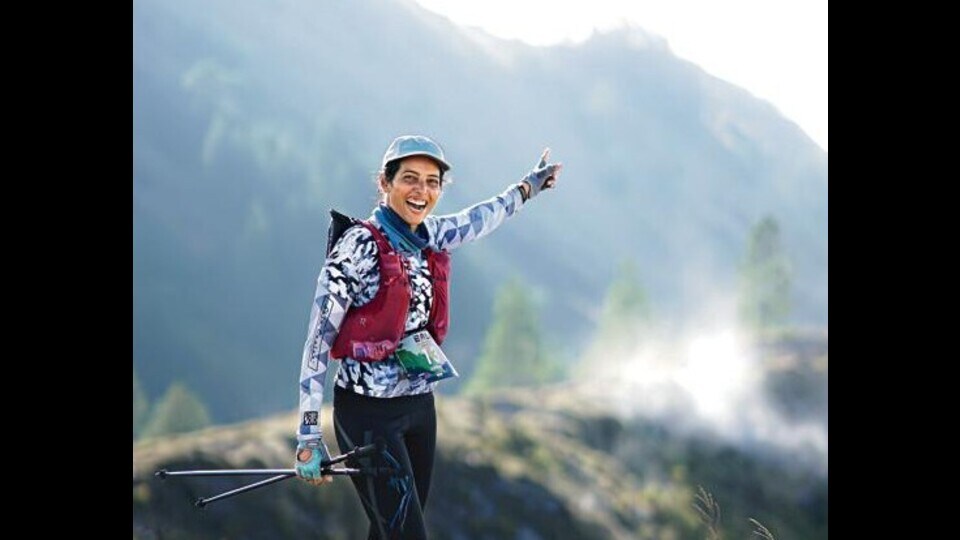
The 39-year-old former software engineer just became the first Indian woman to finish the Deep Japan Ultra, one of Asia’s most gruelling races.
On the move for 45 hours and 43 minutes, on no sleep at all, making her way across 173 km of mountain trails and rugged climbs...
As 39-year-old Ashwini Ganapathi navigated the Deep Japan Ultra, one of Asia’s toughest endurance races, she was just hoping she could finish it. She hadn’t expected to set any records. Yet, by the time she was done, she was the only non-Japanese person to complete the trail this year, and the first Indian woman to ever run the full route.
Of the 135 participants, more than half quit midway; only 63 finished. And even they weren’t carrying the weight she bore. “As a vegetarian, I can’t eat most of the meals served at the checkpoints.They tend to have fish soup in them,” Ganapathi says. “So I was carrying more than 8 kg of essentials, including 2 kg of food and hydration.”
How did a software engineer from Bengaluru end up on this path?
It was a simple 10-km run in 2014 that changed it all for her.
Ganapathi was working with IBS Software when she reluctantly joined a company-sponsored running team. There were times, during the training and the eventual run, when she wondered why she had agreed to do this.
“Then, something about the discomfort of it all pulled me in,” Ganapathi says. She began to seek our runs, then look for harder trails. She started to train with coaches and eventually sports psychologists too.
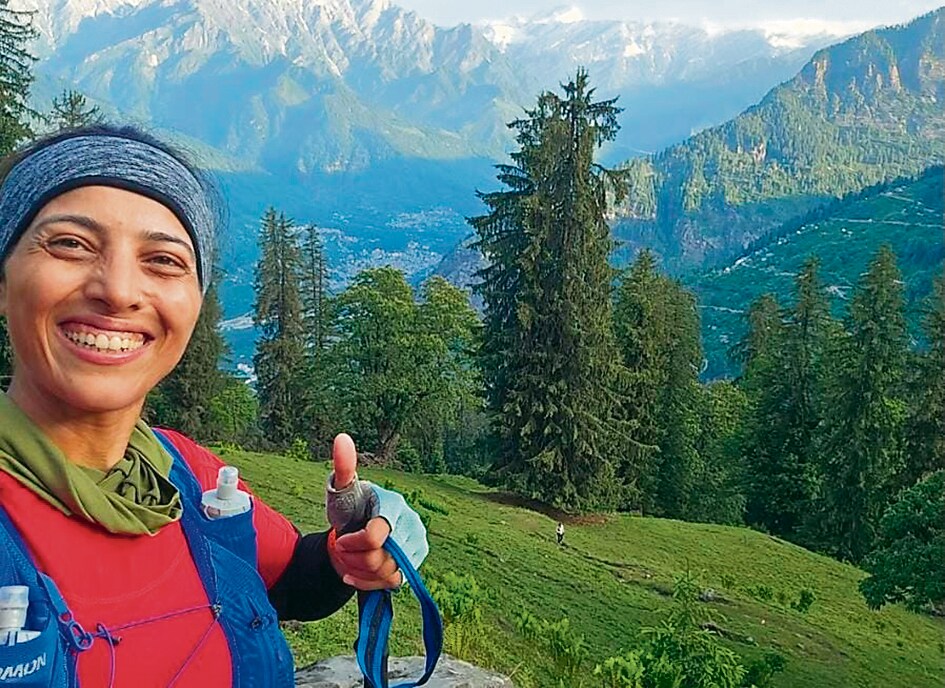
She competed in an Olympic-distance triathlon in Chennai in 2018, and ran her first ultra-marathon, a 50-km trail in the Hennur bamboo forest near Bengaluru, later that year. “Endurance running has become the space in which I feel most alive. It has been my loyal friend through grief. It soothes me and holds me together,” she says.
Her husband Sandeep Sathyanarayana, 39, a software engineer with Nokia, has cheered her on through it all. “We met at work and have been married for 14 years,” she says smiling.
The next challenge she has set herself is the Western States Endurance Run, a 161-km race in the US and one of the oldest 100-milers in the world. There are many others on her list too. “I am driven by curiosity. I want to explore the unknown,” she says. “I want to be one of the women carving out space in the toughest corners of this sport.” Excerpts from an interview.
* You say it all started, for you, with school-level sports…
Growing up (in Bengaluru, Karnataka), it was a bit of a tug-of-war at home. Activity wasn’t always encouraged. My mother, like many from her generation, was worried that running around outdoors would turn my skin darker, and make it harder for me to find a groom someday. My father was the complete opposite. He loved sports and saw no reason why I should be stopped from trying anything. So I played every sport my school offered: hockey, throwball, volleyball, kho-kho, athletics.
I would come home with scraped knees and muddy shoes, to face mom’s raised eyebrows. But she never stopped me from playing.
* What prompted you to switch to running full-time?
It was a simple question from my husband’s grandfather (the late Sanskrit and English scholar DS Krishnachar) that really changed it all for me. He asked, very casually, if our highly paid IT careers truly made us happy.
The question lingered. I couldn’t unhear it.
That conversation eventually gave me the courage to choose a life that feels meaningful, even if it looks unconventional. My family’s unconditional backing has made the whole transition that much more fulfilling. Now, I am also a running coach, and earn just enough to make do.
* Why endurance runs?
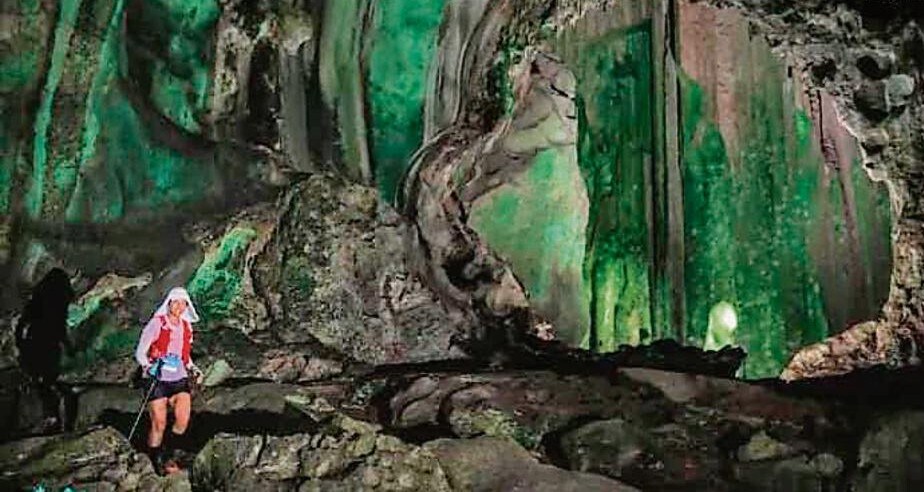
For me, the endurance element strips away the noise. It shows you exactly who you are when things get hard. It’s never been about proving something. It’s about growing through the challenges and finding strength I didn’t know I had.
Every race teaches me a little more about resilience, patience, and trusting myself. The discomfort is real, but so is the transformation that comes with it.
* The body will tire, and one can train for that. Does the mind fight you too, on these runs?
After a certain point, the hardest part is no longer the physical battle, it’s the mental one. I have faced moments of panic in which exhaustion, loneliness and doubt hit all at once.
It helps to stay in the present, break the race into small steps and focus on breath. I’ve worked with sports psychologists to build mental tools. Over time, you don’t just endure those moments, you learn how to meet them with strength and clarity.
The power of the mind enthrals me and is one of the reasons I like to push these boundaries.
* What with training six days a week and dietary restrictions, are there things you miss about your life before endurance running?
Honestly, I don’t feel like I’ve missed out. My life does look different now, with fewer late nights, more-mindful eating. Even casual nights out need to be planned. But the joy I find in pursuing my limits… that’s something no indulgence or downtime ever gave me. This isn’t a trade-off. It’s a choice.
* Was the recent run in Japan your most gruelling one yet?
The most gruelling race yet has been the 2022 Everest Extreme Ultra — 60 km, at altitudes above 3,400 metres, starting at Everest Base Camp in Nepal. The lack of oxygen, rugged terrain and sheer physical demands made it unforgettable. But every step also tested my mind in ways I had never experienced.
My mother was battling cancer at the time, and had given up hope. She had always been proud of my running. So I thought, if I do this, it might prove to her that the body can do what seems impossible.
It seemed to help energise her momentarily, but we lost her within three months. I would not have chosen to leave her for three weeks, if I had known. But I did what felt right at that time. So, you can imagine what I was going through emotionally, so close to the world’s highest mountain… and battling my own Everest.
Finishing that race reminded me why I do this, to meet versions of myself I’ve never met before. The Deep Japan Ultra is now a close second.
* What keeps you going back to the trails?
Running has been my loyal friend, through grief and through life’s quiet storms. A complicated emotional relationship with my father, over my marriage, was a source of great turmoil and weighed on my mother and me for over 15 years. Then I lost her, and she was just 60.
Through it all, running has given me space to breathe, and helped me find my way back to myself. Apart from my husband’s love, it is running’s embrace that soothes me and gently holds me together.


