
 E-Paper



Films: A director pays tribute to actor Irrfan via his book

 Prefer HTon Google



The only way director Anup Singh could come to terms with the passing of actor Irrfan Khan was by writing a book about the man who had been his muse
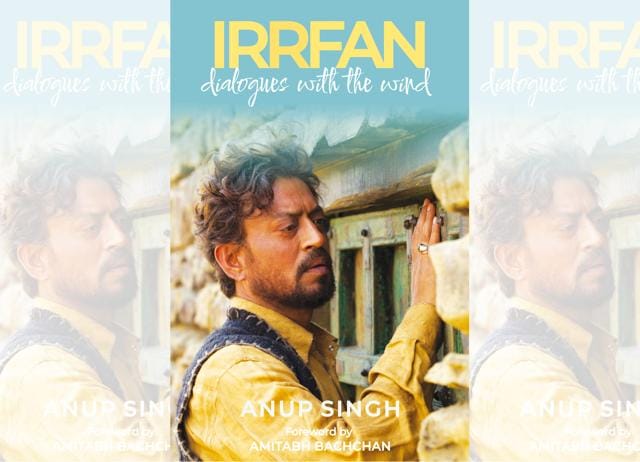
Director Anup Singh’s book, Irrfan: Dialogues with The Wind, is an impressionistic narrative based on his interactions with the internationally acclaimed actor, Irrfan Khan.
Coming to terms with his grief over Irrfan’s death proved difficult for 60-year-old Anup, who had forged a close bond with the actor while directing him in two lauded films, Qissa and The Song of Scorpions. But this emotional turmoil eventually led to Singh penning a book on the actor.
“Initially, I tried very hard to block out Irrfan’s passing and not think about it, it was just too painful,” Singh reminisces. “But I was flooded with memories. I would be in a car with my wife and a gentle curve on the road would make me think of one of Irrfan’s gestures. Sometimes, when I closed the door of my house at night, it would make a bass creak… and it would remind me of the sound of Irrfan’s voice.”
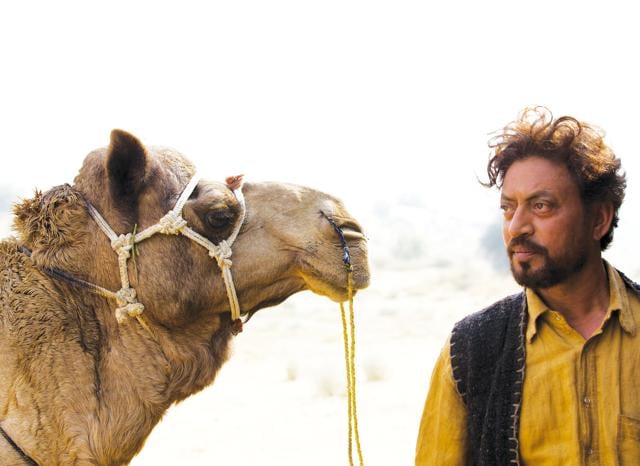
While this sense of Irrfan’s continued presence in his life consoled Anup, it also made him question its import. “I realised that perhaps he was there because there was a sense of something incomplete in our work. We had been planning at least five or six more films together. That is why I started writing the book.”
Fund of trust
Ask Singh to cite one aspect of Irrfan’s personality that he most urgently wanted to convey through his writing, and he says without hesitation: “Irrfan was unafraid. He was ready to take any risk in life and in his performances.There was no shadow he would hesitate to go into as an actor if he trusted you. He realised that we are a multiplicity of personas. Even though we might decide to live as just one persona, he was very curious about the others. So for him every role was an endeavour to see these other aspects of himself. He would not limit himself in any way.”
Singh characterises his relationship with Irrfan as a slow build-up of trust. Initially, Irrfan had refused to do Qissa because he thought it was too dark. Singh narrates, “I knew he had a great passion for Nusrat Fateh Ali Khan saab, the qawwali singer. So I said, ‘Janaab (which is how I addressed Irrfan), when Nusrat saab sings, his face may sometimes be contorted in a very aggressive way… but what comes out of him is one of the most sublime sounds’.” Irrfan immediately agreed to do the film.
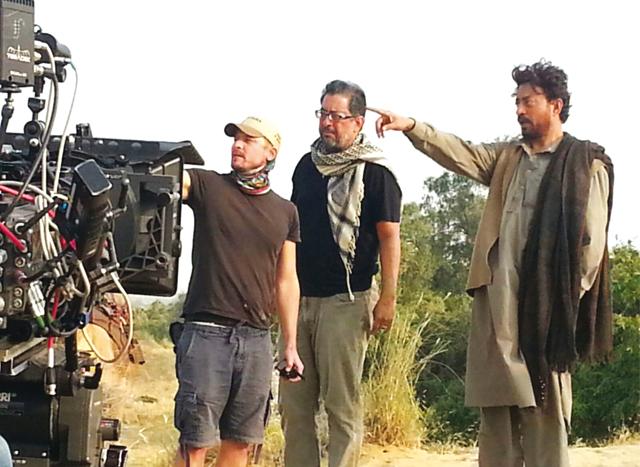
The two started on a note of suspicion but what brought them together, Anup says, “Was our shared belief completely that, like Nusrat saab, we would improvise with a given text, and go beyond not just our own expectations but also the predeterminations of character and story.”
The author-director declares, “This brought us to an exceptional, very intimate friendship where we could completely trust each other.”
Anup shares many instances of Irrfan’s concern. “I had a bad confrontation once with my producer on Qissa and I was disturbed by it but tried to keep a jovial front with my actors. Somehow Irrfan grasped my state of mind. After we finished shooting at around midnight, he knocked at my door. He had brought his music system and he spent the whole night just playing music for me. That was his spirit. He was ready to bring to you the fullness of himself.”
Rhythm returned
“Irrfan was my muse,” Anup says emotionally. “We were supposed to do another film together but I’ve just put the script aside because I don’t know whom to cast. In the last months before he passed away, we communicated regularly, and Irrfan, generous as always, would push me, ‘Why don’t you think of this actor or that? He would be good’.”
Singh admires the resilience his friend showed in his final days. He reveals, “Irrfan approached his ailment not with questions like, ‘Why did this happen to me? Why am I in so much pain?’ His question was: ‘What is this? What does it tell me about life, about my body? And how does it change my relationship with other people?’ One of Irrfan’s defining characteristics was his curiosity. He could look at a pebble for half an hour. But at the end, and I write about it in my book also, he did have a sense of loss, of desolation. Because he felt that he had not been given the answer he was looking for. He felt that there was much more he needed to learn.”
For Singh, penning the book has been cathartic. “It made me very happy. I felt Irrfan and I had done another film together. While writing, I could see him working with me. Every dialogue that I put down, I remembered his tone. For Irrfan, both life and performance had a lot to do with rhythm and he worked very hard to find the right rhythm. I hope that the language of the book, the lilt, the poetry of it which comes from Irrfan, will also enter the reader. That is what I would like to celebrate about Irrfan—his sense of rhythm, his joy in life.”
Dinesh Raheja is a reputed film historian, columnist and TV scriptwriter who has been writing on cinema for over three decades
From HT Brunch, February 6, 2022
Follow us on twitter.com/HTBrunch
Connect with us on facebook.com/hindustantimesbrunch


