
 E-Paper



Humour: May I have your attention, please?
Here’s raising a toast to the pleasures and the perils of public speaking through the years of great speeches


Now we’ve had our fill of Bernie Sanders memes, it’s time to reflect on the headlining act of the US inauguration day: the President’s speech. Biden’s address to his beleaguered nation was packed with noble sentiments. As well as echoes from Bill Pullman’s dramatic monologue from the ’90s blockbuster, Independence Day – as is the case with so many presidential speeches. For all the relief at witnessing a credible US President speak coherent words, I did end up missing Martin Sheen of The West Wing, a pastmaster at political speechifying.
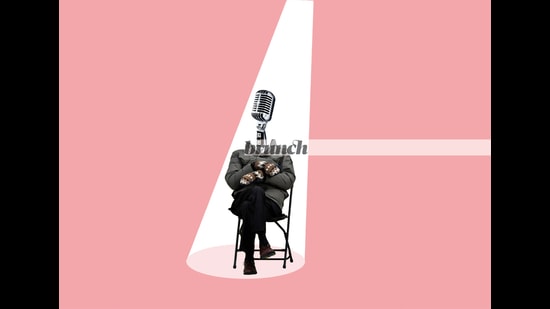
We shall overcome
Few leaders possess the eloquence of Abe Lincoln delivering the Gettysburg Address in 1863, a timeless speech that lasted less than two minutes and included fewer than 275 words. And while Martin Luther had a dream that will likely echo on in public consciousness forever, there are some kings who are lesser orators. Take, for instance, Colin Firth’s turn as the troubled George VI, a reluctant king put on the spot by the surprise abdication of his love-struck brother. Oscar winner, The King’s Speech (2010), was an intimate study of a public figure. The new king needs to make his first wartime radio broadcast, in 1939, but he is impeded by a nasty stutter. Enter maverick Australian speech therapist played by Geoffrey Rush, and we have an adventure film where all the action occurs in the confines of a London clinic.
Nehru’s ‘Freedom at Midnight’ speech is a defining moment in the history of modern India. It’s the speech that gave us, apart from the first words of our new republic, the unforgettable phrase: “tryst with destiny”. It will take a long time for the world to forget certain speeches from the last four years of American history, but “we shall overcome”, as President Lyndon B. Johnson proclaimed in 1965, echoing the unofficial anthem of the American civil rights movement.
The joys of dialoguebaazi
Our own cinema has a weakness for speeches, dismissively called “dialoguebaazi”. But when it comes off, it hits hard. Shah Rukh Khan’s “sirf sattar minute” speech in the dressing room of the Indian women’s hockey team in Chak De! India (2007) is a keeper. (As is the white shirt, blue jeans, Aviator sunglasses and light beard look for SRK.) From a dishonoured hockey player out to exonerate himself, we move on to a middle-class housewife, ridiculed by her family for her poor English. Sridevi’s speech at the climax of English Vinglish (2012) was a lesson in understated eloquence. While so many memorable speeches are framed in the context of national pride, here we saw a woman stand up for herself in the domestic realm, empowered by language.
I found myself at two quite different ceremonies in the last year or so. One featured Nobel winner Abhijit Banerjee, while the other starred author-politician, Shashi Tharoor. While Prof. Banerjee’s address was a masterclass in compassionate economics, Mr. Tharoor’s words were charmingly self-deprecating. One thing the two events had in common – other than engaging speeches by the two gentlemen – was that I found myself twinning with each of them. No more black churidar kurtas with floral jackets for me; it’s clearly the uniform for middle-aged male intellectuals.
Raising a toast
Things get a bit tricky when one is badgered into making a speech for a friend or a relative. Not every toast can be as entertaining as Sherlock Holmes’ best-man speech for Watson in the Benedict Cumberbatch series. And luckily, few are as offensive. So we bumble on, trying to scour our memories for the most appropriate anecdote, struggling for weeks to come up with an unforgettable tribute. Or we’re thrown into the ring suddenly, asked to honour a loved one on the spot, a dozen drunken pairs of ears turned in our direction. Some speakers rise to the occasion, interspersing college escapades with emotional interludes skillfully, drawing applause and admiration. Mostly, it’s a sorry exhibition of emotions that refuse to take off and jokes that fail to land.
The exquisite Vikram Seth says it best in this poem from his collection, All You Who Sleep Tonight (1990).
Advice to Orators
In speech it’s best—though not the only way—
Indeed the best, it’s true, can be the worst—
Though often I… as I had meant to say:
Qualify later; state the premise first.
Follow @rehana_munir on Twitter and Instagram
From HT Brunch, February 7, 2021
Follow us on twitter.com/HTBrunch
Connect with us on facebook.com/hindustantimesbrunch


